
Jaguar F-Type (X152) — British two-seat sports car
Two-door, two-seat sports car by Jaguar Land Rover introduced in the 2010s. Available as a convertible and coupe, it combines modern performance engines, lightweight design cues and a lineage tied to the classic E-Type.
The Jaguar F-Type is a two-door, two-seat sports car developed by Jaguar Land Rover under project code X152. Launched in the 2010s, it marks Jaguar’s return to a focused sports-car format and is presented in both open-top and fixed-roof forms. The model blends contemporary performance engineering with visual references to Jaguar’s historic sports cars.
Image gallery
10 Images


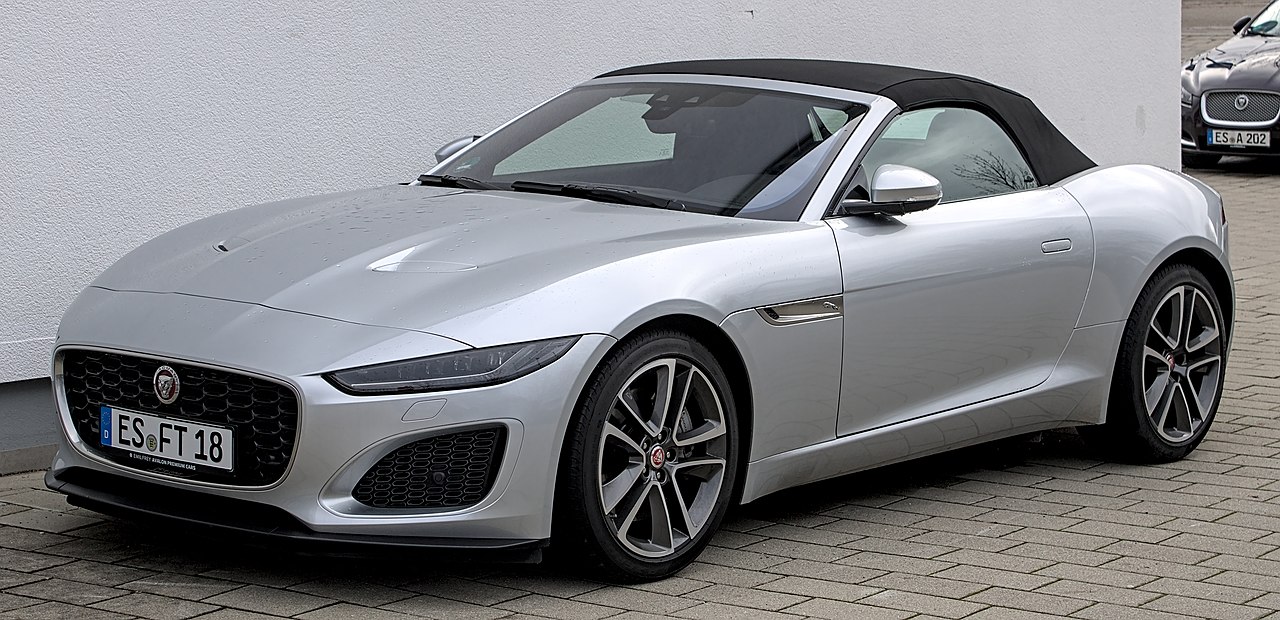


Design and characteristics
Styling emphasizes a long bonnet, compact cabin and short rear deck to deliver a traditional front-engine sports-car silhouette. Construction uses modern materials and engineering to balance structural rigidity with weight control. Interior layout is driver-oriented, with an emphasis on ergonomics and tactile controls, while the exhaust and chassis tuning aim to produce an engaging driving character.
Variants and powertrains
Over its production life the F-Type has been offered in several configurations and tuned for different levels of performance. Typical variants include:
- Convertible (roadster) — the original form at launch and often chosen for its open-air appeal.
- Coupe — a fixed-roof model introduced later for enhanced body stiffness and GT manners.
- High-performance versions — tuned and sometimes upgraded by Jaguar’s performance division for increased output and track capability.
Engine choices historically ranged from smaller turbocharged units to supercharged V6 and V8 options; transmissions included manual and automatic units depending on model year and market. For current and historical specifications see the official model information.
History and development
The F-Type grew from concept studies shown in the early 2010s and entered series production thereafter. Jaguar positioned it as a modern sporting successor to earlier two-seat Jaguars, combining contemporary engineering with strong design cues. During its production run the car received periodic updates to styling, chassis calibration and on-board technology to remain competitive in the premium sports-car segment. For manufacturer timelines and press releases consult manufacturer resources.
Use, reception and significance
The F-Type serves as a halo product for Jaguar, demonstrating the brand’s sporting credentials. Owners and reviewers have praised its blend of handling, braking and engine sound, while critics have noted trade-offs between comfort and outright sportiness depending on trim. It is used both as a grand tourer and for enthusiast driving on road and track. Broader commentary and reviews are available from independent automotive sources, for example industry coverage.
Notable facts and distinctions
The car is often discussed in relation to historic Jaguar models, notably the E-Type, and has been used to highlight Jaguar Land Rover’s contemporary design direction. Special editions and performance variants underline the model’s role as a showcase for engineering and styling. Production and corporate details can be found through Jaguar Land Rover publications and dealer information at company pages.
Related articles
Author
AlegsaOnline.com Jaguar F-Type (X152) — British two-seat sports car Leandro Alegsa
URL: https://en.alegsaonline.com/art/49097