
Jackson Pollock
American painter central to Abstract Expressionism, noted for drip and action painting techniques, influential mid-20th century figure; married to Lee Krasner and subject of films and major exhibitions.
Jackson Pollock (January 28, 1912 – August 11, 1956) was an American painter whose experimental methods and large-scale canvases became central to the Abstract Expressionist movement. Born Paul Jackson Pollock in Cody, Wyoming, he attracted attention for a distinctive approach in which paint was dripped, poured and splattered across canvases placed on the floor. This emphasis on gesture and process led critics and historians to associate his work with the term "action painting."
Image gallery
9 Images


Technique and materials
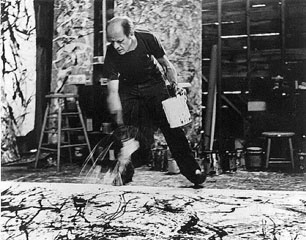
Pollock developed a working method in which conventional brushes were often set aside in favor of sticks, hardened brushes, or direct pouring from cans and syringes. He used commercial enamels and other fluid media as well as conventional artist paints, producing layered webs of line and color that record the motion of the artist. Many accounts and studies focus on the physicality of his process, the all-over compositions that avoid a single focal point, and the way surfaces document sequences of gesture. Some of his most famous paintings exemplify this approach through dense interlacing of paint and rhythmical energy.
Early life and influences
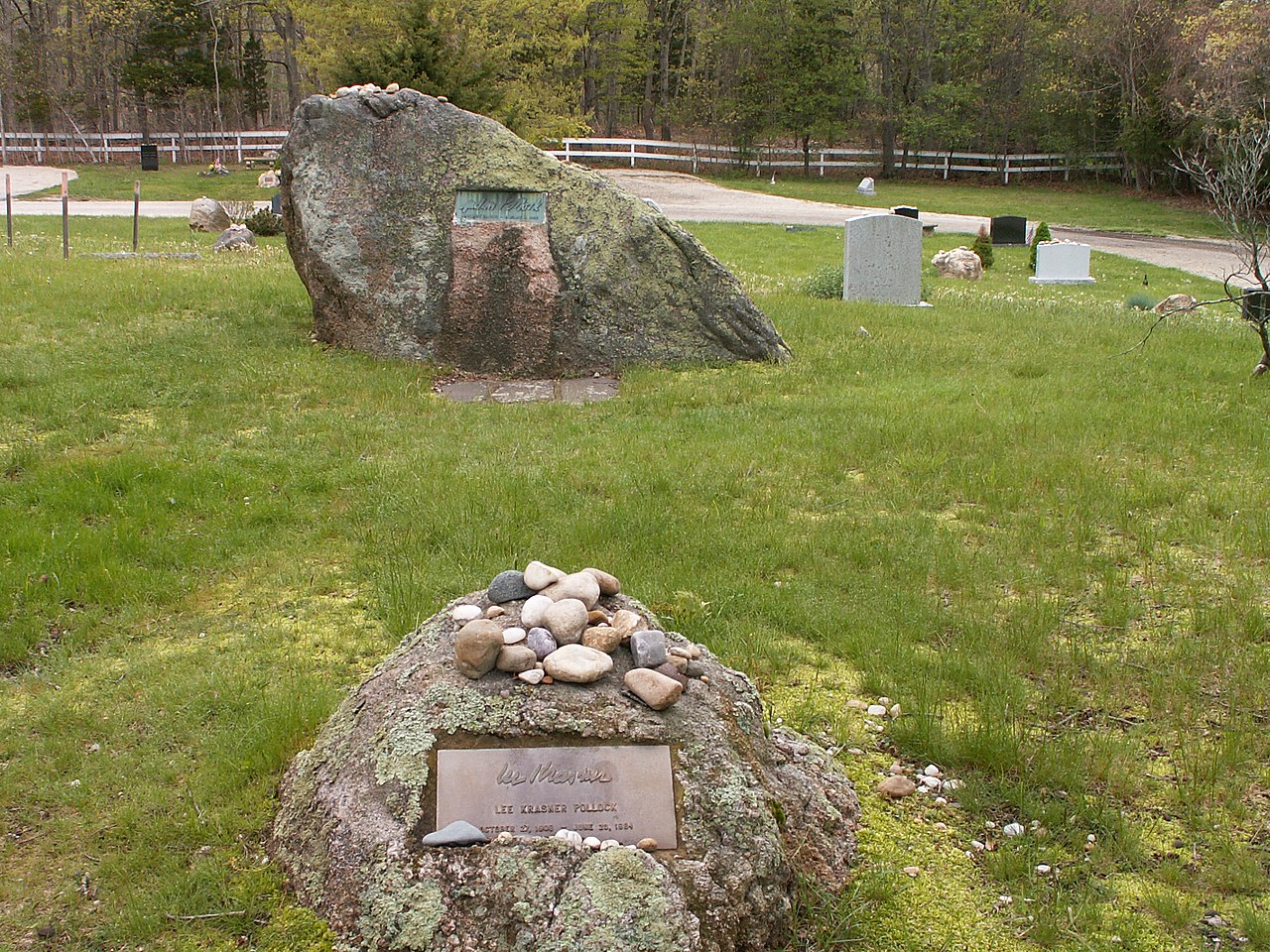
After growing up in the American West, Pollock undertook formal training that included study at the Art Students League in New York and work associated with federal arts programs during the 1930s. He encountered modernist ideas in a milieu that included teachers and peers who shaped his thinking about composition and scale. Historical movements such as Surrealism, and contemporary teachers like Thomas Hart Benton and later Hans Hofmann, have been cited as part of the matrix of influences that informed his development. Pollock's relationship with fellow artist Lee Krasner was a major personal and professional partnership: Krasner supported, encouraged and intervened in aspects of his career while continuing her own practice.
Career, recognition and major works
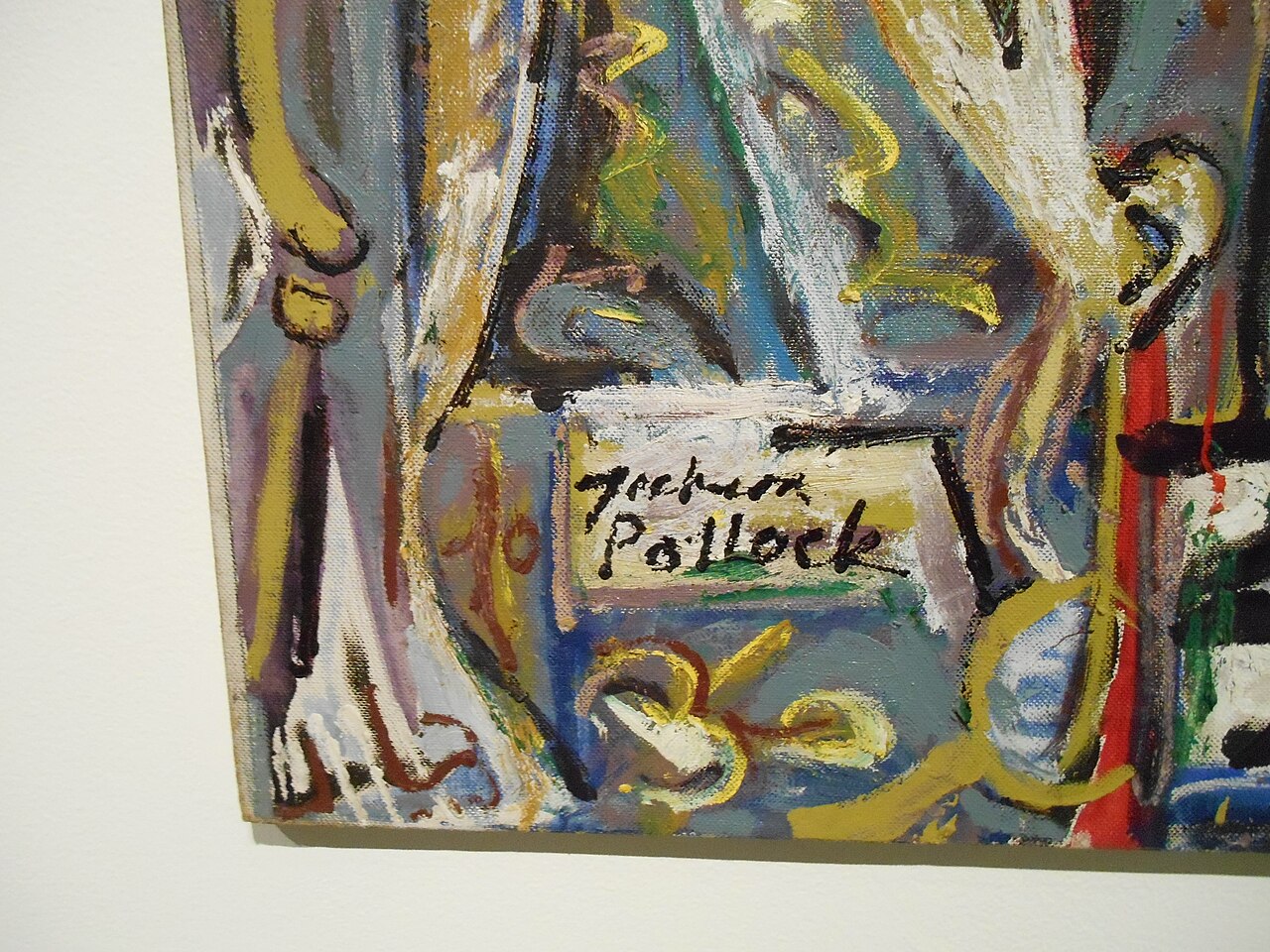
By the late 1940s Pollock's drip paintings brought him national and international attention. Museums and collectors acquired his work, and he became a subject of intense critical debate about the meaning and value of abstract art in postwar America. Well-known works from his mature period include large-scale canvases that are often discussed in exhibitions and scholarship. His paintings are included in major public collections and have been widely reproduced in surveys of twentieth-century art.
Personal struggles and public portrayals
Pollock's life was marked by personal difficulties, including problems with alcohol, periods of emotional struggle, and a fraught public image that both fascinated and troubled commentators. He was filmed in his studio by Hans Namuth in 1950–51, a work that significantly shaped public perceptions of his method. His life and art later inspired cinematic portrayals, including the feature film Pollock, directed by and featuring Ed Harris, which dramatizes aspects of his career and personal life.
Legacy, conservation and influence
Pollock's influence extends to later generations of artists who explore gesture, performance and the boundaries between painting and action. His use of unconventional materials and the scale of his works present distinctive conservation challenges: the physical condition of layered enamels and the structural support of large canvases require specialized care. Scholarly attention continues to reassess his place in art history, situating his achievements within broader cultural and institutional contexts.
Death and remembrance
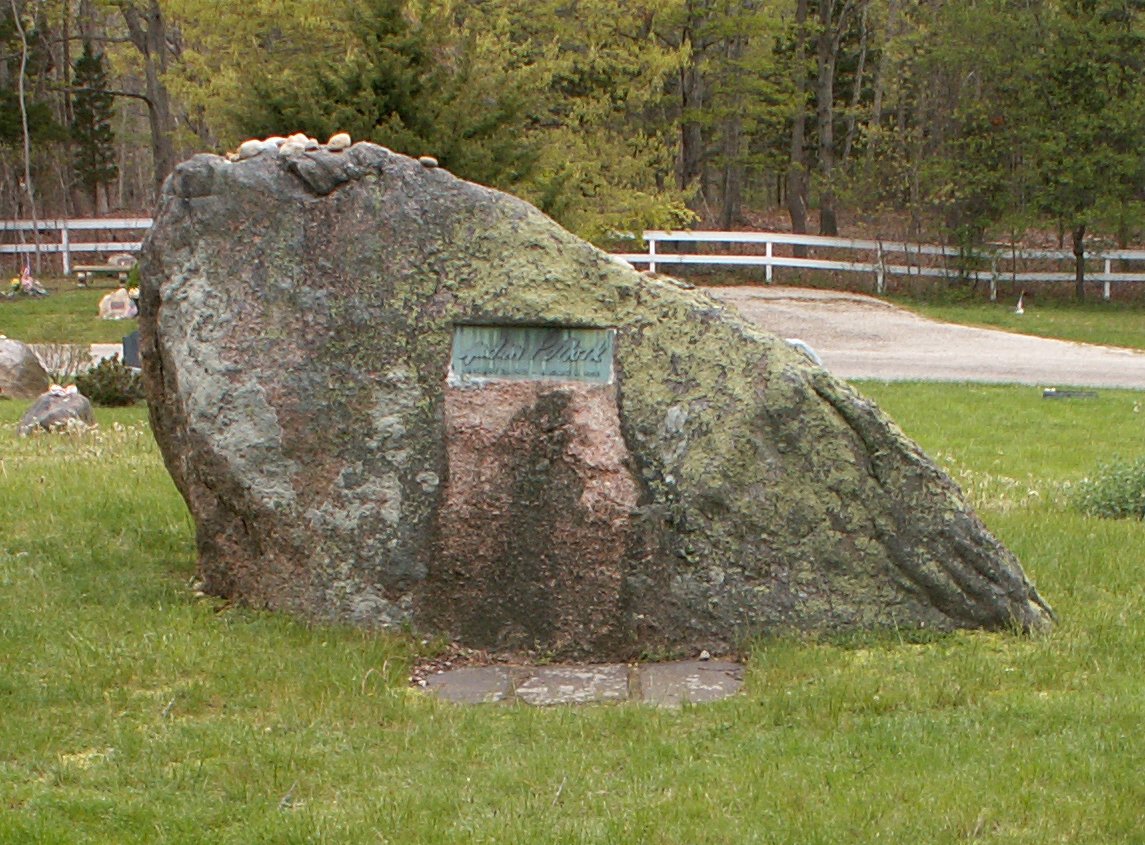
In August 1956 Pollock died at the age of 44 in an automobile accident near his home in Springs, New York. His work remains widely exhibited and continues to provoke discussion about creativity, process and the role of the artist in the twentieth century. For further context, readers can consult museum catalogues, exhibition essays and authoritative monographs that trace both technical aspects of his practice and changing interpretations of his contribution to modern art.
- Nickname often reported as "Jack the Dripper" in reference to his drip technique.
- Associated with the New York School and postwar American art movements.
- Subject of important documentary film work and later cinematic dramatizations.
- Work is held by major museums and continues to be studied for its technical and historical significance.
Questions and answers
Q: Who was Paul Jackson Pollock?
A: Paul Jackson Pollock was an American painter who became famous for painting in the abstract expressionist style.
Q: What was Pollock's most famous technique?
A: Pollock's most famous technique was dripping and splashing paint on a large canvas, which is often referred to as action painting.
Q: What was Pollock's nickname?
A: Pollock's nickname was Jack the Dripper.
Q: Who was Lee Krasner?
A: Lee Krasner was Pollock's wife and an artist, who helped him with his work.
Q: What were some of Pollock's personal problems?
A: Pollock had serious drinking problems and was bitter.
Q: Where can one find Pollock's paintings?
A: Pollock's paintings are in museums all over the world, and his work is rated very high.
Q: What are some movies that have been made about Pollock?
A: A short documentary directed by Hans Namuth in 1951 and the 2000 movie "Pollock" made by and starring actor Ed Harris are some of the movies made about Pollock.
Related articles
Author
AlegsaOnline.com Jackson Pollock Leandro Alegsa
URL: https://en.alegsaonline.com/art/48983
Sources
- painting.about.com : "What paint did Pollock use?"
- time.com : "The Wild Ones"