
Jackson County, Missouri
Jackson County is a populous county in western Missouri, containing much of Kansas City and the city of Independence. Established in 1826 and named for Andrew Jackson, it has important historical and cultural sites.
Overview
Jackson County is a county administrative unit in the U.S. state of Missouri (state reference), located in the western portion of the state and forming a large part of the Kansas City metropolitan area. At the time of the 2010 census the county's population was recorded as 674,158, making it the second-most populous county in Missouri after St. Louis County. The county combines dense urban neighborhoods with suburban and rural districts.
Image gallery
9 Images


County seats and government
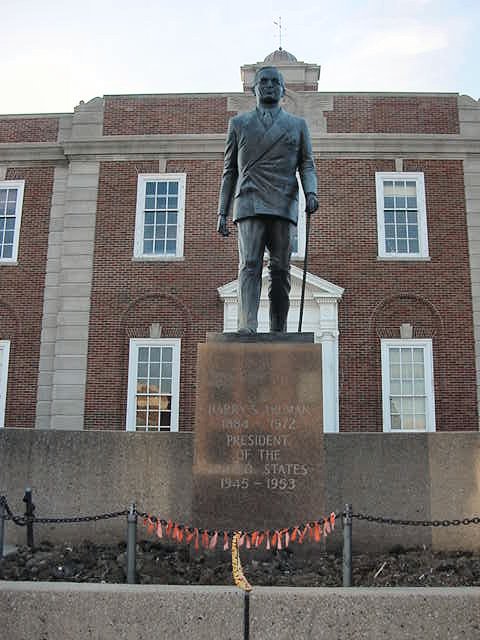
Jackson County has two official county seats: Independence and Kansas City. This dual-seat arrangement reflects historical development: Independence was the early civic center and a departure point for 19th-century trails, while Kansas City's growth in the late 19th and 20th centuries shifted much commercial and population weight to the west. County government provides standard local services—courts, public safety, records, public health and infrastructure—under elected officials and administrative departments.
History
Jackson County was established on December 15, 1826. It was named for Andrew Jackson, who was elected President of the United States in 1828; the name reflects his popularity among many settlers of the period. The county's early importance springs from its position along the Missouri River and from Independence's role as a jumping-off point for the Santa Fe, Oregon and California Trails, routes widely used during westward expansion.
Economy, culture and transportation
Economically, Jackson County benefits from a mix of sectors: urban commerce, manufacturing and services concentrated in Kansas City; government, retail and cultural institutions in Independence and surrounding suburbs; and agricultural activity in outlying areas. The county is a transportation hub for the region, with river, rail and highway connections that have shaped its growth. Cultural contributions include the jazz and barbecue traditions associated with Kansas City and several museums and historic sites in Independence.
Notable places and distinctions
- Independence — historic downtown, the Truman Presidential Library and museums linked to 19th-century trails.
- Kansas City — the county's largest city, known for music, cuisine and professional sports.
- Fort Osage and other early frontier sites that document interactions between settlers and Native American nations.
- Important transportation corridors and civic institutions that serve the wider metropolitan region.
Further notes
Jackson County's dual seats, urban-rural mix and historical role in westward migration make it a focal point for Missouri's history and modern economy. For historical context on the county's namesake see Andrew Jackson, and for contemporary civic and demographic details consult local government and census resources.
Related articles
Author
AlegsaOnline.com Jackson County, Missouri Leandro Alegsa
URL: https://en.alegsaonline.com/art/48964
Sources
- quickfacts.census.gov : "State & County QuickFacts"
- naco.org : "Find a County"