
Izu Province: history, geography, and cultural significance
Izu Province was an historical Japanese province on Honshū that included the Izu Peninsula and islands. It played roles in coastal defense, hot-spring tourism, and administration before becoming part of modern Shizuoka Prefecture.
Izu Province was a traditional province of Japan located on the eastern side of what is now Shizuoka Prefecture. The territory lay on the main island of Honshū and included the Izu Peninsula together with several offshore islands. The province is also commonly known by its alternate name Zushū.
Image gallery
3 Images

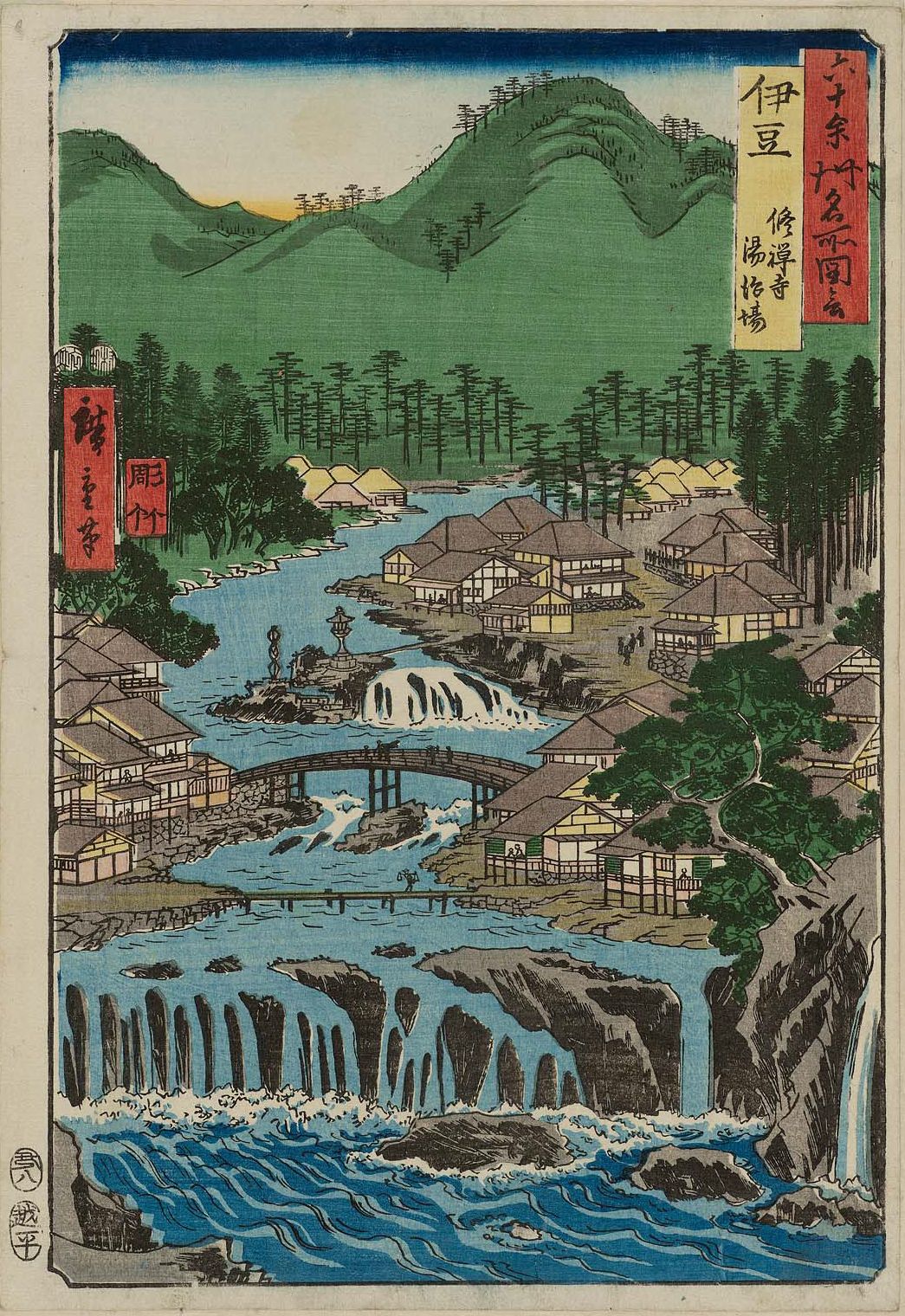
Geography and natural features
Izu's landscape combines a rugged volcanic peninsula, coastal plains and island chains. Volcanic activity created the region's mountains and many of its famous hot springs. Coastal fishing, maritime routes and fertile valleys have shaped local livelihoods.
- Peninsular terrain and cliffs facing the Pacific Ocean.
- Warm mineral springs and thermally active areas popular for bathing.
- Several inhabited islands lying to the south and east of the peninsula.
The province bordered neighboring territories; historically it shared boundaries with adjacent provinces and was connected by sea lanes. In period sources its borders are discussed in relation to nearby regions and neighboring provinces, notably Sagami and Suruga.
Historical development
Izu emerged as a distinct administrative unit under Japan’s ritsuryō system and continued through medieval and early modern times. During the Edo period the area was important for coastal defense and as a source of marine products. Control alternated between local lords, shogunate-appointed administrators and direct shogunal oversight at different times.
In the Meiji era the old provincial system was replaced by prefectures; Izu’s lands were incorporated into the modern administrative framework that formed Shizuoka Prefecture and adjacent jurisdictions.
Culture, economy and modern legacy
Izu has long been celebrated for its hot springs, seaside scenery and fishing villages, attractions that continue to draw visitors. Many towns preserve historical sites, traditional inns and coastal industries. The province’s islands are noted for their distinctive communities and volcanic geology.
Today the name Izu persists in place names, tourism literature and regional identity, linking contemporary landscapes to their historical provincial past. For general reference see entries on Izu Province and regional guides that treat its geography and heritage in more detail.
Related articles
Author
AlegsaOnline.com Izu Province: history, geography, and cultural significance Leandro Alegsa
URL: https://en.alegsaonline.com/art/48770
Sources
- books.google.com : "Izu"
- books.google.com : "Tōkaidō"
- books.google.com : "Shimoda"
- books.google.com : "Provinces and prefectures"
- eos.kokugakuin.ac.jp : "Nationwide List of Ichinomiya," p. 2