
Ionian Sea
A part of the Mediterranean between southern Italy, Greece and Albania, the Ionian Sea is known for its deep basins, seismic activity, Greek islands, rich marine life and important ferry and shipping routes.
Overview
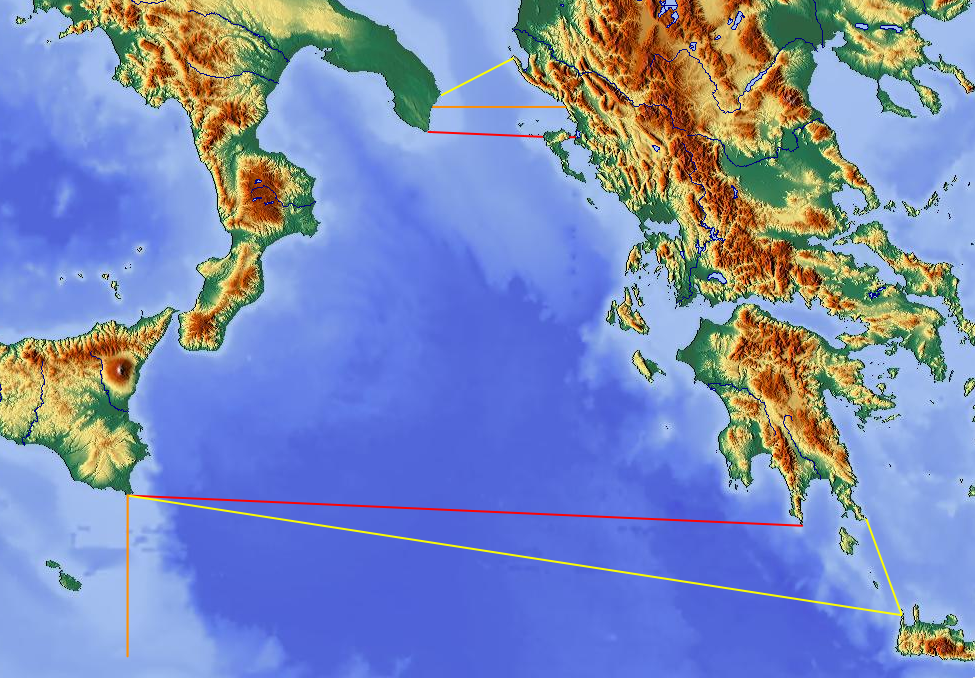
The Ionian Sea is a marginal sea of the Mediterranean Sea, located south of the Adriatic Sea. It lies between the southern Italian peninsula and the western coasts of Greece, with a section of coastline belonging to southern Italy and parts of southwestern Albania. The sea has served as an important corridor for navigation, trade and cultural exchange since ancient times and remains a busy area for commercial shipping, ferries and recreational boating.
Image gallery
8 Images





Geography and bathymetry
The Ionian basin contains deep waters and several channels that connect with adjacent parts of the Mediterranean. It includes one of the deepest basins in the Mediterranean and contains the Calypso Deep, the sea's deepest depression. The eastern margin is indented by a chain of islands commonly called the Ionian Islands, most of which belong to Greece.
Islands
The island groups along the eastern side are collectively known as the Ionian Islands. Principal islands include Corfu, Zakynthos (Zante), Kefalonia, Ithaca and Lefkada. Corfu is one of the largest and historically significant islands in the archipelago. Smaller islets and sheltered bays have long supported local fishing, maritime trade and tourism.
Geology and seismicity
The Ionian region lies near the convergent margin between the African and Eurasian plates and is affected by the Hellenic arc system. Earthquakes, uplift and submarine faulting have shaped coastlines and the seabed; the area is therefore among the more seismically active parts of the Mediterranean and has a history of strong earthquakes and related coastal hazards.
Oceanography and ecology
Water circulation in the Ionian Sea is influenced by exchanges with the Adriatic to the north and by broader Mediterranean circulation patterns. The sea supports typical Mediterranean habitats such as seagrass meadows (notably Posidonia), diverse fish communities, sea turtles and seasonal visits by cetaceans. These ecosystems underpin fisheries and attract nature-based tourism, including diving and wildlife watching.
Human use and transport
Major ferry routes and regular passenger services cross the Ionian Sea, linking Greek ports with Italian harbours and facilitating passenger travel, freight and tourism. Notable connections include ferry services between Patras and Italian ports and routes from Piraeus to the islands and western destinations. Coastal towns and island communities rely on maritime transport for supplies, commerce and visitors.
Conservation and research
Conservation efforts in the Ionian Sea address fisheries management, habitat protection and pollution control. Scientific research covers marine biology, oceanography, geology and seismology to improve understanding of natural hazards and to support sustainable use of marine resources. Nautical charts and up-to-date advisories from national maritime agencies are recommended for navigation and planning.
Further reading
- Regional overviews and maritime administration guidance are maintained by neighbouring states and international organisations.
- Academic and conservation institutions publish studies on the sea's ecology, geology and human uses.
Related articles
Author
AlegsaOnline.com Ionian Sea Leandro Alegsa
URL: https://en.alegsaonline.com/art/47985