
Ion Mincu University of Architecture and Urbanism
Romania's primary public university for architecture and urban planning, founded in 1952 in Bucharest and named after the architect Ion Mincu; offers education, research and professional training.
The Ion Mincu University of Architecture and Urbanism is Romania's principal higher education institution devoted to the design of buildings and cities. It traces its identity to the postwar reorganization of architectural education and bears the name of Ion Mincu, a noted Romanian architect and proponent of a national style. The university is located in the capital and can be identified at 44°26′11″N 26°06′00″E.
Image gallery
4 Images


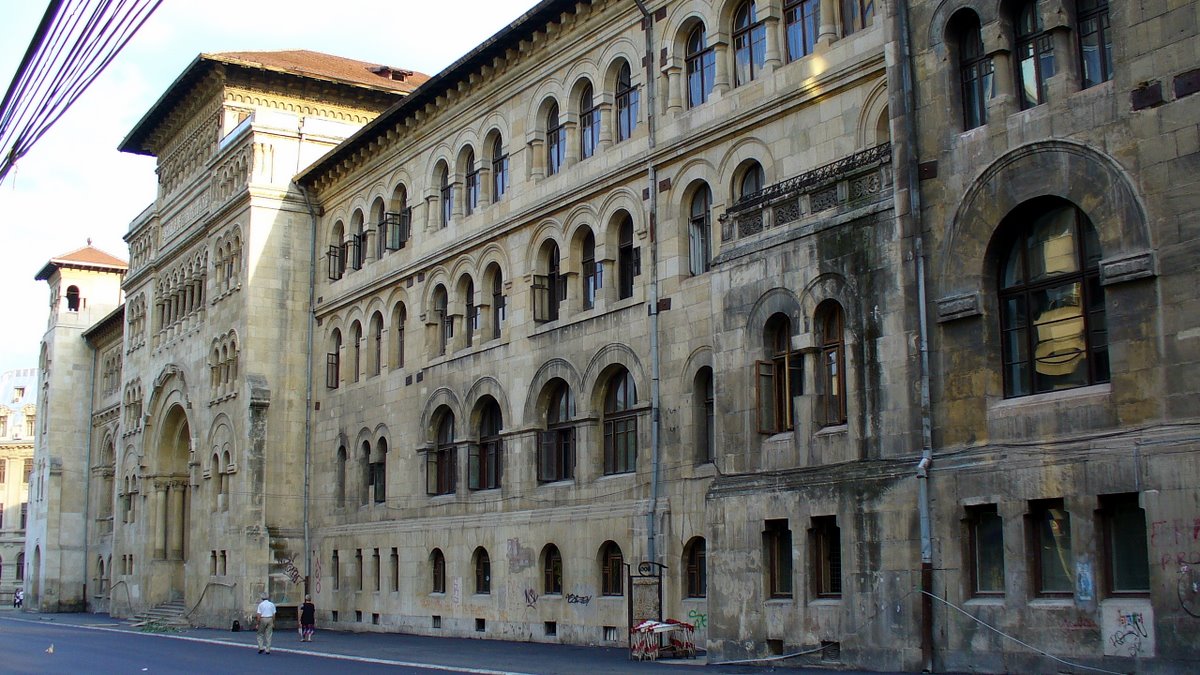
Mission and academic profile
The university serves as the central university institution for architecture and urban planning in Romania. Its programs span initial professional degrees, advanced master's studies and doctoral research, and they combine studio practice, theory, technical training and urban design. Students study subjects such as building design, urban morphology, conservation of historic fabric and environmental considerations while engaging with practical projects and workshops.
Organisation and facilities
The university comprises departments and studios that support teaching, laboratory research and design-build activities. Facilities typically include design studios, lecture halls, model and materials workshops, and archives for historical documentation. Its urban location in Bucharest places it close to a wide range of built environments, from historic neighborhoods to contemporary developments, which are used as living laboratories for student projects.
History and development
Established in 1952 during a period of institutional consolidation, the university built on earlier traditions of architectural instruction in Romania and gradually expanded its curricula and research capacity. Over time it adopted contemporary teaching methods while maintaining an emphasis on the country's architectural heritage and the cultural context of design.
Role and influence
Graduates of the university play a visible role in shaping Romania's built environment: in private practice, public planning, heritage conservation and academia. The school also engages in collaborative research, international exchanges and professional continuing education, contributing to debates about sustainable urban development, building technologies and preservation of historic sites.
Notable features
- Name and legacy: Honors Ion Mincu and connects teaching to national architectural traditions.
- Studio-based learning: Emphasizes hand-drawing, model-making and digital design in parallel.
- Urban research: Focus on city-scale problems and interdisciplinary cooperation.
Prospective students and researchers typically consult the university directly for programme details, admissions rules and current collaborations. The institution continues to be central to Romania's architectural education and to the professional formation of architects and urban planners.
Related articles
Author
AlegsaOnline.com Ion Mincu University of Architecture and Urbanism Leandro Alegsa
URL: https://en.alegsaonline.com/art/47975