
ʻIolani Palace: Hawaii's Royal Residence and National Historic Landmark
ʻIolani Palace in downtown Honolulu was the royal residence of Hawaii's last monarchs. Now a restored museum and National Historic Landmark, it preserves the kingdom's history, architecture, and royal collections.
Overview
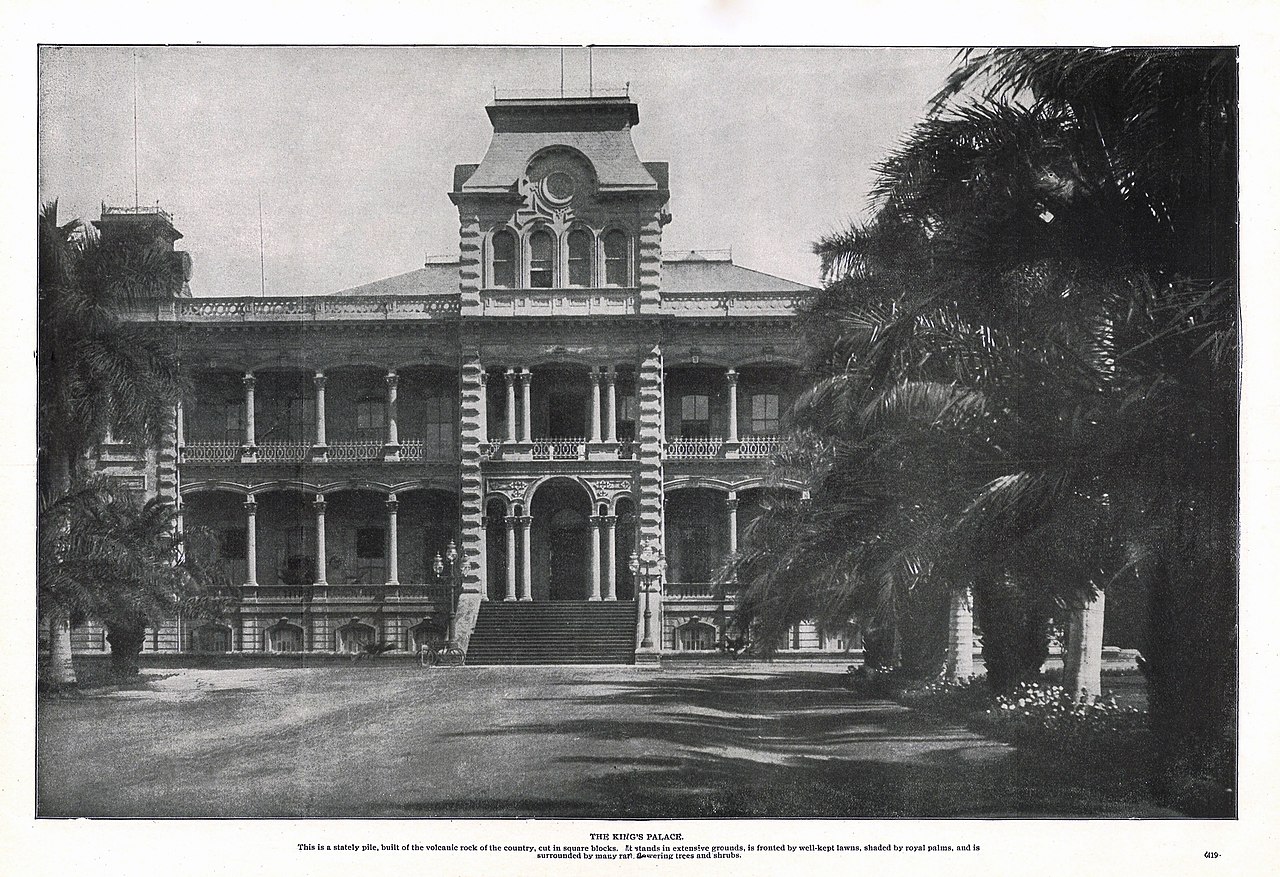
Located in downtown Honolulu on the island of Hawaii, ʻIolani Palace served as the official royal residence for the Hawaiian monarchy in the late 19th century. It is notable as the only building in the United States that was built and used as an official home by a reigning monarch. The palace became the center of royal government under two sovereigns before the end of the kingdom era.
Image gallery
10 Images




Architecture and principal rooms
The present palace, completed in the late 19th century, is often described as being in an "American Florentine" style that blends Italianate design motifs with local materials and American construction techniques. The two‑story masonry building features a distinctive central tower and elaborate interior finishes. Prominent interior spaces include the throne room, the state dining room, private royal apartments and offices where affairs of state were conducted.
- Throne Room: ceremonial events and audiences
- State Dining Room: formal banquets and receptions
- Private Chambers: living quarters and family rooms
Historical significance
ʻIolani Palace was the working seat of monarchy for King Kalākaua and his successor, Queen Liliʻuokalani. It witnessed major political events in Hawaiian history, including tensions that culminated in the overthrow of the Hawaiian Kingdom in 1893. After the monarchy ended, the building was reused by successive governments and adapted to new functions.
Later uses, preservation and public museum
Following the end of the monarchy the palace served as a government building and the territorial and state capital offices until a modern capitol replaced it in the mid‑20th century. Recognized for its historic value, the structure was designated a National Historic Landmark in 1962 and later underwent careful restoration. The restored palace opened to visitors as a museum in 1978 to display royal artifacts, furniture and archival materials that document the Hawaiian Kingdom.
Visiting and legacy
Today ʻIolani Palace operates as a museum with guided tours and curated exhibits that explain the monarchy's government, culture and everyday life. The site preserves material culture—furniture, clothing, regalia and official documents—and interprets the palace's complex legacy in Hawaiian and American history. Researchers and visitors can learn about the kingdom era, the palace's architecture, and the events that led to Hawaii's political transformation.
For more information on location, visiting hours, exhibitions and educational programs see official resources and local heritage organizations via history pages, outreach partners at cultural sites, or tourism and archival links such as official residence records. Additional context about the monarchy's role is often found in biographies and collections referenced at historic registers and museum portals like palace museum pages. Scholarly and public materials also discuss the palace in relation to broader legal and diplomatic developments (local guides, regional histories). For primary documents and interpretive resources consult repositories and annotated collections (archival sources, monarch biographies).
Questions and answers
Q: What is Iolani Palace?
A: Iolani Palace is a building in downtown Honolulu, Hawaii, United States which was used as a palace for the kings and queens of Hawaii.
Q: How many monarchs governed from Iolani Palace?
A: Two monarchs governed from Iolani Palace - King Kalākaua and Queen Liliūokalani.
Q: What is unique about Iolani Palace?
A: Iolani Palace is the only palace in the United States that was used as an official residence by a reigning monarch.
Q: What happened to Iolani Palace after Hawaii stopped having kings and queens in 1893?
A: After Hawaii stopped having kings and queens in 1893, the building was used as the state's capitol building until 1969.
Q: When did Iolani Palace become a National Historic Landmark?
A: Iolani Palace became a National Historic Landmark in 1962.
Q: When was Iolani Palace restored and opened to the public as a museum?
A: Iolani Palace was restored and opened to the public as a museum in 1978.
Q: What is the significance of Iolani Palace in Hawaii's history?
A: Iolani Palace is significant in Hawaii's history as the former residence of its monarchs and as a symbol of Hawaiian independence and sovereignty.
Related articles
Author
AlegsaOnline.com ʻIolani Palace: Hawaii's Royal Residence and National Historic Landmark Leandro Alegsa
URL: https://en.alegsaonline.com/art/47965
Sources
- nrhp.focus.nps.gov : "National Register Information System"
- tps.cr.nps.gov : "Iolani Palace"
- pdfhost.focus.nps.gov : "Iolani palace nomination form"
- iolanipalace.org : "Restoration of the Palace"
- archives.starbulletin.com : "The only royal residence in the U.S. celebrates the lost Hawaiian monarchy"