
Jama Masjid (Masjid-i Jahān-Numā) — principal mosque of Old Delhi
A concise overview of Jama Masjid — the large 17th-century mosque in Old Delhi (India), its architecture, history, religious role, and significance as a cultural and tourist landmark.
Jama Masjid, also called Masjid-i Jahān-Numā (a Persian name often rendered as the "World-reflecting Mosque"), is the main congregational mosque of Old Delhi. The name and historic inscriptions reflect Persianate court culture and its links to Mughal patronage; see the original Persian term Masjid-i Jahān-Numā in historic sources. Located in the heart of Old Delhi, the mosque serves both as a religious center and as a prominent landmark in India.
Image gallery
10 Images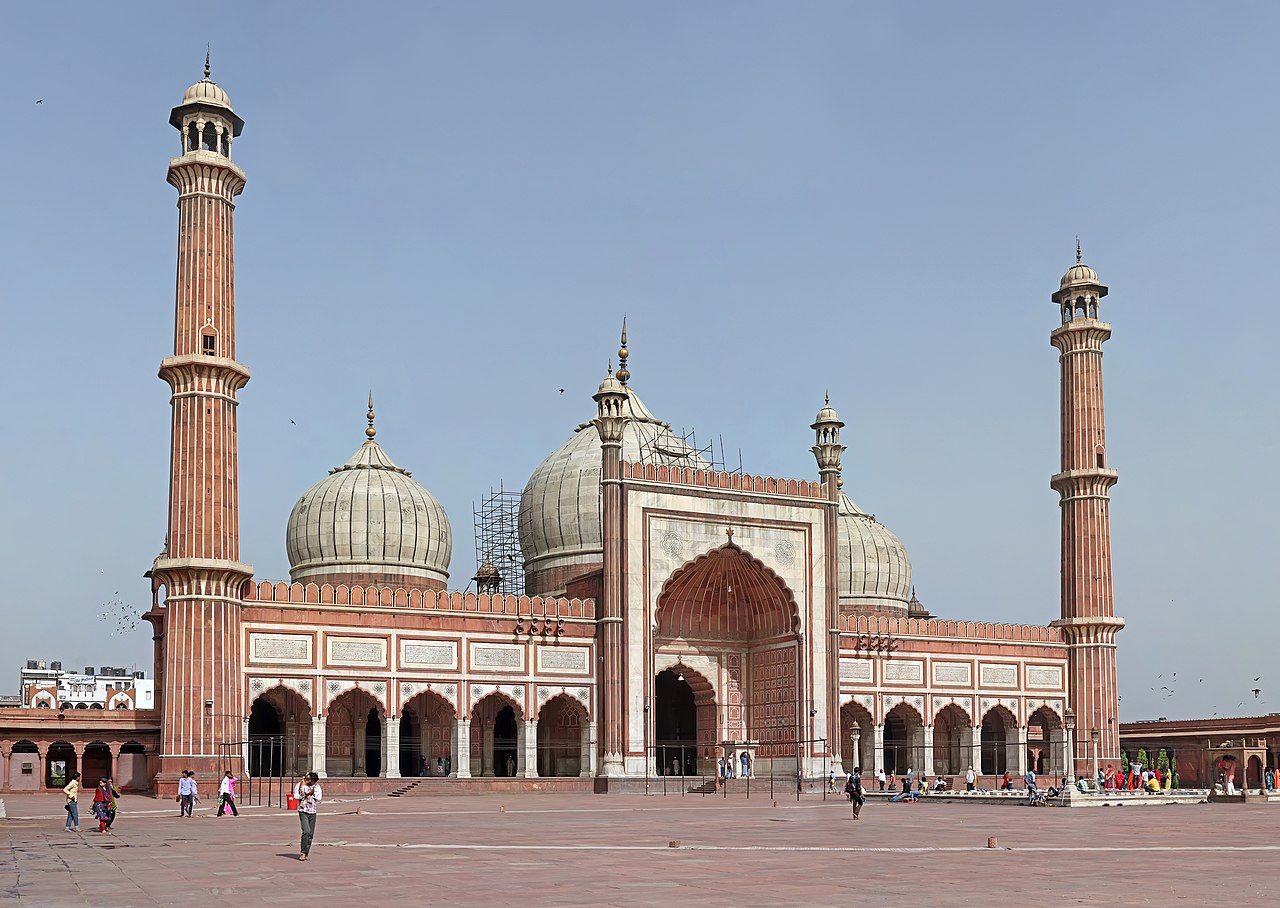




Overview and function
Built under imperial patronage in the mid-17th century, the Jama Masjid was intended as the principal mosque of the city's Muslim community. It has long been a focal point for Friday prayers (Jumu'ah), major Islamic festivals such as Eid, and large communal gatherings. The mosque's role combines liturgical function, community identity, and civic symbolism in the historic urban fabric.
Architecture and layout
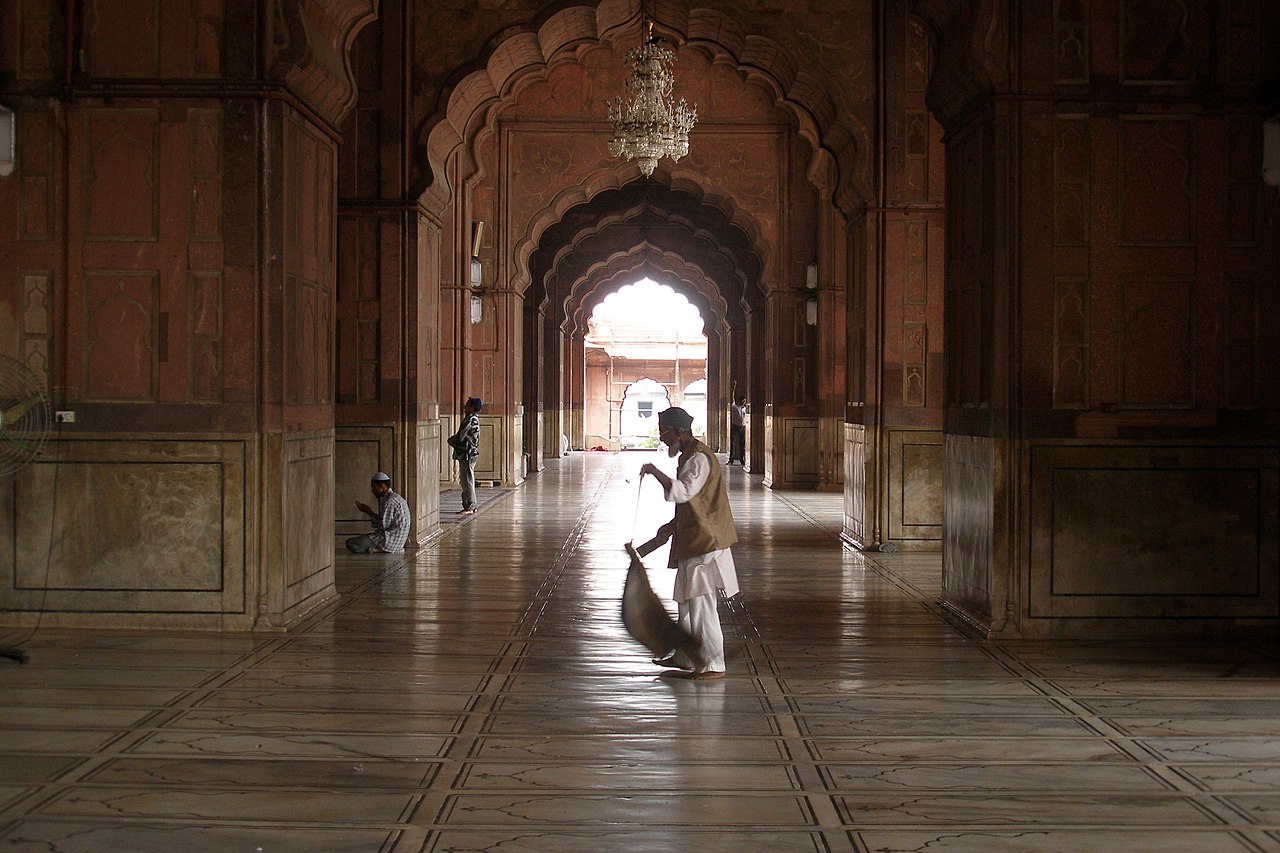
The mosque complex is notable for its large open courtyard, a high prayer platform and a covered prayer hall framed by arched facades and domes. Constructed primarily of red sandstone with marble detailing, the design includes two tall minarets flanking the main façade, three large white marble-topped domes, and a spacious courtyard able to accommodate very large congregations. Interior features typical of congregational mosques include the mihrab (prayer niche indicating qibla), the minbar (pulpit), and areas for ablution.
History and context
Jama Masjid was established when the Mughal court made the surrounding district the imperial capital, and its siting relates closely to the nearby citadel and market streets. Over time the mosque has witnessed political changes, conservation efforts, and continuous religious use. Its architecture reflects the Mughal synthesis of Persian, Central Asian, and local Indian building traditions.
Visiting, use, and significance
- Religious use: daily prayers, Jumu'ah services, and festival observances.
- Cultural role: an emblem of the city's historic identity and a frequent subject of art and photography.
- Visitor practicalities: non-Muslim visitors are generally welcomed outside prayer times but should observe modest dress and local guidelines.
- Conservation: like many large historic monuments it undergoes periodic maintenance to address wear and the effects of urban surroundings.
As the principal mosque of the old city, Jama Masjid remains one of the most recognized religious sites in the region. For background on its official or scholarly descriptions see references to its status as the primary congregational mosque (principal mosque) and consult broader regional histories via linked resources for additional context India.
Visitors seeking more practical or historical details can consult museum displays, guidebooks, and local information centers; online resources also provide photographs, schedules, and conservation updates at various portals Old Delhi resources and cultural archives Persian-language studies.
Related articles
Author
AlegsaOnline.com Jama Masjid (Masjid-i Jahān-Numā) — principal mosque of Old Delhi Leandro Alegsa
URL: https://en.alegsaonline.com/art/49152