
Airbus A310 MRTT
A military multirole tanker and transport converted from the Airbus A310 platform, used for air-to-air refuelling, personnel and cargo transport, and aeromedical evacuation roles.
Overview
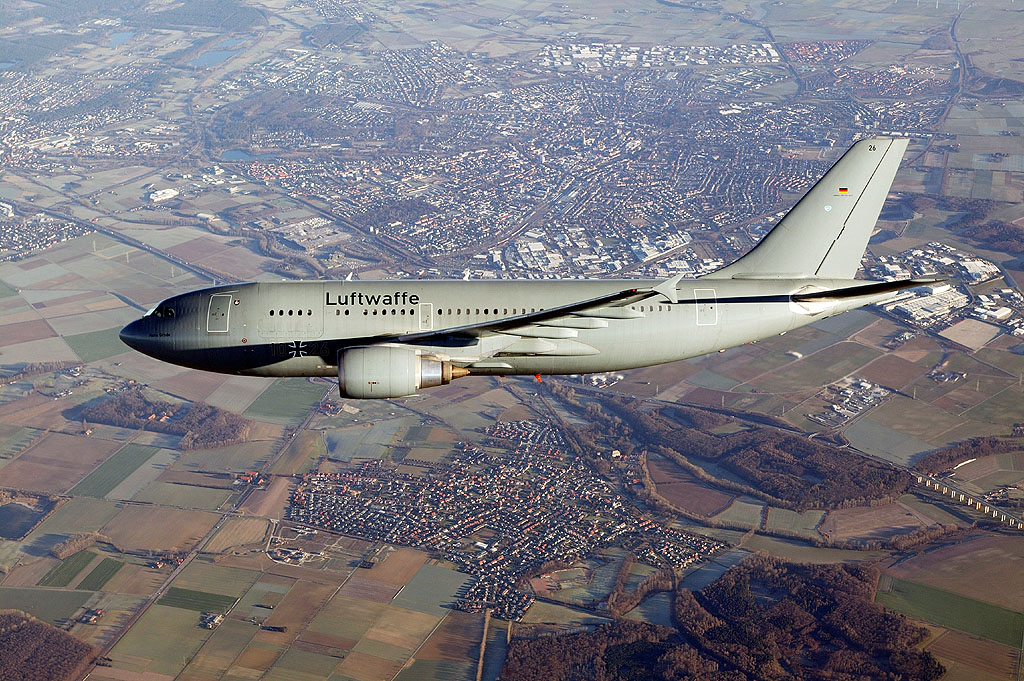
The Airbus A310 MRTT is a military multirole tanker-transport built by adapting the civilian Airbus A310 airframe for military use. MRTT stands for Multirole Tanker Transport, a class of aircraft that combines air-to-air refuelling capability with strategic transport functions. The conversion retains the basic two‑engine A310 layout while adding fuel tanks, refuelling hardware and mission equipment to support a range of military and humanitarian missions.
Image gallery
10 Images


Design and refuelling systems
Conversions typically include strengthened structures, additional fuel tanks or bladder installations, and plumbing to feed refuelling pods or hoses. The A310 MRTT is generally fitted to operate hose‑and‑drogue systems—compatible with many NATO receivers—and may carry underwing refuelling pods or a centerline hose arrangement depending on operator requirements. Flight deck and communications avionics are modified to meet military standards and mission management systems are installed to coordinate refuelling and transport tasks.
Roles and capabilities
The platform is used in multiple roles that exploit both its tanker and transport characteristics. Typical capabilities include:
- Air-to-air refuelling to extend the range and endurance of combat and support aircraft.
- Strategic airlift of passengers, cargo, and palletized equipment.
- Aeromedical evacuation and on-board treatment for wounded personnel.
- Logistics support and long-range repositioning missions.
Conversion and development
Rather than designing a tanker from scratch, converting an existing commercial A310 airliner offered a cost‑effective route to fielding tanker capability. Conversions are carried out by aerospace integrators and maintenance facilities working to military specifications. The approach allowed operators with modest refuelling demands to acquire a capable MRTT without the expense and scale of newer, larger designs.
Operational use and distinctions
The A310 MRTT sits between smaller tactical tankers and the larger A330 MRTT family in terms of size and fuel capacity. Its main advantages are lower acquisition and operating costs, a smaller footprint for airfields and compatibility with established refuelling techniques. Limitations include reduced fuel and cargo volume compared with newer, heavier MRTT types, which affects the number of receivers it can refuel in a single sortie and the payload it can carry on long missions.
Legacy and relevance
As air forces modernize, the A310 MRTT has been regarded as a transitional or niche solution for nations that require reliable refuelling and transport capability without committing to larger platforms. Its conversions illustrate how adaptable commercial airframes can be repurposed for military support roles, extending service life and delivering flexible logistics and force‑projection options.
Tags
Related articles
Author
AlegsaOnline.com Airbus A310 MRTT Leandro Alegsa
URL: https://en.alegsaonline.com/art/1666