
Interchange (road)
A road interchange is a grade-separated junction that links two or more roads to allow traffic to flow without direct crossing. Designs balance capacity, land use, safety, and construction cost.
Overview
An interchange is a grade-separated junction where two or more roads meet so traffic can change routes without crossing opposing flows. Interchanges are the standard solution when a high-capacity route, such as a freeway, meets another freeway or a major arterial road. They use bridges, ramps and separated carriageways to permit continuous movement and reduce conflict points. For an introduction to related network connections see other roads.
Image gallery
10 Images

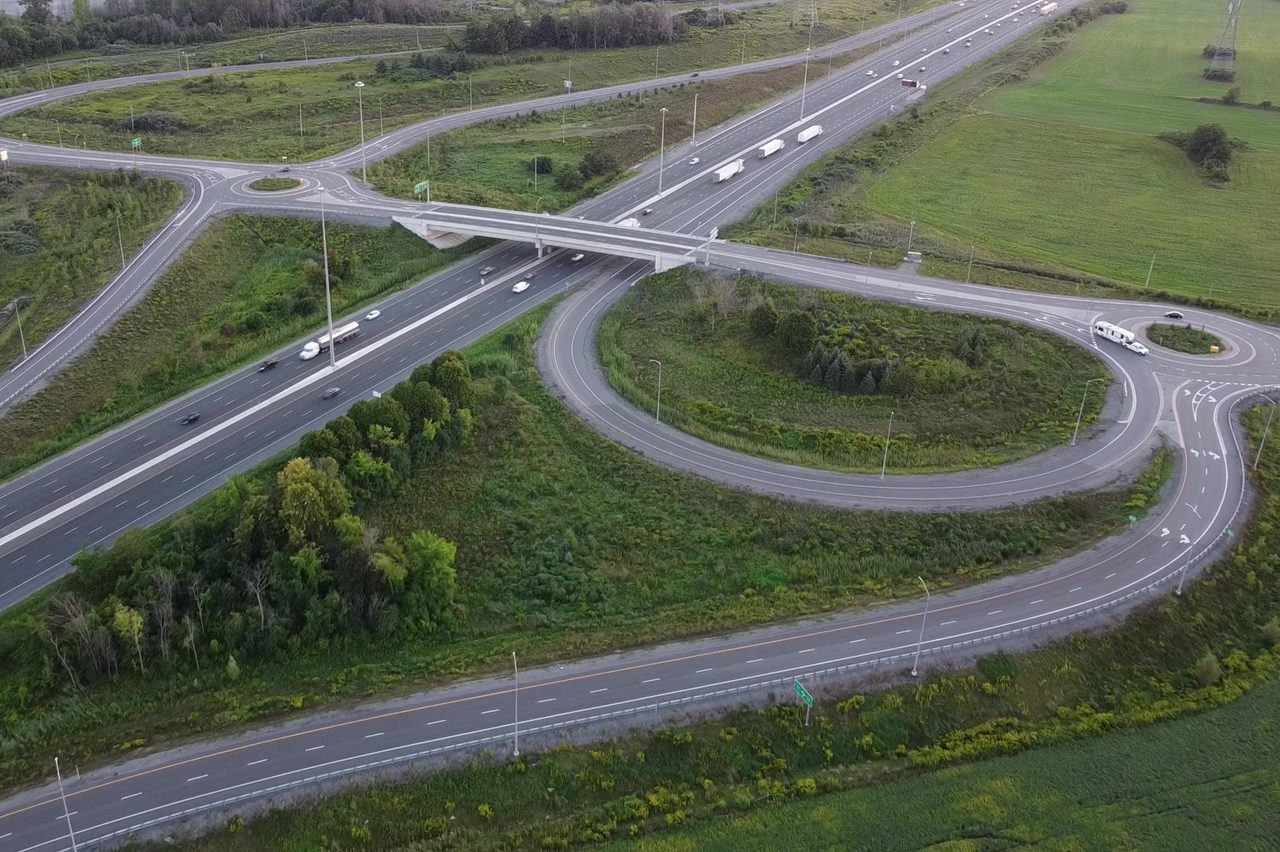
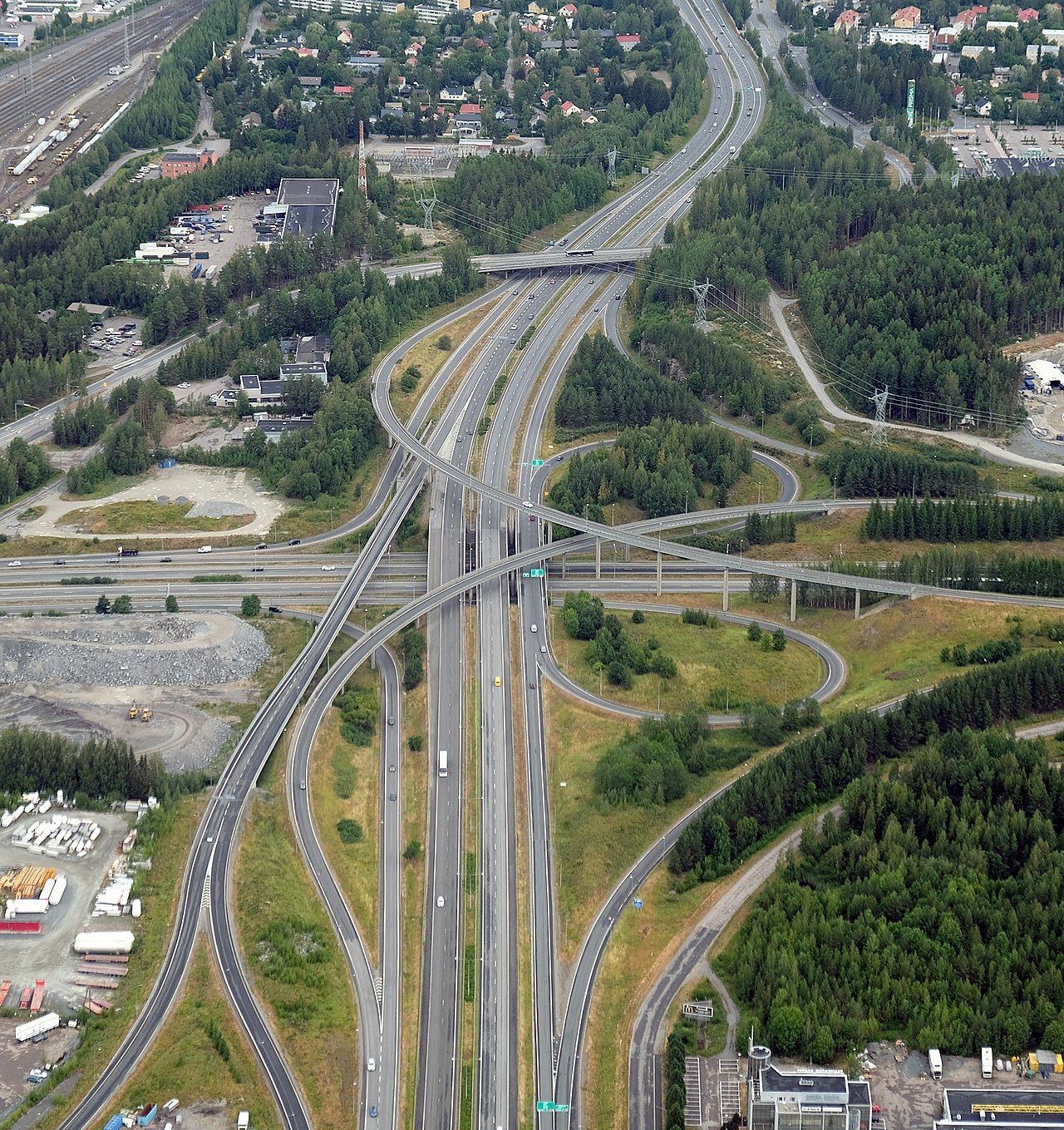


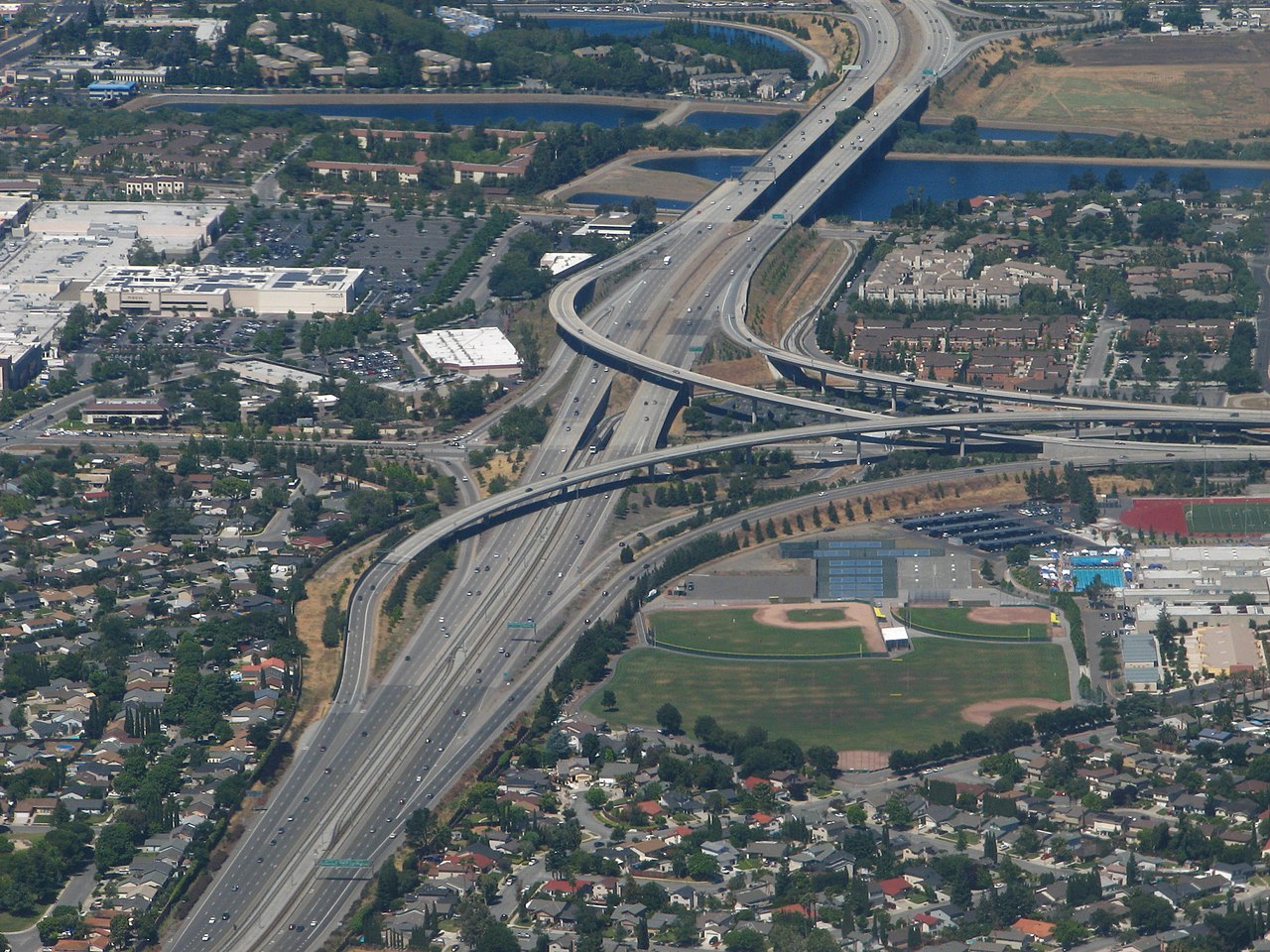
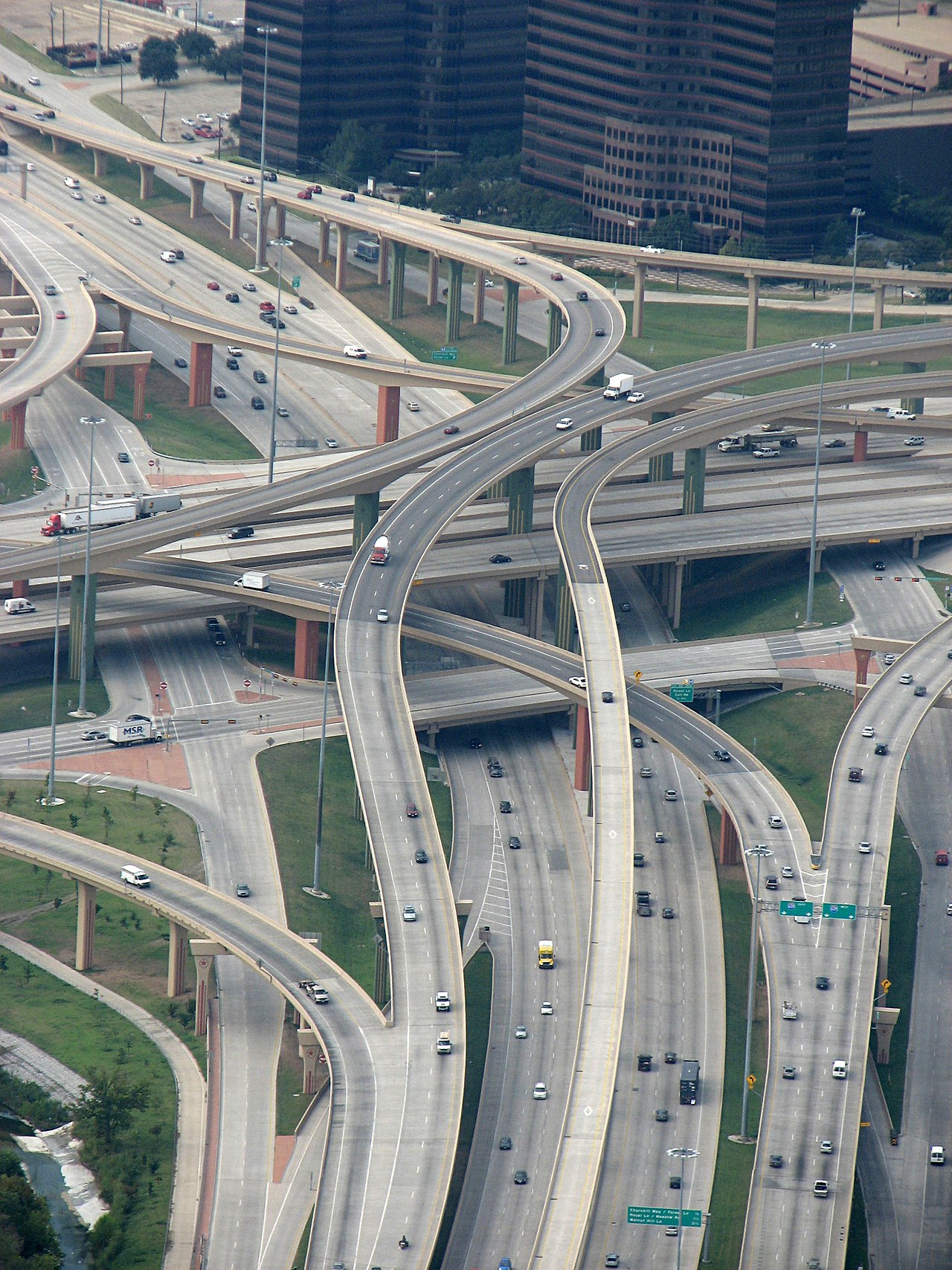
Components and basic features
Most interchanges consist of ramps (slip roads), bridges or overpasses, and the mainlines of the intersecting roads. Ramps may be directional, looped or curved and are designed to accommodate appropriate speeds. Interchanges are described as two-level, three-level, or multi-level depending on the number of separated grades. Collector–distributor lanes, merge areas and signage are used to organize movements and reduce weaving where traffic shifts between routes.
Common interchange types
- Diamond interchange – compact and common where a freeway crosses a minor road; ramps meet the crossroad near signalized intersections.
- Cloverleaf – uses loop ramps for all left-turn movements; allows free-flow but can create weaving sections.
- Stack (turbo) interchange – multi-level directional ramps that separate movements, used where traffic volumes are high.
- Trumpet – connects a freeway to a terminating road or another freeway with a T-shaped configuration.
- Single-point urban interchange (SPUI) and diverging diamond – modern variants that reduce conflict points and fit tight urban corridors.
Performance, safety and trade-offs
Interchange design balances capacity, safety, land take and cost. Free-flowing, directional interchanges reduce delays but require larger footprints and more structure. Simpler designs save land and money but may introduce signals and congestion. Weaving areas—where entering and exiting traffic cross paths—are a key safety and capacity concern that engineers try to minimize through ramp geometry or auxiliary lanes.
History and development
Grade-separated interchanges emerged with the rise of high-speed motor traffic in the early 20th century and were refined as highway networks expanded. Many classic layouts became widespread through mid-century highway building; later decades brought innovations focused on safety, space efficiency and accommodation of pedestrians, cyclists and transit. Newer forms like diverging diamond interchanges were introduced to simplify complex turning movements and improve safety at constrained sites.
Design considerations and modern practice
Designers must consider traffic volumes by movement, topography, nearby land uses, multimodal needs and future growth. Urban interchanges increasingly include dedicated transit lanes, bicycle and pedestrian crossings, and noise or environmental mitigation. Proper signage, lighting and maintenance are essential to preserve safety and functionality. While no single layout suits every location, the variety of interchange types allows engineers to match geometry to traffic patterns and site constraints.
Related articles
Author
AlegsaOnline.com Interchange (road) Leandro Alegsa
URL: https://en.alegsaonline.com/art/47569