
Road intersection
A road intersection is where two or more roads meet. This article explains types, control devices (signals and signs), design considerations, safety for pedestrians and cyclists, and distinctions from interchanges.
An intersection is a place where two or more roads meet or cross at the same level. Intersections are fundamental elements of street networks: they link routes, distribute traffic, and provide places for turning, crossing and entering or leaving adjacent property. Because many movements converge at a single location, intersections are focal points for delays, collisions and urban design decisions.
Image gallery
8 Images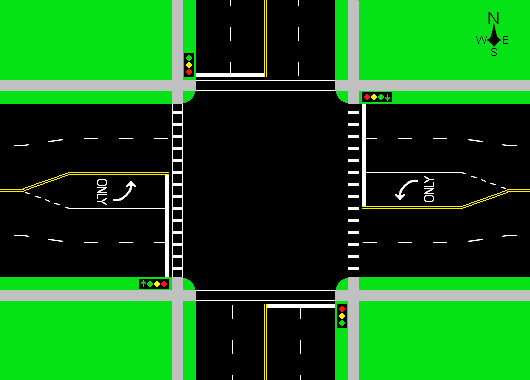


Types and elements
Intersections are commonly described by their shape and control. Typical forms include:
- T-junctions where one road meets another without crossing.
- Crossroads (four-way intersections) where two roads cross.
- Roundabouts and traffic circles that channel traffic in a loop.
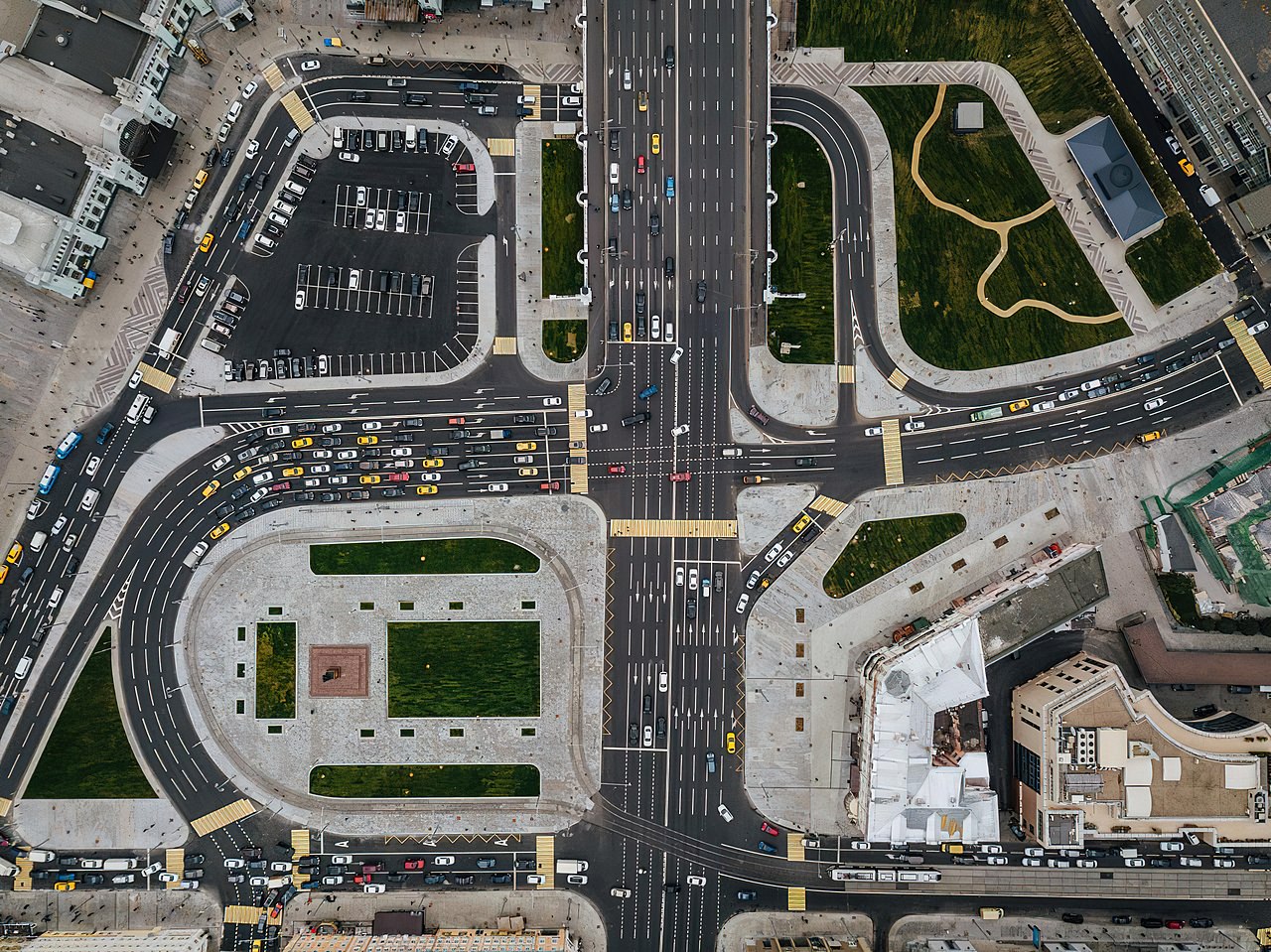
- Complex multi-leg or skewed intersections found in older or constrained street layouts.
Common physical elements include travel lanes, turn lanes, medians, curb ramps, crosswalks, and markings that guide vehicle, bicycle and pedestrian movements.
Control and safety
Movement at intersections is managed by regulatory devices and geometry. Right-of-way rules are enforced with signs such as stop signs, yield signs or by signal control with traffic lights. Roundabouts often use yield control to reduce conflict points and speed. Effective control reduces crashes and improves flow but must be matched to traffic volumes, sightlines and vulnerable users.
Design, planning and distinctions
Design considers capacity, safety, multimodal access and land use. Modern practice includes features for pedestrians and cyclists: marked crossings, refuge islands, longer crossing times at signals and bicycle-specific lanes or signals. Intersections can be at-grade (same level) or replaced by grade-separated interchanges where bridges or ramps eliminate direct crossing movements for higher-speed roads.
Historically, intersections evolved from simple rural crossroads to engineered urban junctions as traffic volumes and vehicle speeds increased. Planners weigh trade-offs between throughput, safety and place-making: a large high-speed intersection may move more vehicles but can be hostile to walking and nearby businesses.
Understanding intersection types, controls and design options helps communities reduce collisions, improve accessibility and shape how streets function. For further reading on roadway design and control devices see general resources on road planning and traffic control, including material about signal operation and sign use such as stop sign guidance.
Related articles
Author
AlegsaOnline.com Road intersection Leandro Alegsa
URL: https://en.alegsaonline.com/art/47749