
Indian gooseberry (Amla)
Indian gooseberry, commonly called amla (Phyllanthus emblica), is a deciduous tree valued for its vitamin-C rich fruit used in cuisine, traditional medicine, and commercial products across South and Southeast Asia.
Overview
The Indian gooseberry, commonly known as amla, is the fruit of a deciduous tree with the scientific name Phyllanthus emblica (synonym Emblica officinalis). Native to the Indian subcontinent and parts of tropical Asia, the plant is grown for its edible, sour-tasting fruit that plays a prominent role in local diets and traditional medicine. For botanical details see the botanical profile.
Image gallery
10 Images


Characteristics
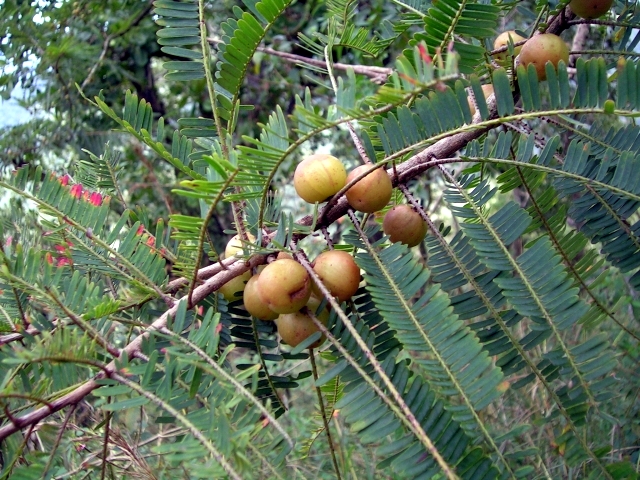
The tree is small to medium in stature with thin branches and a light canopy. Leaves are small and appear along branchlets in a manner that gives a feathery appearance. The round, pale-green to yellow fruit has a firm, fibrous texture with a combination of sour, bitter and astringent flavors. Inside the fruit are several hard seeds surrounded by fibrous pulp that yields a distinctive tart juice.
History and cultivation
Amla has been cultivated for centuries in South Asia and figures prominently in Ayurvedic texts as a rejuvenating ingredient. It adapts to a range of soils and climates within the tropics and subtropics, and is harvested when fruits mature in the cooler season. Traditional propagation is by seed, though grafting and nursery-grown saplings are used in commercial orchards.
Uses and importance
The fruit is consumed fresh, preserved as pickles or sweetened preserves, dried into powders, and pressed into juices and extracts. It is a common ingredient in culinary condiments and health preparations such as tonics and herbal formulations. Products derived from amla include:
- Food items: chutneys, pickles, candied preserves (murabba) and drinks.
- Powders and extracts used as dietary supplements.
- Cosmetic and hair-care preparations based on traditional remedies.
For a summary of common fruit preparations and their uses, consult resources on fruit processing and food culture: fruit uses and products.
Notable distinctions
Although called a gooseberry in English, the Indian gooseberry is not closely related to the European gooseberry (Ribes) and belongs to a different botanical family. Its high content of vitamin C and phenolic compounds gives it a long-standing reputation as an antioxidant-rich food, which has led to widespread culinary and commercial use beyond its native range.
Related articles
Author
AlegsaOnline.com Indian gooseberry (Amla) Leandro Alegsa
URL: https://en.alegsaonline.com/art/47102
Sources
- ars-grin.gov : "Phyllanthus emblica information from NPGS/GRIN"