
Impetigo (school sores): a common contagious skin infection
Impetigo is a contagious superficial bacterial skin infection, most often affecting young children. This article covers causes, signs, treatment, prevention and when to seek care.
Overview
Impetigo is a superficial, highly contagious bacterial infection of the skin that most often affects preschool-aged children but can occur at any age. Because it spreads readily in group settings and by close contact, it is commonly called "school sores." People who participate in close-contact sports such as rugby or American football are at increased risk, and it can also affect adults, particularly when skin is broken or hygiene is poor.
Image gallery
5 Images


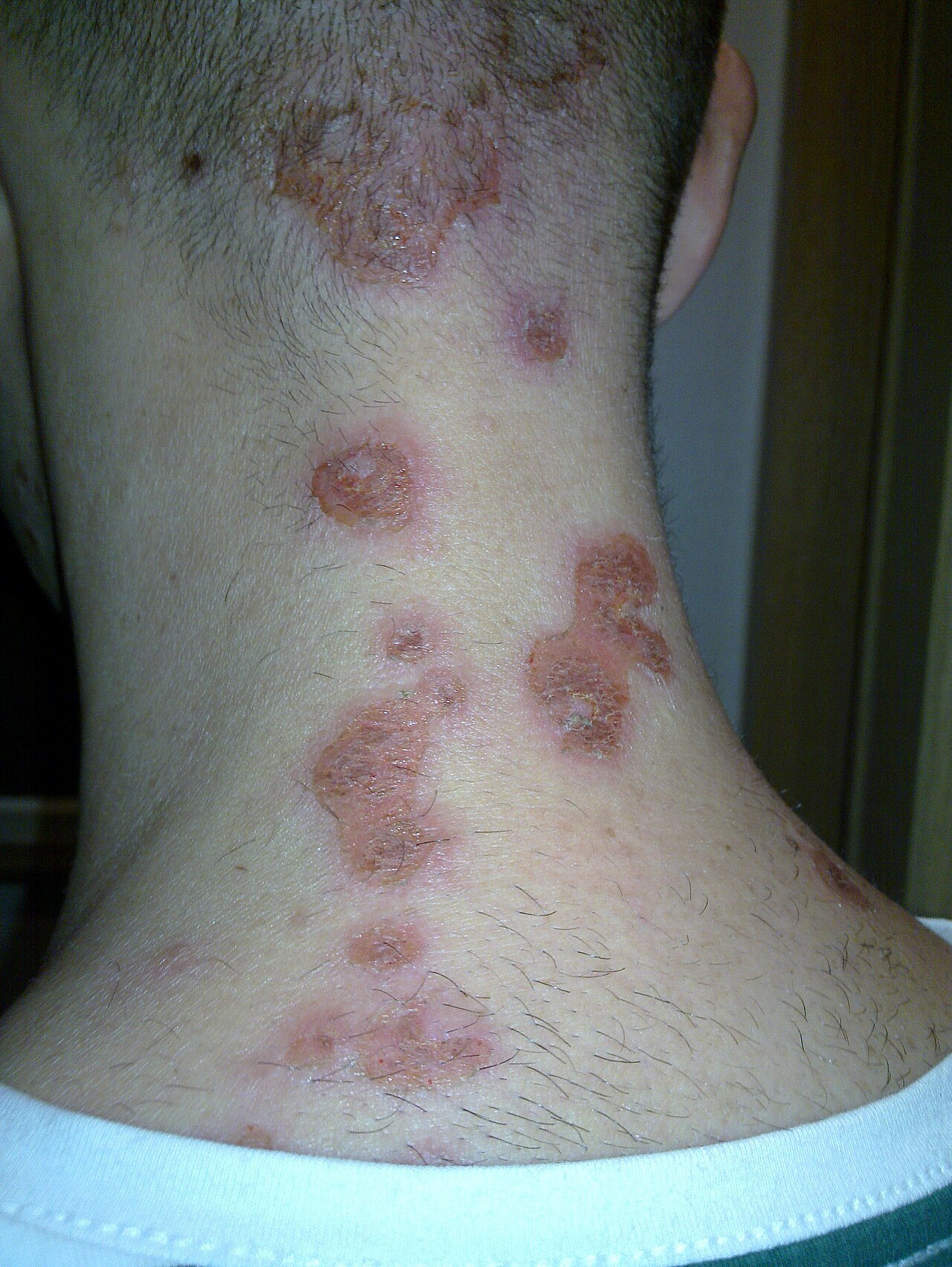
Causes and types
Impetigo is typically caused by Staphylococcus aureus or Streptococcus pyogenes. There are two main clinical forms: non-bullous (the most common) and bullous. Non-bullous impetigo begins as red sores or pustules that rupture to form characteristic honey-colored crusts. Bullous impetigo produces larger fluid-filled blisters that may break and leave raw-appearing skin.
Signs, diagnosis and complications
- Typical signs: small red spots or blisters, pus-filled lesions, yellowish crusts, itchiness.
- Spread: direct skin-to-skin contact or via contaminated towels, clothing and toys; often follows insect bites, eczema or minor cuts.
- Diagnosis is usually clinical; swabs may be taken if infection is severe, recurrent or not responding to treatment.
- Complications are uncommon but can include cellulitis or, rarely after streptococcal infection, post-infectious glomerulonephritis; scarring is unusual when treated promptly.
Treatment and prevention
Management depends on extent and severity. Small, localized lesions are often treated with topical antibiotics (for example, mupirocin) and good wound care. More widespread or systemic infections may require oral antibiotics. Important preventive measures include regular handwashing, keeping lesions covered, avoiding sharing personal items, and excluding children from group settings until they are no longer contagious as advised by a clinician.
History, epidemiology and notable facts
Impetigo has been recognized for centuries as a common childhood infection. It remains more prevalent in warm, humid climates and in communities with crowded living conditions. The colloquial name "school sores" reflects its association with young children and school settings. Prompt recognition and basic hygiene measures reduce transmission. If sores are persistent, rapidly spreading, or accompanied by fever, medical evaluation is recommended.
When to seek care: see a healthcare provider if lesions are widespread, painful, worsening despite treatment, or if there are signs of systemic illness.
Related articles
Author
AlegsaOnline.com Impetigo (school sores): a common contagious skin infection Leandro Alegsa
URL: https://en.alegsaonline.com/art/46898
Sources
- nhs.uk : NHS Impetigo
- betterhealth.vic.gov.au : Impetigo — school sores — Better Health Channel