
Image processing: principles, methods, history and applications
Overview of image processing: core concepts, main steps, technical approaches, historical development and common applications across science, industry and everyday imaging.
Overview
Image processing is the discipline that deals with acquiring, transforming, analyzing and producing images using mathematical, statistical and computational techniques. In broad engineering contexts it sits between electrical engineering and computer science, and covers any workflow where the input is a still image, a sequence of images or video frames such as photographs and movie frames (frames of video). The output may be a modified image, extracted measurements, or higher-level descriptions such as detected objects or classifications. A common shorthand definition is the automated analysis and manipulation of images by computer (analyzing and manipulating images with a computer).
Image gallery
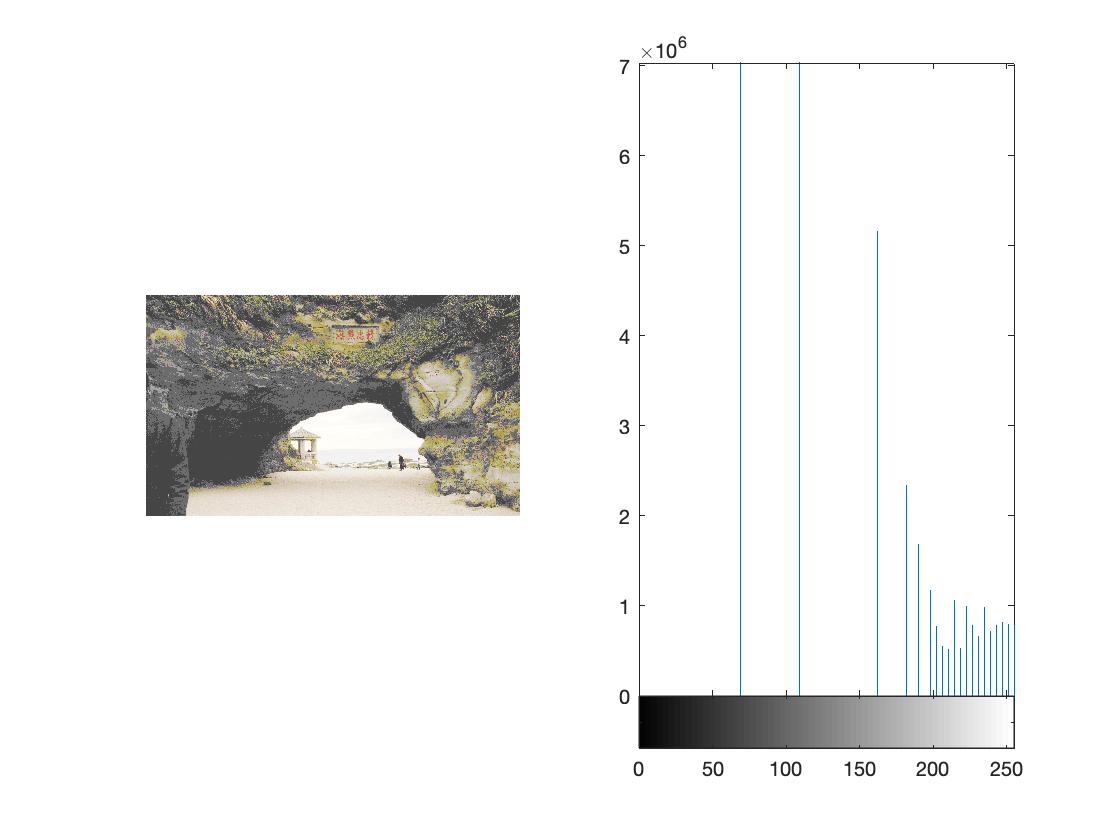
10 Images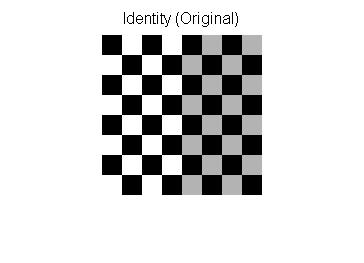




Key steps and components
Typical image processing workflows can be divided into distinct stages. First is acquisition: images are captured with sensors or created synthetically — for example with a camera, a scanner, or by computer-generated imagery. Second comes preprocessing and enhancement to improve visual quality or to normalize data for later analysis. Third is analysis and feature extraction, where algorithms find structures, shapes, textures or motion. Finally, results are rendered or reported — either as altered images or as summaries and measurements that feed other systems.
Common operations and approaches
- Filtering and enhancement: smoothing, sharpening, contrast adjustment, denoising.
- Restoration and reconstruction: correcting blur, removing artifacts, combining multiple views.
- Segmentation and edge detection: partitioning an image into meaningful regions or boundaries.
- Feature extraction and classification: identifying points, lines, textures, or objects for recognition or measurement.
- Compression and coding: reducing size for storage or transmission while preserving important content.
These tasks are approached using spatial-domain operations on pixels, frequency-domain methods (such as transforms), statistical modeling, and increasingly machine learning and deep neural networks that learn to map raw image data to desired outputs.
History and development
Image processing evolved from early analog techniques in photography and television to modern digital methods. As electronic sensors and digital computers became practical in the latter half of the 20th century, algorithms moved from handcrafted filters to more sophisticated model-based methods. In recent decades, advances in sensor technology, computing power and large datasets have driven rapid progress, with deep learning changing how many tasks — from detection to segmentation — are solved.
Applications and examples
Image processing underpins a wide range of applications. In medicine it supports modalities such as X‑ray, CT and MRI for diagnosis and surgical planning. In earth observation and meteorology, processed satellite images reveal weather patterns and land use. Industrial vision systems inspect products on assembly lines. Consumer photography relies on processing for color correction and noise reduction. Other uses include surveillance, remote sensing, robotics, and scientific imaging where measurements are drawn from visual data (data extracted from images).
Distinctions and contemporary trends
Although the field is now dominated by digital techniques, analog and optical processing approaches still exist in specialized settings. Image processing overlaps with related fields such as computer vision (which emphasizes interpretation and higher-level understanding) and signal processing (which provides foundational tools). Current trends emphasize end-to-end learning, real-time processing on edge devices, and combining multiple sensor modalities to produce richer, more reliable outputs.
For further reading on foundational topics and practical tools, consult resources in electrical engineering and computer science that cover sensor technology, algorithms, and application domains. The field continues to evolve as sensors, hardware architectures and learning methods advance, expanding the range of problems that image processing can help solve.
Related articles
Author
AlegsaOnline.com Image processing: principles, methods, history and applications Leandro Alegsa
URL: https://en.alegsaonline.com/art/46799