
Induction heating: principles, equipment, applications and key facts
Induction heating uses time-varying magnetic fields to induce currents and heat inside conductive materials. This article outlines how it works, equipment, history, common uses and practical considerations.
Induction heating is a method of warming an object by generating currents directly inside it, rather than applying heat from an external source. It requires an electrically conductive material as the workpiece and an alternating magnetic field that couples energy into that material. The process produces rapid, localised warming without direct contact, which makes it useful for many industrial and domestic tasks.
Image gallery
5 Images

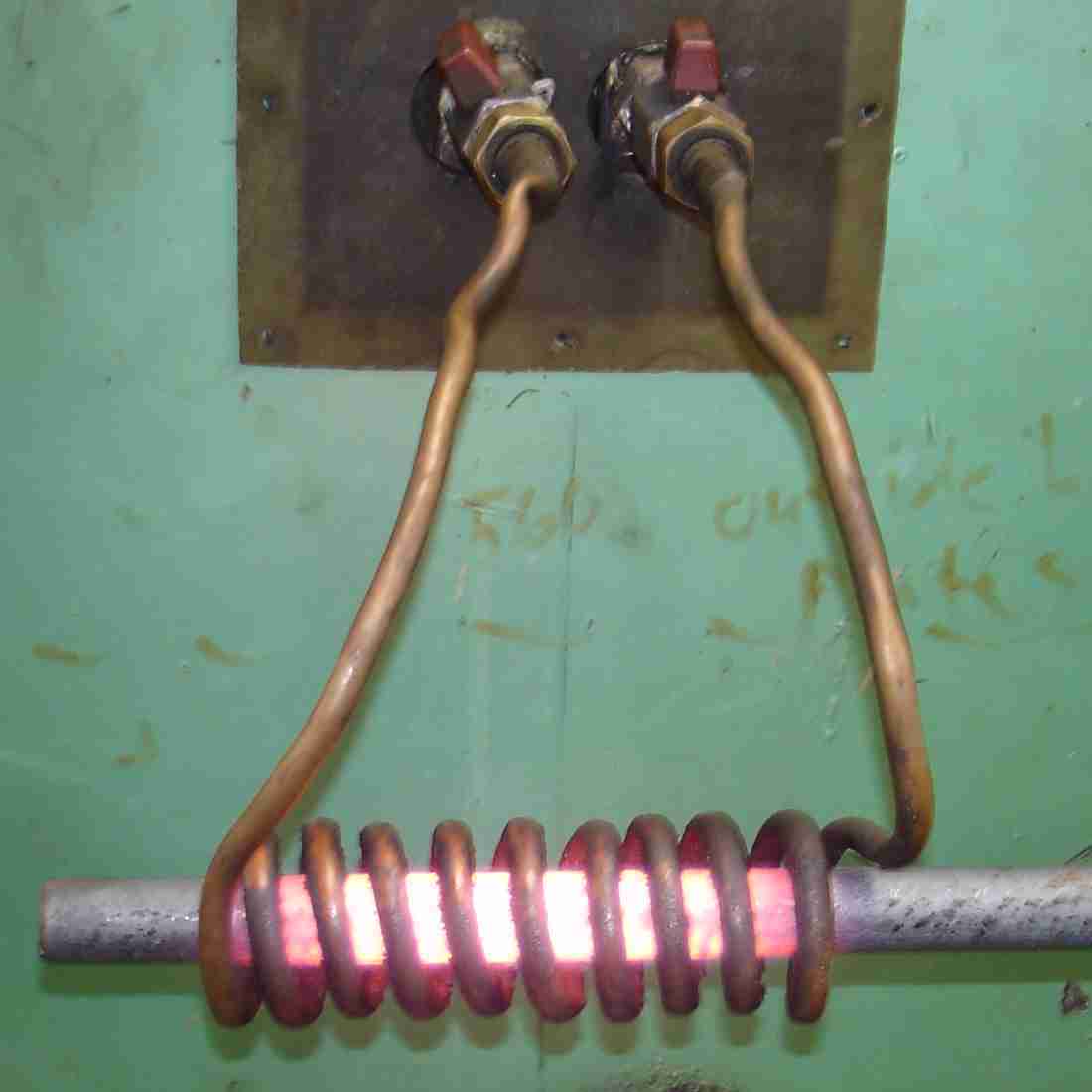


How it works
At the heart of induction heating are electromagnetic induction and the resulting eddy currents. A coil driven by an alternating current creates a changing magnetic field that penetrates the workpiece. Circulating currents form inside the conductor and dissipate electrical energy as thermal energy, producing heat. Frequency and coil geometry determine how deeply the energy penetrates: lower frequencies heat deeper, while higher frequencies concentrate heat near the surface (the skin effect).
Typical components
- Power supply/inverter: converts mains electricity into a controlled alternating output at the desired frequency.
- Induction coil (work coil): shaped to focus magnetic flux on the target area.
- Workpiece: the conductive part that receives energy and warms.
- Cooling and control systems: manage coil temperature and allow repeatable, precise heating cycles.
Applications and examples
Induction heating appears across many fields. In manufacturing it is used for electric resistance spot heating, surface hardening of steel, brazing and soldering, shrink-fitting parts, and melting metals in induction furnaces. In consumer products, induction cooktops heat cookware quickly and efficiently. Other uses include laboratory heating, medical device sterilization (of metal instruments) and localized heat treatment where contactless, controllable heating is desirable.
History and development
The physical principle of electromagnetic induction dates to early 19th‑century experiments; practical induction heating techniques advanced after reliable alternating current sources and high‑frequency generators became available in the late 19th and early 20th centuries. Since then, improvements in power electronics and coil design have expanded efficiency and industrial adoption.
Advantages, limits and safety
Advantages include fast response, precise temperature control, cleanliness (no combustion), and efficient energy transfer to the part. Limitations are that the method only works on conductive or magnetic materials and that high frequencies favour surface heating. Practical considerations include coil design, electromagnetic compatibility, shielding, and safety measures to prevent accidental burns or interference with nearby electronics.
Notable facts: the skin effect concentrates currents near the surface at high frequency; induction allows selective heating of specific zones; and modern systems can be tuned for repeatable, automated production cycles.
For further technical overviews see introductory resources and technical handbooks on induction heating and coil design: learn more about conductive materials, eddy current fundamentals, magnetic field behaviour and heat generation mechanisms.
Questions and answers
Q: What is induction heating?
A: Induction heating is a type of heating method that utilizes eddy current to heat up electrically conductive materials.
Q: How does induction heating work?
A: Induction heating works by generating eddy currents in the electrically conductive material through the use of a changing magnetic field. This causes the material to heat up without actually touching the source of the heat.
Q: What is eddy current?
A: Eddy current is an electric current that is created when a magnetic field changes over time.
Q: Can any material be heated using induction heating?
A: No, only electrically conductive materials can be heated using induction heating.
Q: How does induction heating differ from traditional heating methods?
A: Induction heating differs from traditional heating methods as it utilizes eddy current to heat up the material, without the objects actually touching, and it can transfer heat over short distances.
Q: What are the advantages of induction heating?
A: Some advantages of induction heating include faster heating time, energy efficiency, precise temperature control, and reduced material distortion.
Q: What are some examples of applications of induction heating?
A: Induction heating is used in a variety of industries, such as metalworking, automotive, food processing, and pharmaceuticals. It can be used for purposes such as brazing, annealing, forging, and melting.
Related articles
Author
AlegsaOnline.com Induction heating: principles, equipment, applications and key facts Leandro Alegsa
URL: https://en.alegsaonline.com/art/47219