
Hyundai Veracruz
Mid-size crossover SUV produced by Hyundai from 2006–2015, offering three-row seating, all-wheel drive options and marketed as the company’s largest CUV before being replaced by an extended Santa Fe variant.
Overview
The Hyundai Veracruz was a mid-size crossover utility vehicle introduced by Hyundai in South Korea on October 12, 2006 and launched for sale in early 2007. Positioned above the Santa Fe in the range, the Veracruz was Hyundai’s largest CUV at the time and served as a replacement for the older Terracan SUV. It was advertised as a roomy, family-oriented vehicle with available third-row seating and an emphasis on comfort and passenger space.
Image gallery
4 Images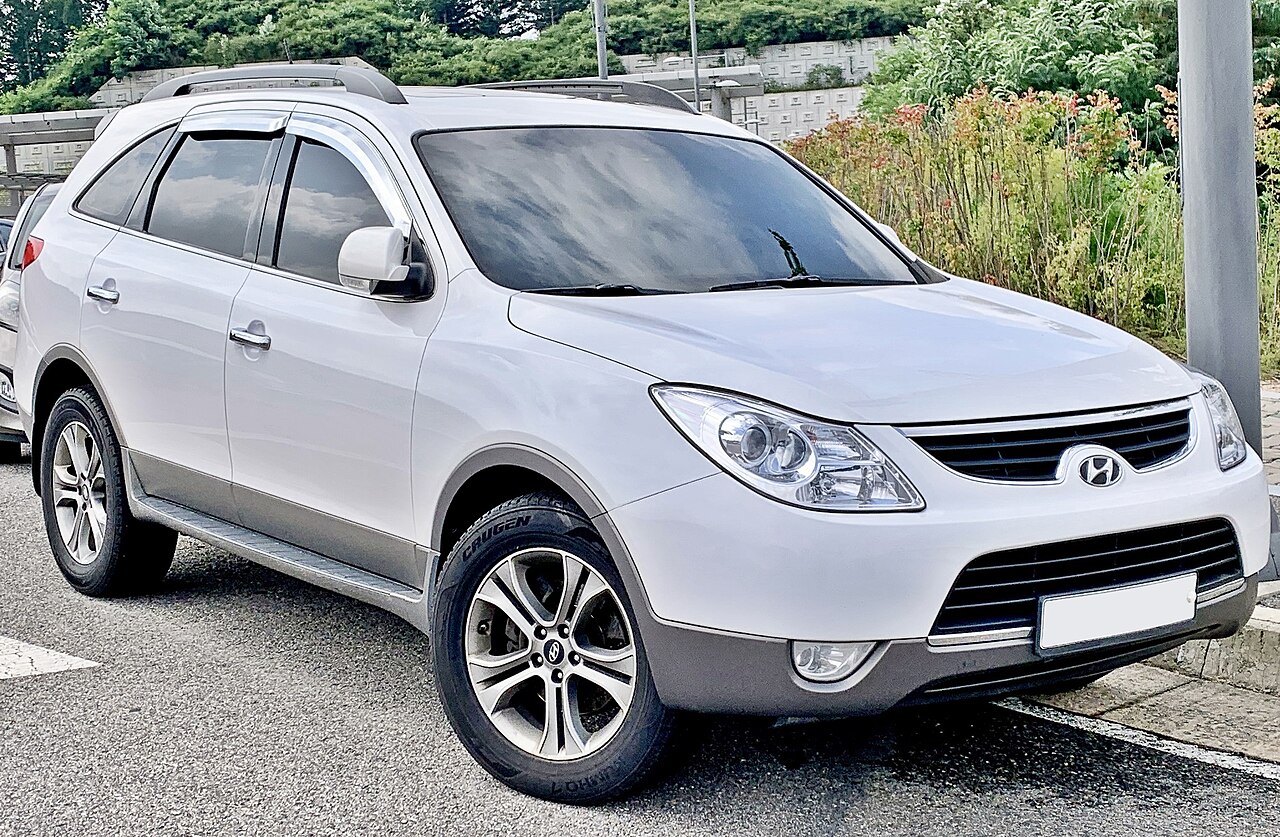


Design and mechanical layout
Underpinning the Veracruz was a unibody platform shared with Hyundai’s larger crossover offerings. Early Veracruz models used the same basic architecture as the Santa Fe (Santa Fe platform), while the refreshed 2011 version was updated on a platform closely related to the Kia Sorento (Kia Sorento). The Veracruz was offered with front-wheel drive and optional all-wheel drive (all-wheel drive systems) and commonly featured V6 powertrains to provide adequate performance for a three-row vehicle.
Features and interior
Hyundai equipped the Veracruz to compete in the mid-size family crossover segment with a focus on comfort and equipment. Typical features included multiple airbags, electronic stability control, anti-lock brakes, and available leather-trimmed seating. Standard and optional tech varied by market and model year but often included navigation, premium audio, heated seats and power-adjustable amenities. The third row was best suited to children or occasional adult use, making the Veracruz a practical choice for larger families who prioritized cargo and passenger flexibility.
Markets, production and corporate context
The Veracruz was sold in multiple markets including South Korea, North America and select export regions. It was marketed by Hyundai as a near-luxury, roomy crossover that bridged the gap between the Santa Fe and larger SUVs. Manufacturing took place in Hyundai facilities, and the model was part of the company’s broader expansion into mainstream and upscale crossover segments during the late 2000s.
End of production and legacy
Hyundai began winding down Veracruz sales internationally around 2013 as product lines were consolidated and a long-wheelbase version of the Santa Fe took on the role of the larger family crossover. The Veracruz nameplate was discontinued completely by 2015. Factors cited by observers included model overlap within Hyundai’s lineup, shifting buyer preference toward two-row crossovers and the company’s strategy to streamline offerings.
Key characteristics and comparisons
- Body type: Mid-size crossover (CUV) with three-row seating.
- Drivetrain: Front-wheel drive standard, optional all-wheel drive (AWD).
- Platform ties: Initially Santa Fe architecture (Santa Fe), later aligned with Kia Sorento underpinnings (Sorento).
- Market role: Larger-family crossover positioned above the Santa Fe.
During its production run the Veracruz was commonly compared to other three-row crossovers of the era, serving buyers who wanted more space than a compact SUV but who preferred the driving manners and efficiency of a unibody crossover over a body-on-frame truck-based SUV.
Related articles
Author
AlegsaOnline.com Hyundai Veracruz Leandro Alegsa
URL: https://en.alegsaonline.com/art/46246
Sources
- autoblog.com : "Detroit Auto Show: 2007 Hyundai Veracruz"
- factory-manuals.com : "Hyundai Terracan 2001-2007 Repair Manual!"
- jdpower.com : "2011 Kia Sorento Preview"
- motortrend.com : "REFRESHING OR REVOLTING: 2013 Hyundai Santa Fe VS. 2012 Hyundai Veracruz"
- commons.wikimedia.org : Hyundai Veracruz