
Hydrus (constellation)
Hydrus is a small southern constellation representing a little water snake. Introduced in the Age of Discovery, it contains a few notable stars such as Beta Hydri and is distinct from the larger Hydra.
Hydrus is a modest constellation in the far southern sky whose name means "the male water snake." It is one of the modern constellations used by astronomers and is best known for a handful of relatively bright stars rather than for prominent deep-sky objects. The constellation is catalogued and recognised on modern star charts; see Hydrus for a reference entry.
Image gallery
3 Images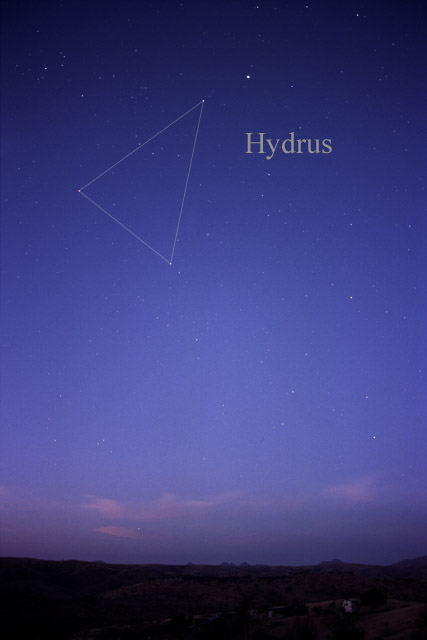

Characteristics
Hydrus occupies a small region of the southern celestial hemisphere and contains only a few stars that are easily seen with the unaided eye from mid- to far-southern latitudes. The brightest member, Beta Hydri, is a nearby subgiant that has attracted attention in stellar studies because of its relative proximity and brightness. Other named stars in the constellation form a simple pattern but are much fainter than the bright stars of major constellations.
History and origin
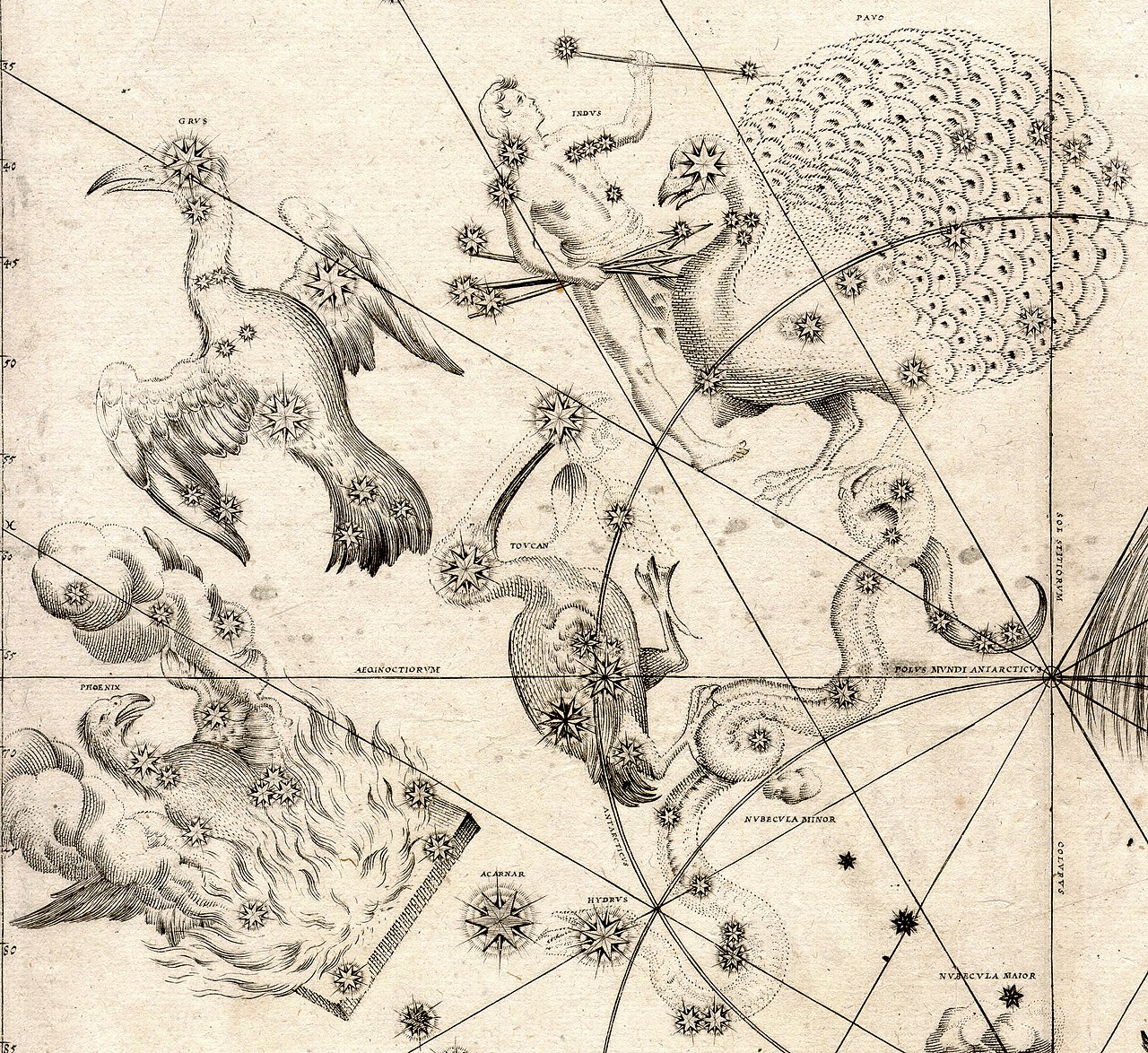
The figure of Hydrus was created during the Age of Discovery by European navigators and astronomers mapping the southern sky. It first appeared on late 16th- and early 17th-century celestial globes and star atlases assembled from observations made by southern-hemisphere voyagers. Hydrus is therefore part of the group often described as the "southern constellations" introduced after Europeans began systematic viewing of the southern skies.
Observation and visibility
Because Hydrus lies well south of the celestial equator, it is best observed from the Southern Hemisphere and is not visible from many northern mid-latitudes. Observers in the far south may see it all year round as a circumpolar pattern, while those at intermediate southern latitudes will find it highest in the sky during the months when southern summer approaches. It presents few bright galaxies or nebulae to casual observers; small telescopes reveal faint star clusters and background galaxies.
Notable features
- Beta Hydri — the constellation's brightest star and a nearby subgiant of interest to astronomers.
- Several fainter Bayer and Flamsteed stars that form the snake-like outline visible on star charts.
- Few prominent deep-sky objects; most targets require binoculars or telescopes to study.
Hydrus is often contrasted with Hydra, a much larger and older constellation carrying the same serpentine theme. Hydrus remains a useful constellation for southern stargazers as a marker of the lesser-known but scientifically interesting stars of the southern sky.
Related articles
Author
AlegsaOnline.com Hydrus (constellation) Leandro Alegsa
URL: https://en.alegsaonline.com/art/46127