
Hurricane Juan (1985)
A brief encyclopedia entry on Hurricane Juan (1985): a relatively weak Atlantic hurricane that nevertheless caused about 24 deaths and roughly $1.5 billion in damage; its name was not retired.
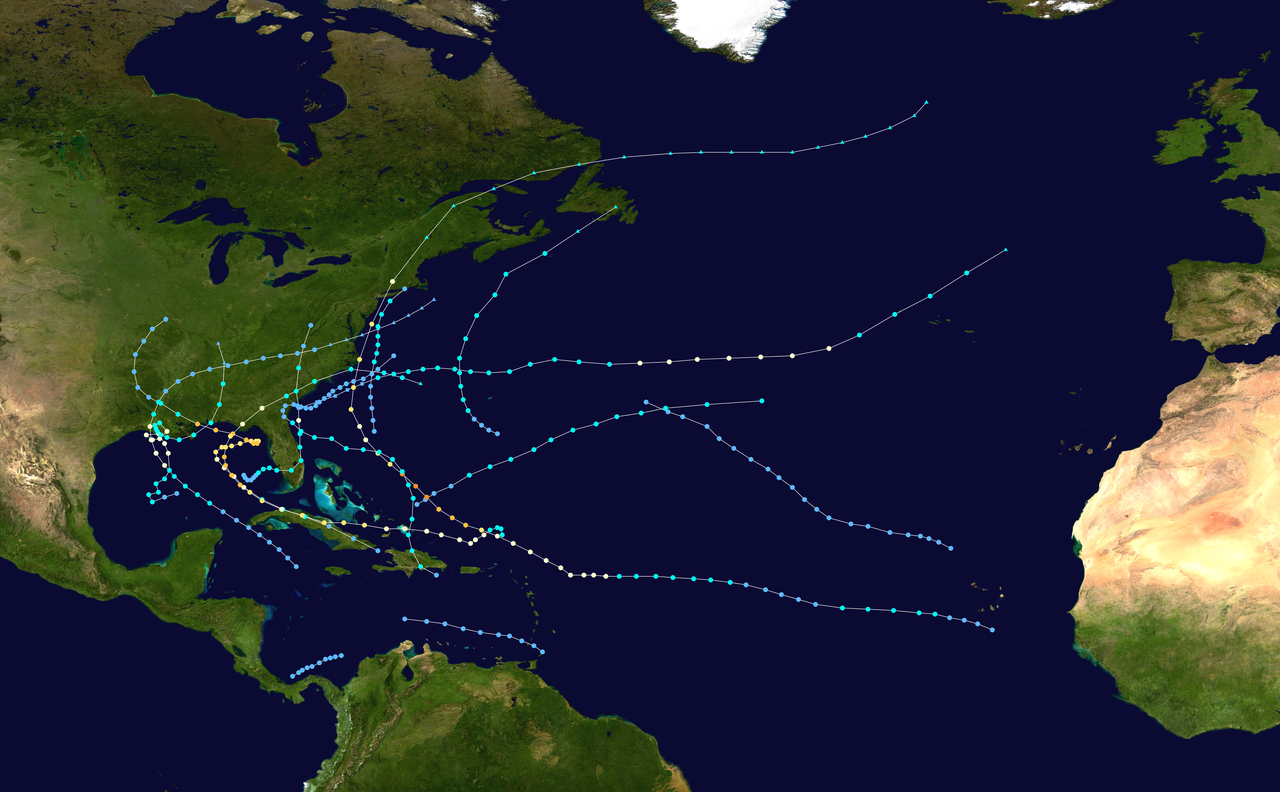
Hurricane Juan of 1985 was a storm in the Atlantic hurricane season that is notable for producing disproportionate damage relative to its intensity. Although it was described as a weak hurricane at peak strength, Juan became the costliest storm of that season, with estimated economic losses near $1.5 billion and an estimated death toll of about 24 people. Its effects prompted attention to how even lower-category tropical cyclones can produce severe local impacts.
Image gallery
7 Images



Overview and development
Juan developed during the 1985 Atlantic hurricane season and followed the lifecycle typical of tropical cyclones: organization from a disturbance, strengthening to a tropical cyclone, and brief transition into hurricane status. Available summaries emphasize that the system never reached the sustained wind magnitudes of the largest storms, yet its combination of factors — including rainfall, surge, and the areas it affected — led to extensive damage. For contemporary summaries and season reviews see seasonal reports.
Characteristics and impacts
Key features of Juan's impact include:
- Fatalities: around 24 people lost their lives in connection with the storm.
- Economic damage: estimated at approximately $1.5 billion, making Juan the costliest storm in the 1985 season.
- Intensity: commonly described in sources as a weak hurricane at peak, meaning maximum sustained winds were lower than those of major hurricanes.
These figures illustrate a recurring lesson in tropical cyclone meteorology: storm intensity measured by peak winds does not alone determine human and economic consequences. Factors such as heavy rainfall, slow storm motion, coastal inundation, flooding, and local vulnerability (population, infrastructure, and preparedness) can produce severe losses even from relatively modest hurricanes.
Because Juan combined damaging weather with exposure in affected areas, it had substantial local consequences for communities, transportation, and utilities. Emergency response and recovery efforts after storms like Juan often focus on restoring power, clearing debris, repairing flood-damaged structures, and addressing both immediate and longer-term housing and economic needs.
Notable among historical and administrative outcomes, the name "Juan" remained on the rotating list of Atlantic storm names after the 1985 season; it was not retired in the spring of 1986 despite the storm's cost and loss of life. In general, hurricane-naming authorities retire names when a storm is so deadly or costly that future use would be insensitive or confusing, but many impactful storms do not meet the criteria for retirement.
Related articles
Author
AlegsaOnline.com Hurricane Juan (1985) Leandro Alegsa
URL: https://en.alegsaonline.com/art/45932