
Hurricane Juan (2003) — Category 2 storm that struck Nova Scotia
Hurricane Juan was a Category 2 hurricane that made landfall near Halifax, Nova Scotia, on September 29, 2003. It caused widespread wind and flood damage in Atlantic Canada, eight deaths, and about $200 million in losses.
Overview
Hurricane Juan was the sixth hurricane of the 2003 Atlantic hurricane season. It formed in September 2003 and tracked northward across the Atlantic, reaching hurricane strength before approaching eastern Canada. Juan is notable for making direct landfall near a densely populated area of Nova Scotia, an uncommon occurrence for a tropical cyclone in Atlantic Canada.
Image gallery
10 Images





Meteorological summary and landfall
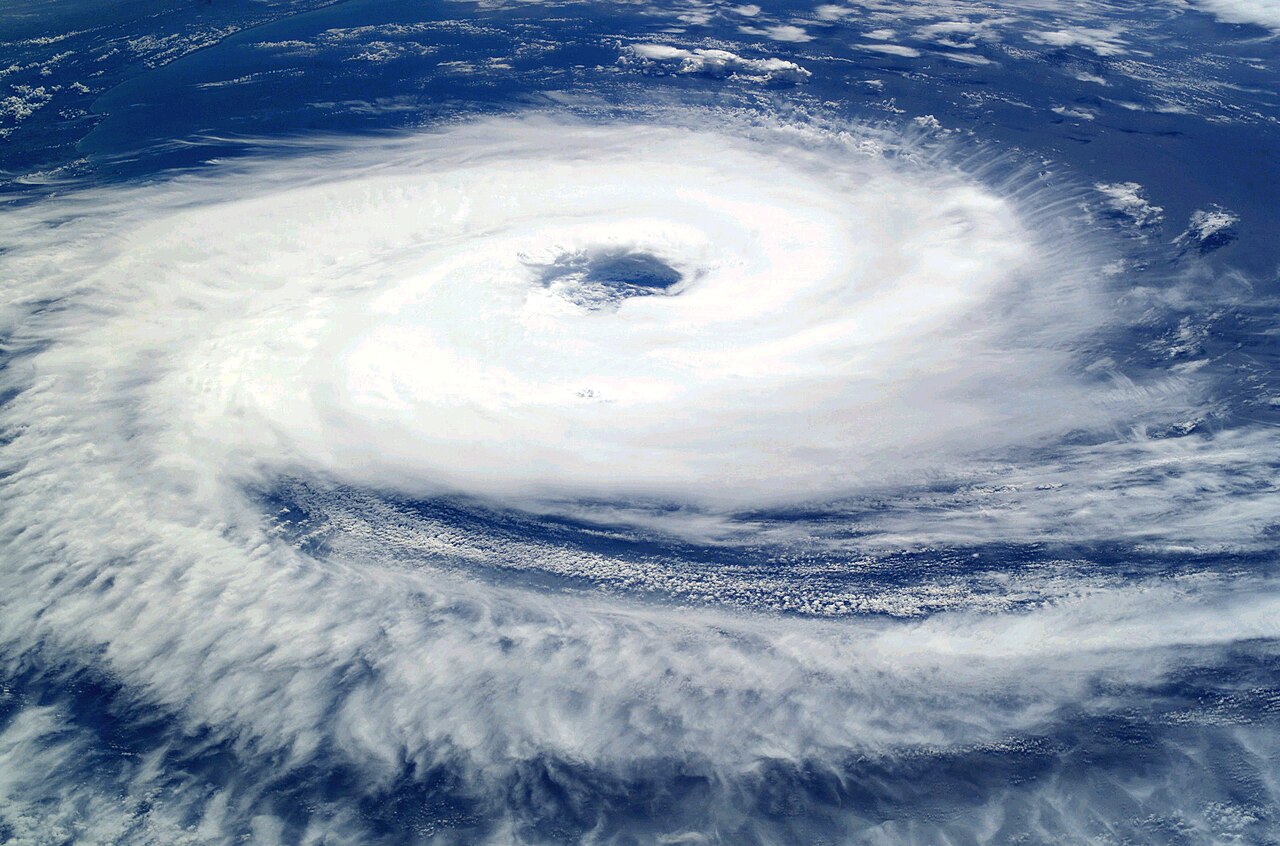
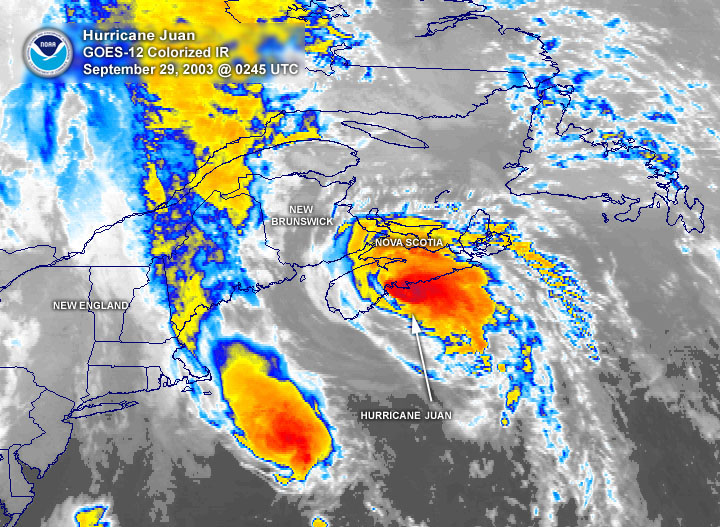
As Juan moved into higher latitudes, it retained a compact but intense core of strong winds. By the time the center reached the Halifax area on September 29, 2003, it was classified as a Category 2 hurricane, producing sustained winds capable of causing structural and vegetative damage. The storm’s forward motion and proximity to shore contributed to strong gusts and coastal storm surge in exposed areas. Cooler surrounding waters limited further intensification, but the tight wind field led to concentrated impacts where the eye crossed the coast.
Impacts and damage
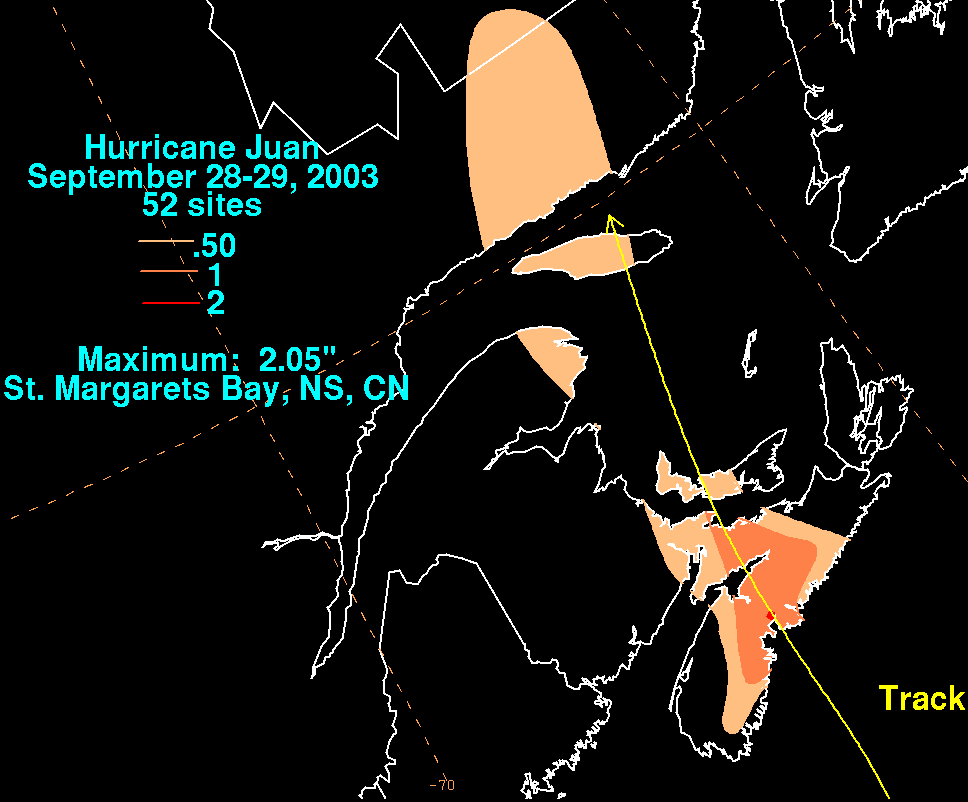
Juan caused significant damage across parts of Nova Scotia. The most severe impacts were wind-related: widespread tree fall and broken branches brought down power lines, blocking roads and damaging homes. Tens of thousands of residents experienced prolonged power outages, some lasting several days. Coastal communities experienced localized flooding and overwash from elevated seas and storm surge. Official reports attribute eight fatalities to the storm and estimate economic losses on the order of $200 million, making Juan one of the costliest hurricanes to affect Nova Scotia in recent decades.
Geographic scope and secondary effects
Although Nova Scotia sustained the worst damage, strong winds and heavy rain were reported in adjacent provinces. Prince Edward Island and parts of New Brunswick experienced gusty conditions and service interruptions, while maritime shipping and offshore activities were disrupted during the event. The storm highlighted vulnerabilities in urban and coastal infrastructure to late-season tropical systems.
Aftermath and legacy
Recovery efforts focused on restoring electrical service, clearing debris, and repairing damage to public infrastructure. The event prompted reviews of tree management near power lines, emergency response planning, and municipal preparedness for tropical storms. Juan is often cited in regional hazard assessments and public information as an example of how tropical cyclones can impact populated Atlantic Canadian centers.
For context on the season, see the 2003 season summary. For provincial resources and emergency guidance consult Nova Scotia information pages and national weather services such as those maintained for Canada.
Questions and answers
Q: What was Hurricane Juan?
A: Hurricane Juan was the sixth hurricane in the 2003 Atlantic hurricane season.
Q: Where did Hurricane Juan cause damage?
A: Hurricane Juan caused damage in Nova Scotia, which is in Canada.
Q: How many people were killed by Hurricane Juan?
A: Hurricane Juan left 8 people killed.
Q: How much damage did Hurricane Juan cause?
A: Hurricane Juan caused about $200 million in damage.
Q: Was Hurricane Juan the only hurricane to affect Canada in the 2003 season?
A: Yes, Hurricane Juan was the only hurricane to affect Canada in the 2003 Atlantic hurricane season.
Q: Was Hurricane Juan a particularly costly hurricane for Nova Scotia?
A: Yes, Hurricane Juan was one of the costliest hurricanes in Nova Scotia.
Q: What other countries did Hurricane Juan affect besides Canada?
A: According to the given text, Hurricane Juan only affected Canada.
Related articles
Author
AlegsaOnline.com Hurricane Juan (2003) — Category 2 storm that struck Nova Scotia Leandro Alegsa
URL: https://en.alegsaonline.com/art/45933