
Huguette Dreyfus — French harpsichordist and educator
French harpsichordist (1928–2016) who played a major role in mid-20th century early‑music revival and taught at the Schola Cantorum, Sorbonne and the Lyon Conservatory.
Huguette Dreyfus (30 November 1928 – 17 May 2016) was a French musician best known for her work as a harpsichordist and as a teacher. Over several decades she combined a performing career with influential conservatory teaching, helping to broaden interest in Baroque keyboard music and historically informed performance in France.
Image gallery
1 Image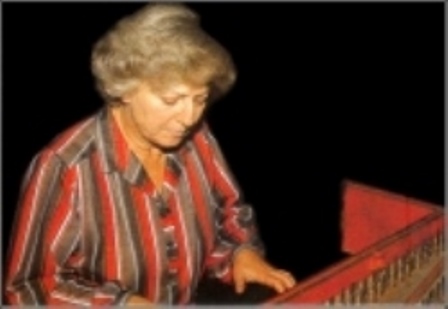
Overview
Dreyfus specialized in the harpsichord, an instrument central to seventeenth- and eighteenth-century repertoire. She came from Mulhouse in northeastern France—born in Mulhouse in the historic region of Alsace—and established herself as both a soloist and chamber musician. Her career spanned concert work, recordings, and extended pedagogy at major French institutions.
Career and teaching
In addition to concert activity, Dreyfus held teaching posts that shaped generations of keyboard players. She taught at several respected institutions, including:
- Schola Cantorum in Paris
- Courses at the Sorbonne
- National Conservatory of Music and Dance of Lyon
Through these appointments she influenced students’ approaches to ornamentation, articulation and stylistic interpretation appropriate to Baroque and early Classical composers.
Instrument and repertoire
The harpsichord occupies a different technical and expressive world from the modern piano: plucked strings, lighter dynamic range, and a repertory centered on composers such as J.S. Bach, François Couperin, Jean-Philippe Rameau and Domenico Scarlatti. Dreyfus was part of the wider 20th-century revival that reintroduced audiences to these composers on period instruments, emphasizing historical techniques and phrasing.
Legacy and significance
Although primarily remembered as a performer and teacher rather than as a prolific recording artist, Dreyfus left a legacy through her students and her public advocacy for early-music study in conservatories. Her work contributed to the normalization of specialized harpsichord instruction within French musical education and helped broaden public appreciation for Baroque keyboard music.
Dreyfus died in Lyon on 17 May 2016 at the age of 87. Her career is frequently cited in discussions of the postwar early-music movement in France and the institutional development of historically informed performance practice.
Related articles
Author
AlegsaOnline.com Huguette Dreyfus — French harpsichordist and educator Leandro Alegsa
URL: https://en.alegsaonline.com/art/45610
Sources
- francemusique.fr : "Death of Huguette Dreyfus"