
Homalocephale — a small flat-skulled pachycephalosaur
Homalocephale, a small pachycephalosaurid dinosaur with a thick but flattened skull, is known from Late Cretaceous deposits and informs how dome shapes varied among horned and thick-headed ornithischians.
Overview
Homalocephale was a small, bipedal herbivorous dinosaur belonging to the pachycephalosaur family. It is chiefly notable for a proportionally thick but relatively flat skull that contrasts with the rounded domes of some better-known relatives. Fossils assigned to Homalocephale come from Late Cretaceous formations in central Asia and have contributed to understanding diversity in head morphology among pachycephalosaurs.
Image gallery
7 Images



Physical characteristics
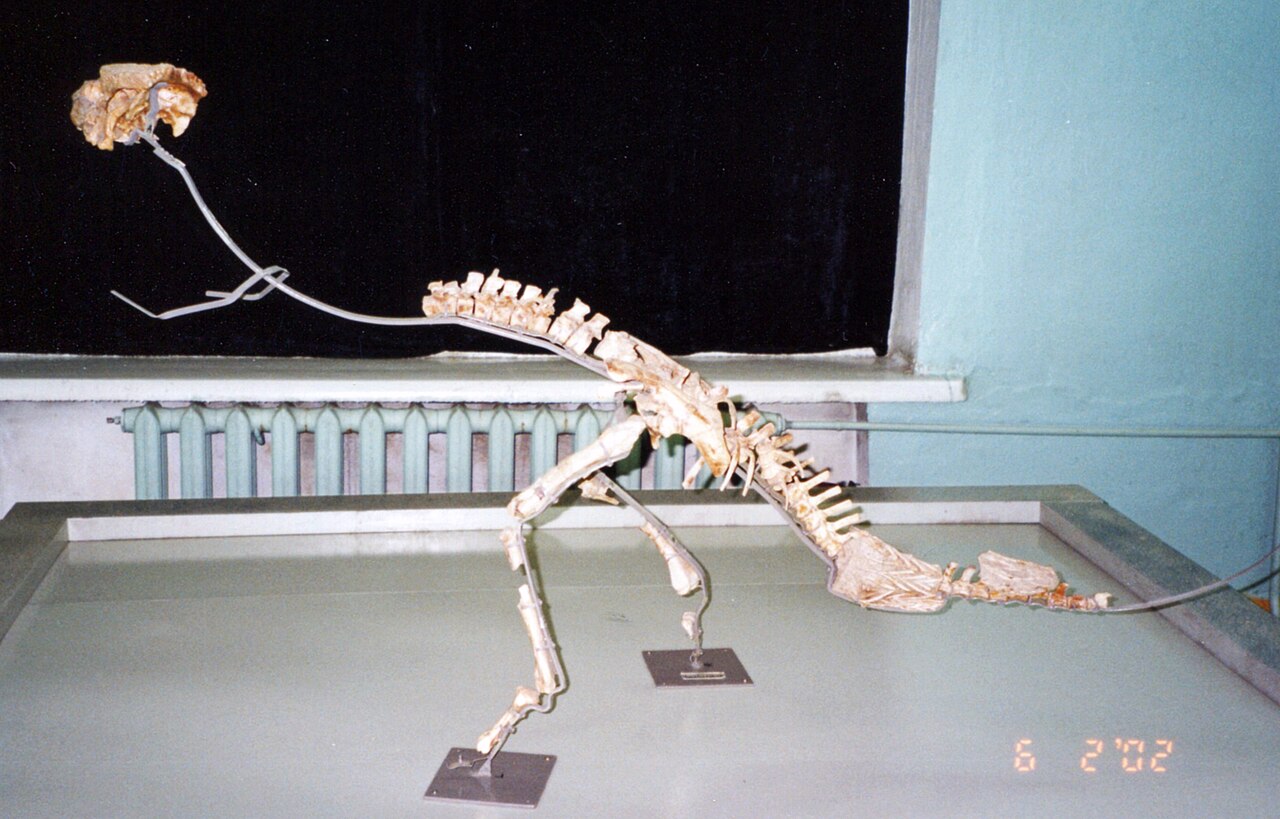
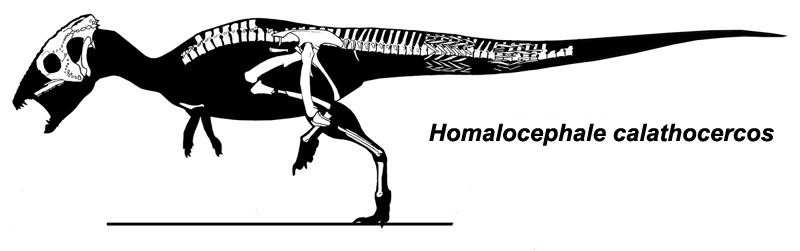
This genus reached roughly 1.5 metres (about 5 feet) in length and weighed on the order of a few dozen kilograms. The skull bones are unusually thick and show a porous internal texture with channels for blood vessels, suggesting a well-supplied outer layer of bone. Unlike the high, rounded domes of some pachycephalosaurids, Homalocephale's skull roof is comparatively flattened and bears small knobs and bumps along the snout and rear margins. Other features include leaf-shaped cheek teeth, relatively short forelimbs, large eye sockets, a stiff tail, and an inferred good sense of smell.
Distinguishing features
- Flattened but heavy skull roof with vascularized bone.
- Knobbly ornamentation along snout and posterior skull edge.
- Small, leaf-shaped teeth adapted for cropping vegetation.
- Compact body size with bipedal posture and reduced forelimbs.
Interpretations and significance
The flattened cranial profile has prompted debate about behavior and ontogeny. Some researchers argue flat-headed specimens represent juvenile or subadult stages of dome-headed species, while others treat Homalocephale as a distinct taxon showing an alternative skull form. Because the thickened bone is richly supplied with blood vessels, functional explanations range from display and species recognition to low-energy head-butting or flank-butting, though the flat roof seems less suitable for high-impact collisions than the domes of later pachycephalosaurs.
Further reading
For general background on pachycephalosaurs and the anatomy of thick-skulled ornithischians, see resources linked here: pachycephalosaur overview and ornithischian skull anatomy.
Related articles
Author
AlegsaOnline.com Homalocephale — a small flat-skulled pachycephalosaur Leandro Alegsa
URL: https://en.alegsaonline.com/art/44846