
Honeyguide (Indicatoridae): wax-eating birds famed for guiding to bee nests
Honeyguides are Old World tropical birds (family Indicatoridae) that eat beeswax and larvae, sometimes lead people to bee colonies, and practice brood parasitism; most species occur in Africa and a few in Asia.
Honeyguides are a small family of birds placed in Indicatoridae, usually treated as near-passerine members of the order Piciformes. They are generally inconspicuous in appearance—dull, streaked or olive plumage with stout bills—but notable for distinctive behaviors and dietary specializations that set them apart from many other insects-eating birds.
Image gallery
3 Images

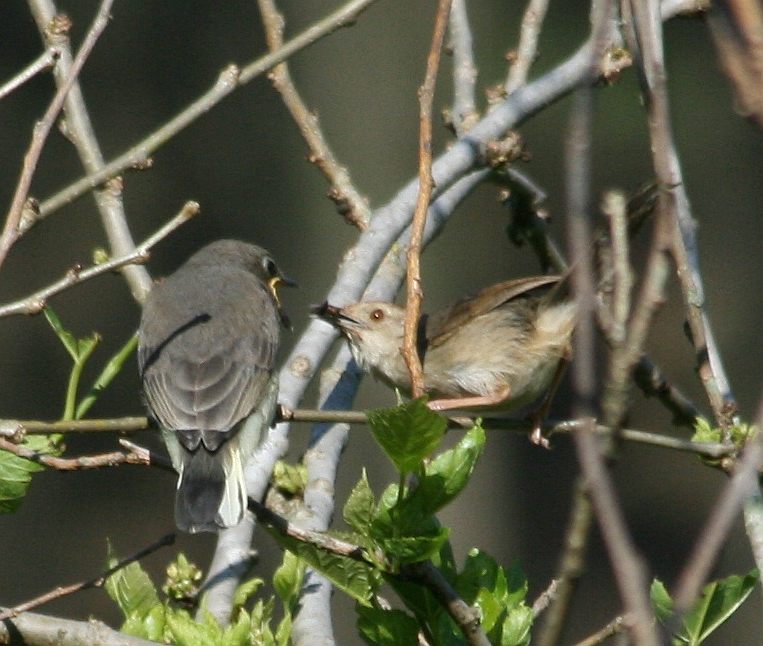
Distribution and habitat
These birds have an Old World tropical distribution, occurring mainly in wooded and savanna environments. The majority of species are found in Africa, with a smaller number present in parts of southern and southeast Asia. Different species occupy a range of habitats from dry bush to moist forest margins, often near sites where bees and wasps nest.
Diet and feeding
Honeyguides are unusual because they regularly consume substances most birds do not: they eat bee and wasp larvae, and in particular they digest beeswax and leftover comb. They also take other small invertebrates and fruits. By feeding on grubs and wax, honeyguides exploit a niche where competition is limited; this dietary habit is supported by specializations of the bill and digestive system that help process wax and hard-bodied prey.
Guiding behaviour and human interaction
Certain honeyguide species are renowned for deliberately leading people and some mammals to active bee nests. A guiding bird will call persistently and fly in short bursts toward a hive, pausing and doubling back until a human or other follower responds and follows. When the nest is opened by the human, honey-hunters take the honey while leaving wax and larvae, which the bird then consumes. This interspecific interaction—sometimes described as a form of facultative mutualism—has been documented in traditional honey-hunting cultures, and is one of the best-known examples of a wild bird guiding another species to resources.
Reproduction and lifecycle
Most honeyguides are brood parasites: they lay eggs in the nests of other bird species rather than build their own. Host birds incubate the eggs and raise the young, while honeyguide chicks often hatch early and may possess adaptations that eliminate competition in the nest. Brood parasitism in honeyguides has influenced their breeding strategies and relationships with potential host species across their range.
Conservation and notable facts
- Honeyguides are often secretive and local, so population trends vary by species; habitat change and loss of traditional human-honeyguide relationships can affect some populations.
- The family name and many accounts of behaviour can be explored further under Indicatoridae entries and broader treatments of Piciformes.
- Field studies from Africa provide the clearest evidence of guiding behaviour, while reports from parts of Asia are less frequent.
- The birds’ reliance on nests of bees and wasps makes them interesting subjects for studying interspecific interactions involving beeswax and grubs.
For readers interested in taxonomy, behaviour, or conservation, more detailed resources can be consulted about Indicatoridae, their placement among near-passerine birds, and their role in Old World ecosystems.
Questions and answers
Q: What are honeyguides?
A: Honeyguides are a family of near-passerine birds in the order Piciformes that have an Old World tropical distribution, with most species in Africa and two in Asia.
Q: What are other names for honeyguides?
A: Honeyguides are also known as "indicator birds" or "honey birds."
Q: How do honeyguides interact with humans?
A: One or two species of honeyguides will deliberately lead humans to bee colonies, so that they can feast on the grubs and beeswax that are left behind.
Q: What is the order to which honeyguides belong?
A: Honeyguides belong to the order Piciformes.
Q: Where are most honeyguides found?
A: Most honeyguides are found in Africa, while two species are found in Asia.
Q: What is the distribution of honeyguides?
A: Honeyguides have an Old World tropical distribution, meaning they are found in tropical areas of the world, primarily in Africa and Asia.
Q: Why are honeyguides called "indicator birds"?
A: Honeyguides are called "indicator birds" because they can help humans find bee colonies for honey hunting.
Related articles
Author
AlegsaOnline.com Honeyguide (Indicatoridae): wax-eating birds famed for guiding to bee nests Leandro Alegsa
URL: https://en.alegsaonline.com/art/44993
Sources
- bbc.co.uk : "Underground chick-killers filmed"
- wikidata.org : Q214137
- species.wikimedia.org : Indicatoridae
- animaldiversity.org : Indicatoridae
- eol.org : 1594
- fossilworks.org : 39435
- gbif.org : 9699
- inaturalist.org : 17551
- irmng.org : 104963
- itis.gov : 178145
- ncbi.nlm.nih.gov : 189527
- ubio.org : 21515