
Hooded seal (Cystophora cristata)
Arctic pinniped known for the male's inflatable nasal 'hood' and an unusually brief lactation; found in the central and western North Atlantic and closely tied to seasonal sea ice.
Overview
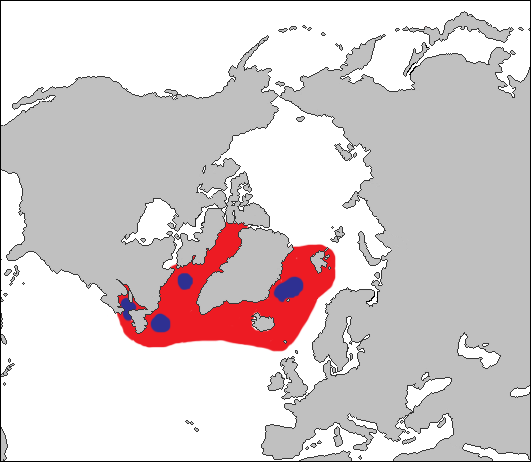
The hooded seal (Cystophora cristata) is a large Arctic marine mammal of the seal group and a member of the order that includes walruses and sea lions. It inhabits pack ice and adjacent waters in the central and western North Atlantic, occurring from the waters around Svalbard and the Greenland Sea westward toward the Gulf of St. Lawrence. As a pinniped, it spends much of its life at sea and comes ashore or onto ice to breed, moult and rest.
Image gallery
10 Images



Physical characteristics
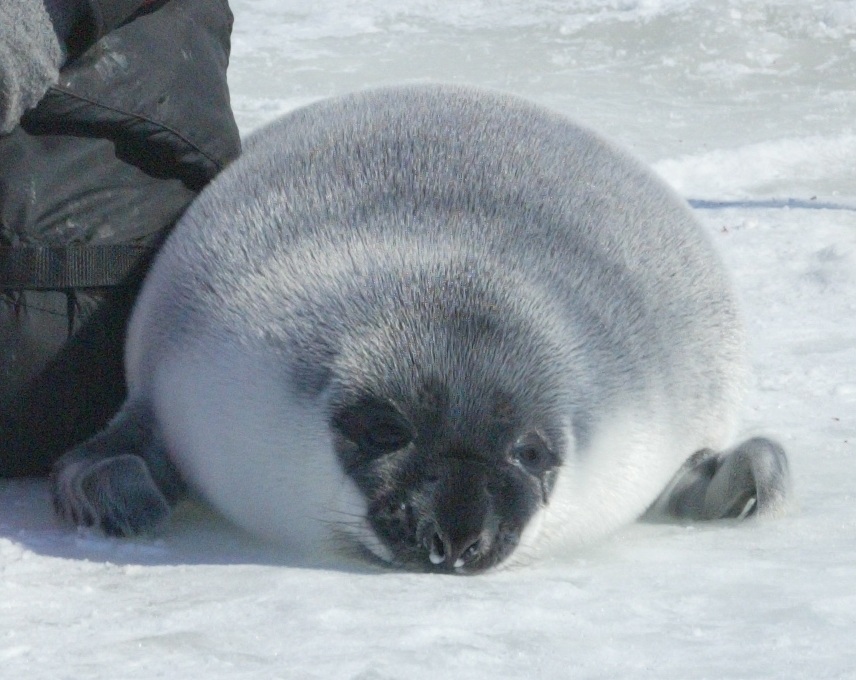
Hooded seals are sexually dimorphic, with males generally larger and heavier than females. Their common name refers to a distinctive inflatable nasal structure on adult males: a flexible bladder or "hood" that can be extended over the head, and a separate inflatable sac that can be pushed out from a nostril to form a balloon-like display. The hood develops as males mature and is used in visual and acoustic displays during interactions with rivals and potential mates. The pelage is mottled grey and silver in adults; newborns have a different, often darker juvenile coat.
Life history and behaviour
Breeding and pup rearing are closely tied to ice conditions. Hooded seal pups are notable for an exceptionally short lactation period—among the briefest of any mammal—during which they nurse and put on a large proportion of their body fat before weaning in only a few days. Adults feed on a range of fish, squid and crustaceans, foraging at sea and making dives to capture prey. Natural predators include large marine carnivores such as polar bears and killer whales.
Conservation and human interactions
Hooded seal populations have been affected by historical hunting, changes in sea-ice habitat and other human activities. Some regional populations have declined, and the species' well-being is closely linked to the availability of stable ice habitat for pupping and moulting. Management measures, research and monitoring aim to balance subsistence and commercial uses with conservation needs as climate change alters their environment.
Notable facts and distinctions
- Taxonomy: Cystophora cristata is the species name; the genus name highlights the bladder-like nasal structure.
- Unique male anatomy: the "hood" and a single-nostril inflatable sac are used in displays and possibly sound production.
- Pup development: very rapid transfer of energy from mother to pup during a short lactation period.
- Longevity: individuals can live into their early thirties in the wild.
Because hooded seals depend on seasonal pack ice, continued monitoring of populations, careful harvest regulation and research into their ecology remain important for understanding how they will fare as ocean conditions change.
Questions and answers
Q: What is the scientific name of the hooded seal?
A: The scientific name of the hooded seal is Cystophora cristata.
Q: Where is the hooded seal found?
A: The hooded seal is found only in the central and western North Atlantic, ranging from Svalbard in the east to the Gulf of St. Lawrence in the west.
Q: What is peculiar about the male hooded seal's head?
A: The male hooded seal has a peculiar inflatable bladder on the head, which hangs between his eyes and down over his upper lip in the deflated state.
Q: At what age does the bulge on the male hooded seal's nostril develop?
A: The bulge on the male hooded seal's nostril develops when the seal is four years old.
Q: How big can the bulge on the male hooded seal's nostril become when inflated?
A: The male hooded seal can blow up the bulge on his nostril so that it is the size of his head.
Q: What is the lifespan of a hooded seal?
A: The hooded seal can live to about age 30 to 35.
Q: Can the hooded seal be found in the Arctic?
A: Yes, the hooded seal is an arctic pinniped.
Related articles
Author
AlegsaOnline.com Hooded seal (Cystophora cristata) Leandro Alegsa
URL: https://en.alegsaonline.com/art/45031
Sources
- bucknell.edu : "Order Carnivora"
- google.com : Mammal Species of the World
- worldcat.org : 62265494
- iucnredlist.org : "Cystophora cristata"
- drawfluffy.com : Hooded Seal (Cystophora cristata), a Weird Animal
- marinebio.org : Hooded Seals, Cystophora cristata
- arkive.org : Hooded seal images
- pubmed.ncbi.nlm.nih.gov : 7601954
- commons.wikimedia.org : Hooded Seal