
Hogenakkal Falls
Hogenakkal Falls — a scenic cascade on the Kaveri River in Tamil Nadu, India, noted for its dramatic gorges, ancient carbonatite rocks, coracle rides, medicinal baths, and regional water‑resource discussions.
Hogenakkal Falls is a well‑known waterfall on the Kaveri (Cauvery) river in southern India. The falls lie in Dharmapuri district and are located close to the border between the Indian states of Tamil Nadu and Karnataka. The site is a popular day‑trip destination for visitors who come to see the stepped cascades, dramatic rock gorges and the plunging sheets of water sometimes compared in popular description to the "Niagara Falls of India". For practical information and tourism resources see local guides.
Image gallery
6 Images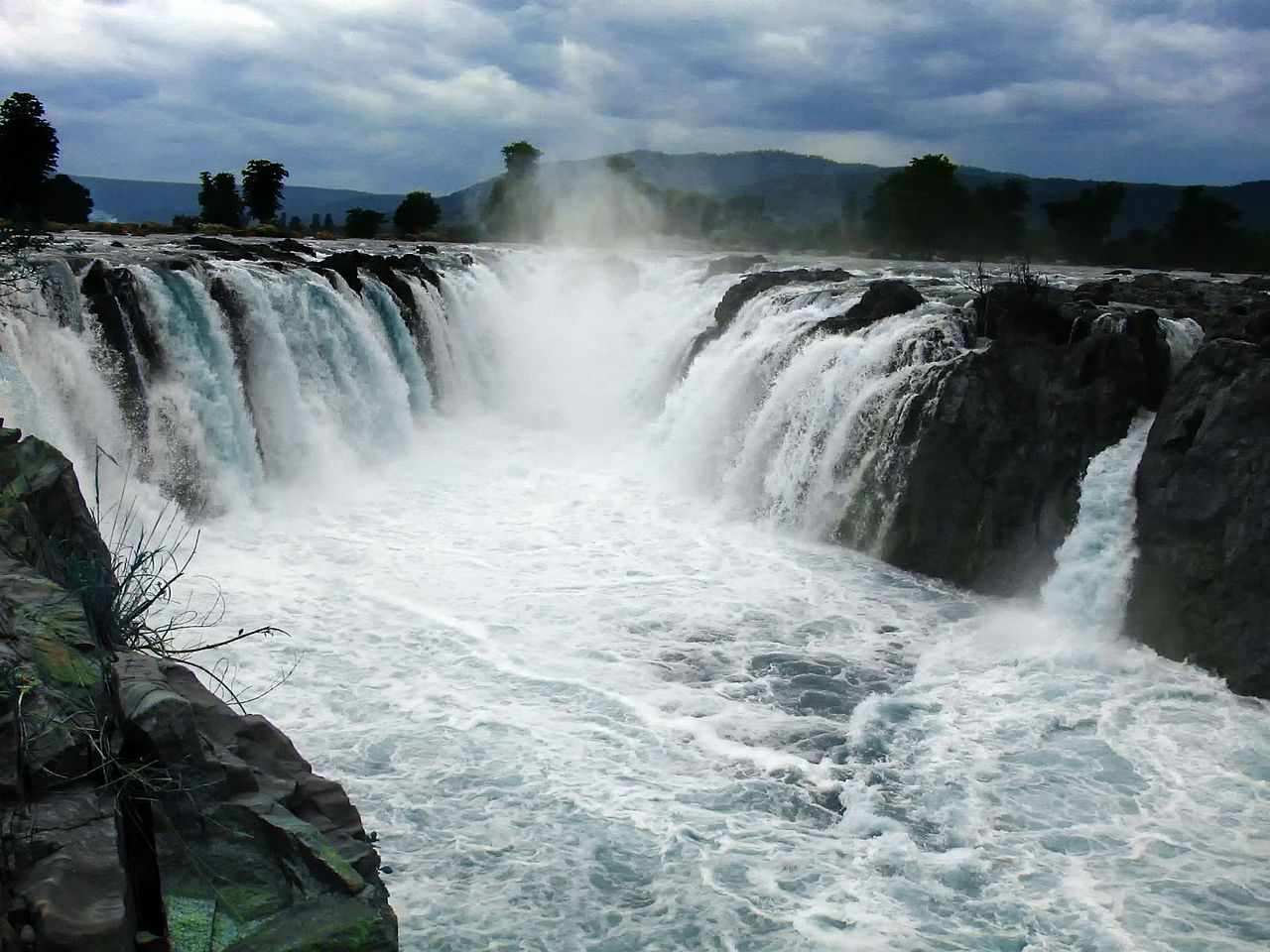


Geology and landscape
The river here passes over very old, hard rock that has been sculpted into deep channels and rounded boulders. Geologists note the presence of ancient carbonatite formations at Hogenakkal, among the oldest carbonatite occurrences in South Asia and significant for studies of Earth’s early crustal processes. The resulting cascades and plunge pools create a rugged, sculpted landscape that influences local river flow and ecology.
Activities and local uses
Visitors often take short, circular coracle rides — small, traditional round boats — on calmer stretches below the falls and on the river upstream. The site is also known for so‑called medicinal or therapeutic baths, where locals and tourists bathe in mineral‑rich pools; local vendors sell fish, snacks and handcrafted souvenirs. For visitor services and official information consult the relevant state or district pages and travel resources such as regional tourism.
Human and administrative context
Hogenakkal sits in a region with long cultural ties to the Kaveri river basin. Administratively the falls are in the Dharmapuri district; nearby communities depend on tourism, fishing and riverine agriculture. From time to time, proposals have been made to develop water‑supply projects drawing on Kaveri waters near Hogenakkal to serve municipal needs. Such proposals touch upon wider inter‑state water management discussions that affect planning and conservation.
Distinguishing features and notes
- Distinctive rock formations including exposed carbonatite and rounded basaltic boulders.
- Traditional coracle rides that are a regional tourism hallmark.
- Popular reputation for therapeutic pools and local fish cuisine.
- Proximity to state borders gives the site both ecological and administrative significance; see local district resources at Dharmapuri district.
Visitors should respect safety notices around fast currents and steep, slippery rocks and check current access rules before traveling. For updated travel advisories, maps and official advisories consult state and tourism links such as visitor pages and regional portals like tourism information.
Questions and answers
Q: Where is Hogenakkal Falls located?
A: Hogenakkal Falls is located in South India on the Kaveri river in the Dharmapuri district of the Indian state of Tamil Nadu.
Q: What is Hogenakkal Falls known for?
A: Hogenakkal Falls is known for medicinal baths and hide boat rides, and is sometimes referred to as the "Niagara Falls of India."
Q: What type of rocks are found at Hogenakkal Falls?
A: Carbonatite rocks are found at Hogenakkal Falls and are considered to be the oldest of its kind in South Asia and one of the oldest in the world.
Q: What proposal did the Government of Tamil Nadu make regarding Hogenakkal Falls?
A: The Government of Tamil Nadu made a proposal to convert Hogenakkal Falls into providing drinking water for the state.
Q: Is Hogenakkal Falls a popular tourist attraction?
A: Yes, Hogenakkal Falls is a major tourist attraction.
Q: What district is Hogenakkal Falls located in?
A: Hogenakkal Falls is located in the Dharmapuri district of the Indian state of Tamil Nadu.
Q: What river is Hogenakkal Falls located on?
A: Hogenakkal Falls is located on the Kaveri river.
Related articles
Author
AlegsaOnline.com Hogenakkal Falls Leandro Alegsa
URL: https://en.alegsaonline.com/art/44670