
History of the First Generation of Home Video Game Consoles (1972–1977)
Survey of the first generation of home video game consoles (1972–1977): origins, hardware traits, representative systems, market dynamics and how the era ended with the 1977 crash.
Overview
The first generation of home video game consoles spans the early 1970s and is generally dated from 1972 until about 1977. This era began with the commercial introduction of the Magnavox Odyssey, the first widely recognized home video game system, and is often described as ending with the market contraction known as the video game crash of 1977. The label "first generation" groups the earliest dedicated systems that brought interactive electronic games into living rooms.
Image gallery
8 Images




Characteristics and hardware
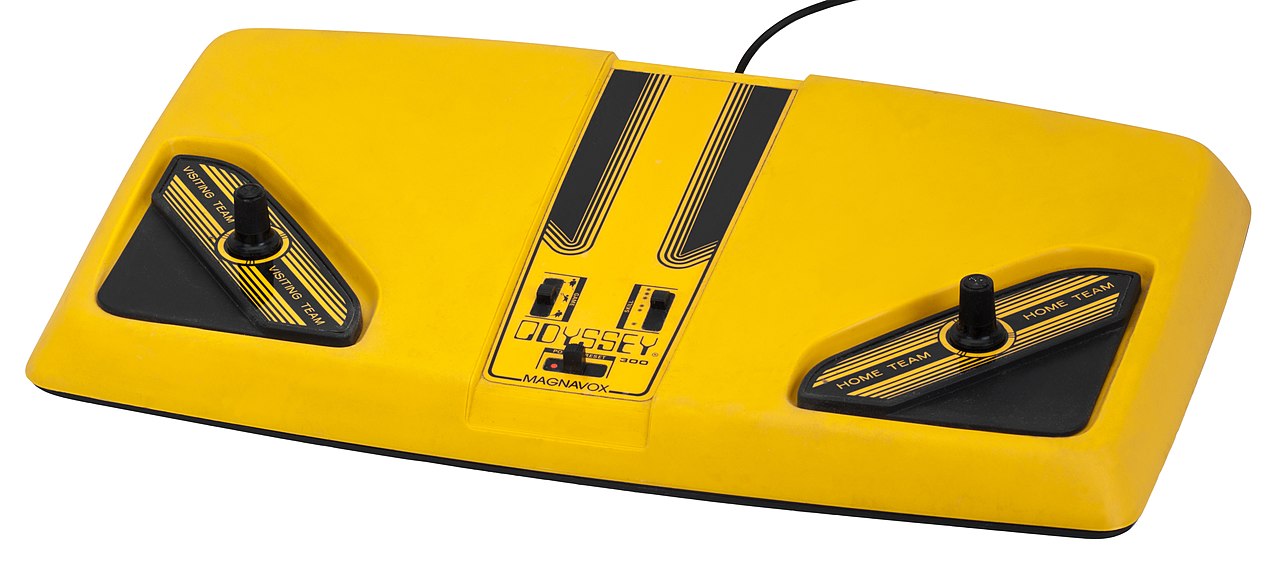
First‑generation consoles were usually dedicated devices: each unit shipped with a fixed set of built‑in games rather than interchangeable software cartridges. Graphics were extremely simple by later standards—basic geometric shapes, single‑color or monochrome displays, and on‑screen elements with little or no scrolling. Audio consisted of simple tones and beeps. Many designs used discrete logic or single‑purpose integrated circuits rather than full microprocessors, and common controls were potentiometer knobs (paddles), switches and simple buttons. Some systems relied on physical screen overlays or colored translucent sheets to add visual detail.
Typical games and accessories
Gameplay during this period centered on variants of Pong and other table‑tennis or ball‑and‑paddle concepts, plus simple shooting and target games. Accessories evolved to include wired light guns, different controller housings, and add‑on paddles. Because the games were fixed in hardware, manufacturers often produced multiple console models that implemented slightly different game sets or rules to extend their product lines.
Representative systems
- Magnavox Odyssey — often credited as the first commercial home console; used overlays and game cards to alter circuitry and rules.
- Atari’s home Pong and other dedicated Pong clones — popularized home versions of the arcade classic and inspired many lookalikes.
- Coleco Telstar and similar PAL/NTSC dedicated units — examples of mass‑market, low‑cost Pong‑style consoles sold worldwide.
Market development and decline
The first‑generation market grew rapidly as manufacturers rushed to capitalize on Pong’s success. That growth produced an abundance of largely similar products and aggressive price competition. Legal disputes over patents and game designs, combined with consumer fatigue and an oversupplied marketplace, led to a sharp downturn in demand by 1977. These pressures contributed to the industry contraction commonly called the video game crash of 1977, which cleared the way for a new class of programmable consoles.
Legacy and distinctions
Though technologically primitive, first‑generation consoles established the concept of home video gaming and familiarized consumers with controllers, multiplayer play and television‑based interaction. The era’s decline coincided with the appearance of cartridge‑based, microprocessor‑driven systems that launched the second generation. For an introductory overview and further references on this early period, see a general treatment of the first generation.
Related articles
Author
AlegsaOnline.com History of the First Generation of Home Video Game Consoles (1972–1977) Leandro Alegsa
URL: https://en.alegsaonline.com/art/44512
Sources
- pong-story.com : "Atari home PONG systems"
- pong-story.com : "Magnavox Odyssey, the first video game system"
- books.google.com : Phoenix: the fall & rise of videogames
- books.google.com : 27
- pong-story.com : "Gemini TV Game Circuits" · web.archive.org