
Anne Sullivan: Teacher and guide to Helen Keller
Anne Sullivan (1866–1936) was an American educator whose tactile teaching methods enabled Helen Keller to learn language; she helped shape modern approaches to education for people with combined vision and hearing loss.
Overview
Anne Sullivan (April 14, 1866 – October 20, 1936) was an American educator whose work with Helen Keller became one of the most widely known examples of teaching people who are deafblind. Born into a poor Irish immigrant family in Feeding Hills, Massachusetts, Sullivan overcame childhood illness and hardship to develop practical tactile methods that enabled her pupil to acquire language and literacy. Her partnership with Keller began in 1887 and continued for decades, drawing public attention to disability, education, and the possibilities of intensive, individualized instruction.
Image gallery
7 Images



Early life and training
Sullivan was the daughter of Irish immigrants who had left Ireland during the mid-19th century. Her family worked as small-scale farmers and struggled with poverty. As a child she suffered from a chronic eye condition and spent part of her youth in institutions for the poor and for people with visual impairments. She later received instruction at schools for the blind, most notably the Perkins School for the Blind, where she learned tactile teaching techniques and fingerspelling. Her own experience with visual impairment informed both her empathy and her practical approach to instruction.
Meeting Helen Keller and teaching methods
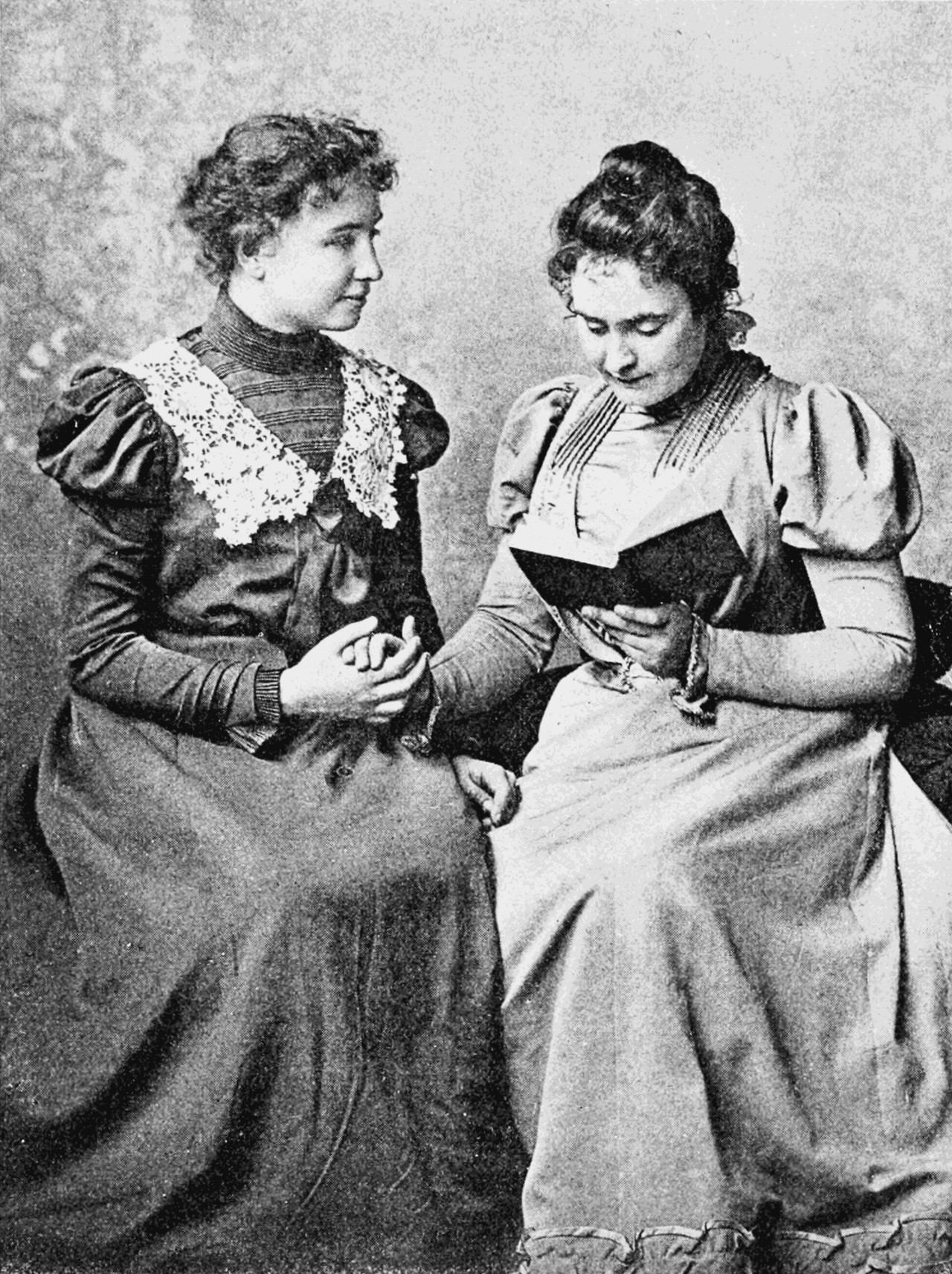
In 1887 Sullivan was hired as a governess and instructor for the young Helen Keller. Using the manual alphabet and fingerspelling, she established a consistent, hands‑on method: spelling words into Keller’s hand while simultaneously associating each word with a concrete object or action. The immediate aim was to convey that words correspond to ideas and things; once that connection was made, Keller’s acquisition of language accelerated. Sullivan’s approach emphasized repetition, clear associations, and tactile forms of communication, drawing on methods of manual sign language and manual alphabets adapted to a tactile mode.
Partnership, education and later life
The teacher–student relationship between Sullivan and Keller was intense and long-lasting. Sullivan not only taught language and literacy but also guided Keller through schooling and public life, acting as interpreter, reader and companion. The two women lived together for many years in Forest Hills, in New York, and their bond endured through successes and health challenges. Sullivan married John Macy in 1905; although her personal life and public role shifted over time, she remained Keller’s primary teacher and close companion.
Health, death and remembrance
Sullivan’s health deteriorated at various times; accounts note greater frailty after 1914, and she died on October 20, 1936 in Forest Hills. Contemporary recollections emphasize the intimacy of the two women’s relationship: Keller remained devoted to Sullivan and later memorialized her teacher in a memoir titled "Teacher." Sullivan’s life has been recounted in biographies and dramatized in works such as the stage and film versions of "The Miracle Worker," which brought widespread public attention to their story.
Significance and influence
- Sullivan is widely credited with adapting tactile instructional techniques that made language learning possible for a deafblind pupil.
- Her methods emphasized linking concrete objects and experiences to spelled words, the foundation for later tactile and multisensory approaches in special education.
- Through Helen Keller’s writings and public career, Sullivan’s role influenced public awareness of disability, access to education and the capabilities of people with combined sensory loss.
For readers seeking more context on Sullivan’s training and legacy, materials on teacher training, the life of Helen Keller, the town of Feeding Hills in Massachusetts, her Irish background and rural family circumstances as small farmers, tactile communication methods, and locations such as Forest Hills in New York can provide additional historical and cultural perspective.
Related articles
Author
AlegsaOnline.com Anne Sullivan: Teacher and guide to Helen Keller Leandro Alegsa
URL: https://en.alegsaonline.com/art/4438