
Hippocamp (hippocampus): the horse-fish of classical art and myth
A mythological sea creature with a horse's forepart and a fish's tail, the hippocamp appears in ancient art as a mount for sea deities and later influenced heraldry, literature and the anatomical name hippocampus.
Overview
The hippocamp (also spelled hippocampe, hippokamp or hippocampus) is a hybrid sea creature from ancient Greek and Roman visual culture. Its standard form combines the head and forequarters of a horse with the scaled, fish-like hindquarters of a marine animal. The creature is best known from decorative and religious imagery rather than from literary myths: it functions as a marine steed or emblem of the sea rather than as a protagonist in narrative cycles. For treatments of the creature in surviving antiquity see ancient sources.
Image gallery
6 Images
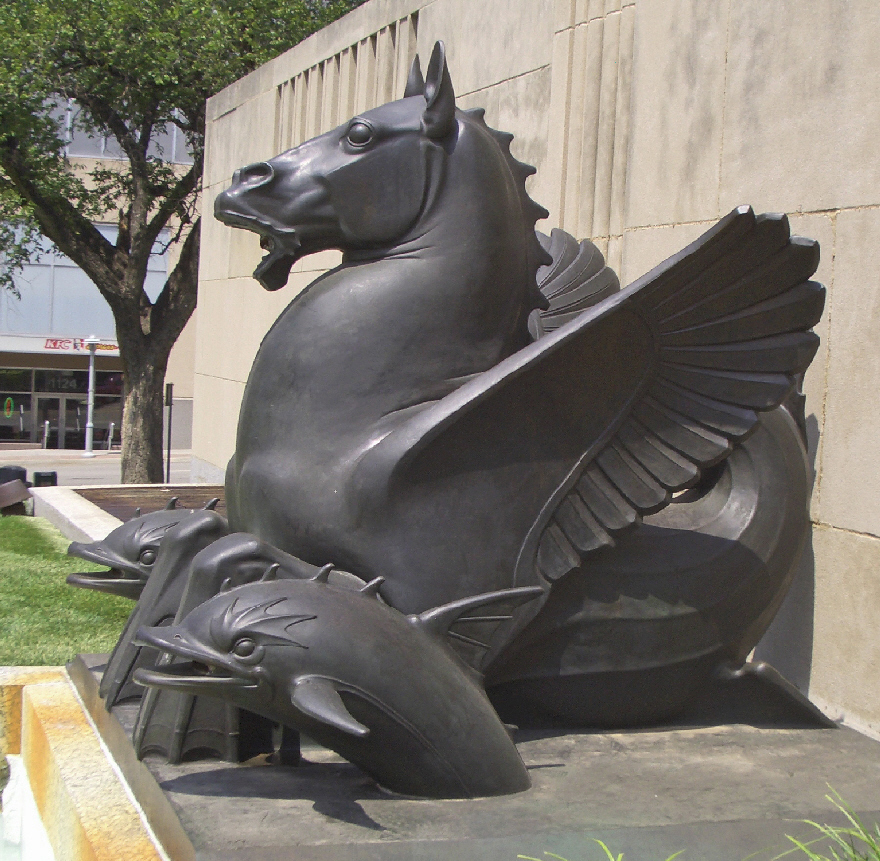


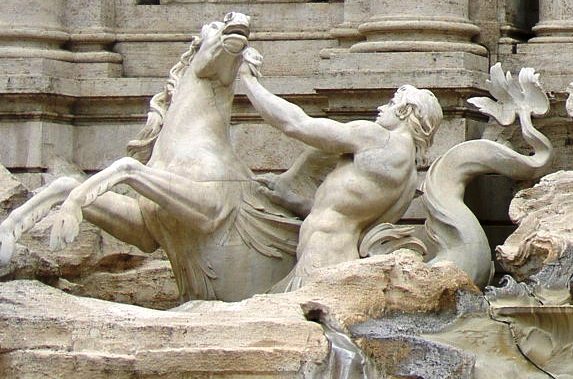
Characteristics and depiction
Artists varied the hippocamp's appearance: some show a full horse body merging into a powerful fishtail, others depict a more stylized, sinuous form with fins and barbels. Typical attributes include a bridled head, flowing mane, and a scaly, undulating tail. The hippocamp is frequently depicted in motion, pulling a chariot or carrying a deity and is often grouped with other marine beings such as tritons and nereids. Representative iconography can be explored via museum collections and archaeological summaries at related catalogues.
History and cultural context
Though the hippocamp rarely figures in surviving narratives, it appears repeatedly on Greek and Roman reliefs, mosaics, coins, and frescoes. In classical art it is commonly associated with sea gods and personifications — for example as a mount for Poseidon, Nereus, or attendant sea-nymphs — and in later periods it is reused in Roman decorative schemes. Medieval and Renaissance artists revived and adapted the form in bestiaries, fountains, and heraldic motifs. Scholarly discussions and comparative images are available through compendia noted at reference collections.
Uses, meanings and modern echoes
The hippocamp functioned primarily as a symbolic vehicle: it conveyed ideas of marine power, speed, and the liminal border between land and sea. In modern times the term hippocampus was adopted in anatomy for a brain structure whose curled shape resembles a seahorse; the classical creature also appears in decorative arts, logos, and popular culture. For general background on the natural and symbolic associations of seahorses and hippocamps see overview material.
Notable distinctions and legacy
Key points to remember:
- The hippocamp is primarily an artistic and emblematic figure rather than a character in surviving mythic narratives.
- Its form blends terrestrial (equine) and marine (fish) elements, signaling a hybrid, liminal identity.
- Its visual legacy spans antiquity, the medieval and Renaissance worlds, and continues in disciplinary names such as the anatomical hippocampus. For additional resources and image guides consult specialist bibliographies.
Because much of our knowledge comes from decorative contexts, the hippocamp's exact symbolic nuances could vary by time, place, and patron; modern studies therefore treat it as a versatile motif that reflects ancient attitudes toward the sea and its divine inhabitants.
Related articles
Author
AlegsaOnline.com Hippocamp (hippocampus): the horse-fish of classical art and myth Leandro Alegsa
URL: https://en.alegsaonline.com/art/44332
Sources
- metmuseum.org : Terracotta bell-krater (mixing bowl) with lid
- theoi.com : Hippokampoi