
Het Wilhelmus — the Dutch national anthem
Het Wilhelmus is the national anthem of the Netherlands, originating in the 16th century. Its archaic lyrics adopt William of Orange’s voice; the tune is the oldest of any national anthem.
Overview

Image gallery
6 Images


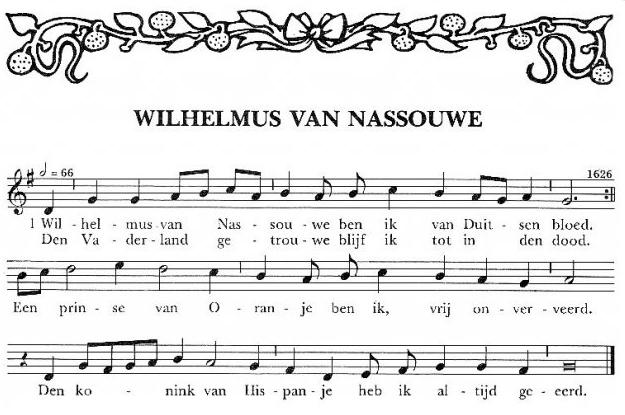

Historical background
The earliest references to the song appear in documents from the late 16th century, when the Low Countries were in conflict with Habsburg Spain. The lyrics are written in an older form of Dutch and present a first-person narrative attributed to William of Orange (William I of Nassau), leader of the revolt. Over time the melody and words were copied, adapted and published in various songbooks. A key early arranger and publisher was Adrianus (Adriaen) Valerius, whose collections helped preserve the tune into the 17th century.
Structure and lyrics
The complete poem consists of multiple stanzas (commonly given as fifteen), each voiced in the persona of William and expressing loyalty, reliance on divine protection, and the moral justification for resistance. A well-known formal feature is an acrostic formed by the initial letters of the stanzas that spells the name of the stadtholder. Modern performances normally use only a small selection of the whole text — most often the first and the sixth stanzas — both because the original language is archaic and because the full poem is long.
Uses, performance and official status
Although popularly sung for centuries, "Het Wilhelmus" was not formally declared the national anthem until the 20th century; the tune and verses had already been widely accepted as a patriotic song long before official adoption. It has been used at royal ceremonies, state events, and sporting occasions, and it was also recognized in related polities such as the Netherlands Antilles until 1964 (see date). The anthem is typically performed in Dutch, and arrangements vary from simple vocal renditions to full orchestral settings.
Notable aspects and distinctions
- Age: the melody dates back to the 1500s and is often described as the oldest national anthem tune still in use.
- Voice and perspective: the lyrics are unusual among anthems in taking the first-person role of a historical leader.
- Language: the wording preserves archaic Dutch forms that differ from modern usage, so translations and modernizations are common in explanations and performances.
- Comparisons: in discussions of national anthems, "Het Wilhelmus" is frequently contrasted with older texts such as Japan’s "Kimigayo", whose words are ancient but whose musical settings developed later.
For further reading on the anthem’s surviving manuscripts, arrangements by later composers and its role in Dutch national identity, consult basic histories of the Dutch Revolt and musical anthologies that collect early modern songs. Scholarly sources discuss the text’s possible authorship (sometimes linked to prominent contemporaries of William) but treat such attributions cautiously because original records are scarce.
Related articles
Author
AlegsaOnline.com Het Wilhelmus — the Dutch national anthem Leandro Alegsa
URL: https://en.alegsaonline.com/art/43947
Sources
- national-anthems.org : "national-anthems.org - facts"