
Heraklion (Heraclion) — largest city and capital of Crete
Heraklion (often spelled Heraclion) is Crete's largest city and administrative capital. A major port and cultural gateway near Knossos, it combines Minoan archaeology, Venetian heritage and modern services.

Heraklion (also spelled Heraclion or Iraklion) is the principal city and administrative centre of the island of Crete. It lies on the island’s northern coast and functions as the main economic, cultural and transportation hub for Crete. The urban area is home to a substantial portion of the island’s population; official figures recorded about 132,000 inhabitants in the 2001 census (census), and more recent estimates indicate growth in the wider metropolitan area.
Image gallery
10 Images


Overview and location
Heraklion’s harbour and port have long linked the island to continental Greece and other Mediterranean destinations. Modern ferry routes and cargo services connect the city with continental Greece and nearby islands, making it a vital maritime gateway. The city combines busy commercial districts, administrative services and residential neighbourhoods with a historic centre that preserves visible layers of its past.
History and archaeology
The modern city stands close to the famous Bronze Age palace of Knossos, the most important archaeological site on Crete and a principal centre of the Minoan civilization. Excavations at Knossos revealed complex architecture, frescoes and artifacts that illustrate the island’s role in the prehistory of the Aegean. Over many centuries Heraklion developed under Byzantine, Venetian and Ottoman influence; substantial Venetian fortifications and other historic structures survive in the urban fabric.
Sights, museums and cultural life
- The Heraklion Archaeological Museum houses major collections of Minoan finds and is a key destination for visitors interested in the island’s ancient past.
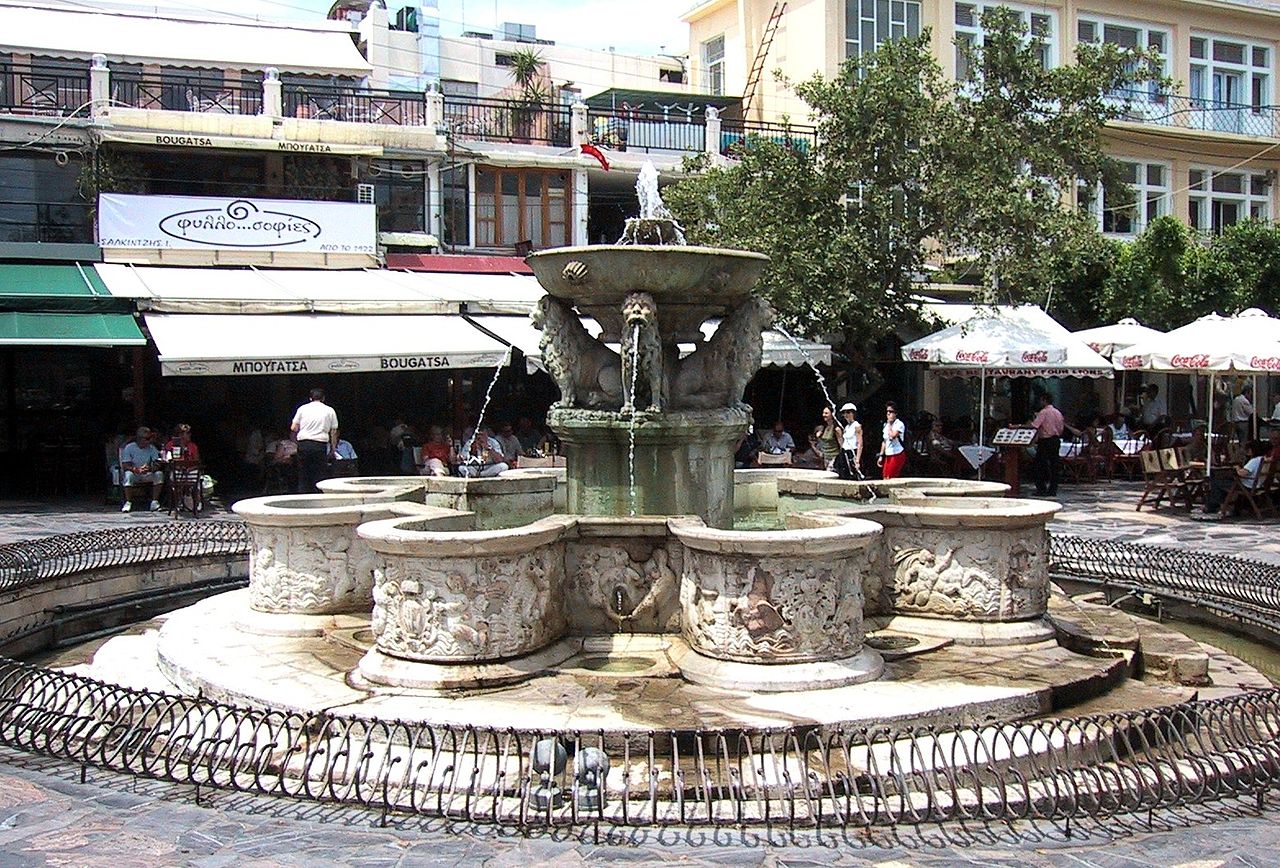
- Venetian-era sites such as the Koules fortress and the Morosini fountain are prominent attractions in the city centre.
- The city supports theatres, galleries and annual festivals that reflect both local traditions and wider Mediterranean culture.
Economy, transport and climate
Heraklion’s economy depends on tourism, shipping, commerce, public administration and services. An international airport and the busy seaport together sustain passenger travel and freight flows, while local agriculture and food products are exported through the port. The city has a hot-summer Mediterranean climate characterized by warm, dry summers and mild, wetter winters; for general seasonal patterns see references on the Mediterranean climate.
Heraklion remains both a practical gateway for travellers to Crete and a focal point for studying the island’s long history, from Minoan palaces to Venetian fortifications and contemporary urban life.
Related articles
Author
AlegsaOnline.com Heraklion (Heraclion) — largest city and capital of Crete Leandro Alegsa
URL: https://en.alegsaonline.com/art/43670