
Anna Anderson — claimant to be Grand Duchess Anastasia
Anna Anderson was the best-known claimant to the identity of Grand Duchess Anastasia. Her story inspired controversy, legal battles, popular culture and eventual forensic resolution by DNA testing.
Overview
Anna Anderson became internationally famous for claiming to be Grand Duchess Anastasia, the youngest daughter of Tsar Nicholas II of Russia. The imperial family was executed by Bolshevik forces in Ekaterinburg on July 17, 1918, an event that left uncertainty and hope among monarchists and relatives. Anderson surfaced in the years after the murder and said she had escaped the execution; her disputed identity sparked decades of debate.
Image gallery
7 Images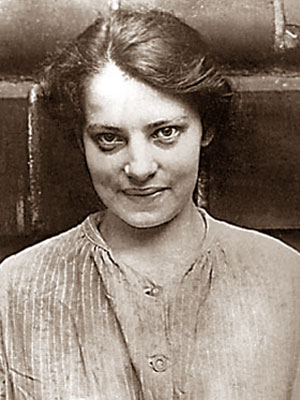


Early life and appearance in Europe
After a suicide attempt in 1920 in Berlin, Germany, Anna Anderson was admitted to a psychiatric facility where she began to assert that she was the missing Grand Duchess. She adopted the name and recounted episodes of escape and concealment. Her appearance, scars and the fragments of memory she offered convinced some observers, while others found inconsistencies and gaps in her story. She remained a polarizing figure throughout her life and was subject to medical, legal and social scrutiny in several countries, including lengthy civil litigation over her identity.
Claims, supporters, and public reaction
Anderson attracted a circle of supporters who produced witnesses claiming familiarity with intimate details of the Romanov family. At the same time, many relatives, servants and acquaintances of the imperial household rejected her as an impostor. The dispute fueled books, newspaper accounts, stage plays and films, turning the question—whether a surviving Romanov was among the living—into a sustained popular fascination. She later married an American, used the name Anastasia Manahan, and eventually settled in Charlottesville, where she lived until her death from pneumonia in 1984.
Investigations and forensic resolution
For much of the twentieth century the claim could be neither decisively proved nor disproved by conventional evidence. That changed after remains believed to be those of the imperial family were discovered and subjected to modern forensic analysis. DNA testing compared tissue associated with Anna Anderson to genetic material from Romanov descendants; the results showed no match. Subsequent forensic work compared Anderson's DNA to that of a Polish factory worker, Franziska Schanzkowska, and found a close correspondence, leading most scientists to conclude Anderson was that woman rather than the Grand Duchess.
Key facts and timeline
- Claim: Anderson maintained she was the escaped Grand Duchess Anastasia, drawing attention across Europe and North America.
- Early incident: A suicide attempt and hospitalization in Berlin preceded her public claims.
- Legal and social impact: Her identity spawned court cases, memoirs, and extensive press coverage.
- Forensic outcome: DNA evidence ultimately did not support her claim and pointed to an alternate identification.
Legacy
Anna Anderson's life illustrates how unresolved tragedies can generate enduring myths. Her story affected royalist hopes, inspired creative works, and highlighted the limits of memory, witness testimony and early 20th-century forensic methods. The later application of genetic science provided a resolution that most historians and forensic experts accept today, while the tale continues to fascinate as an intersection of identity, loss and popular imagination.
For further context on the people and events mentioned above, see sources linked in the text: Anastasia, the executions of July 17, 1918, events in Berlin and Germany, her hospitalization at a mental institution, her later life in Charlottesville, and reports of her death from pneumonia.
Related articles
Author
AlegsaOnline.com Anna Anderson — claimant to be Grand Duchess Anastasia Leandro Alegsa
URL: https://en.alegsaonline.com/art/4345