
Heilbronn (district)
Heilbronn is a rural district in northern Baden-Württemberg, Germany, surrounding the independent city of Heilbronn. It is known for the Neckar valley, vineyards, mixed industry and municipal diversity.
The district of Heilbronn is a Landkreis in the north of Baden-Württemberg in southwest Germany. It surrounds but does not include the independent city of Heilbronn, which serves as the district's administrative seat. The district combines river valleys, agricultural land and small to medium-sized towns within the greater Neckar region.
Image gallery
1 Image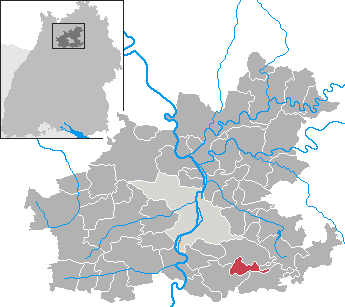
Geography and landscape
The Neckar river flows through the district from south to north and shapes much of its topography. Rolling hills, vineyards and wooded plateaus alternate with the river valley, creating a patchwork of farmland and settlements. The climate and soils in parts of the district support viticulture, while other areas are used for general agriculture and mixed forestry.
History and administration
The territory around Heilbronn has medieval roots tied to the city and surrounding principalities; modern administrative boundaries evolved through 19th- and 20th-century reforms. Today the district is governed by an elected district council (Kreistag) and an executive district administrator (Landrat). Municipalities retain local councils and mayors while cooperating on regional services such as waste management and transportation.
Economy and culture
Industry and agriculture both play roles in the district's economy. Small and medium-sized enterprises, light manufacturing and automotive supply firms are concentrated in several towns, while vineyards and agricultural estates produce wines and other crops. Cultural life often centers on town festivals, wine events and museums that reflect local history.
Features and municipalities
The district comprises a mix of towns and rural communities. Notable aspects include:
- Riverine landscapes along the Neckar, important for transport and recreation.
- Viticulture and regional wine festivals that attract visitors.
- Industrial towns with a heritage of manufacturing and skilled trades, such as district centres and other local centres.
Heilbronn district functions as a transitional area between the larger economic centers of Baden-Württemberg and the surrounding rural countryside, balancing historical character with contemporary industry and agriculture.
Related articles
Author
AlegsaOnline.com Heilbronn (district) Leandro Alegsa
URL: https://en.alegsaonline.com/art/43249
Sources
- destatis.de : "Gemeinden in Deutschland nach Fläche, Bevölkerung und Postleitzahl am 30.09.2016"
- commons.wikimedia.org : Landkreis Heilbronn
- tools.wmflabs.org : 49°10′N 9°15′E / 49.16°N 9.25°E / 49.16; 9.25