
Helmand Province
Helmand Province in southwestern Afghanistan is an arid, agricultural and conflict-affected region centered on Lashkar Gah and the Helmand River, notable for irrigation projects and large-scale opium cultivation.
Overview
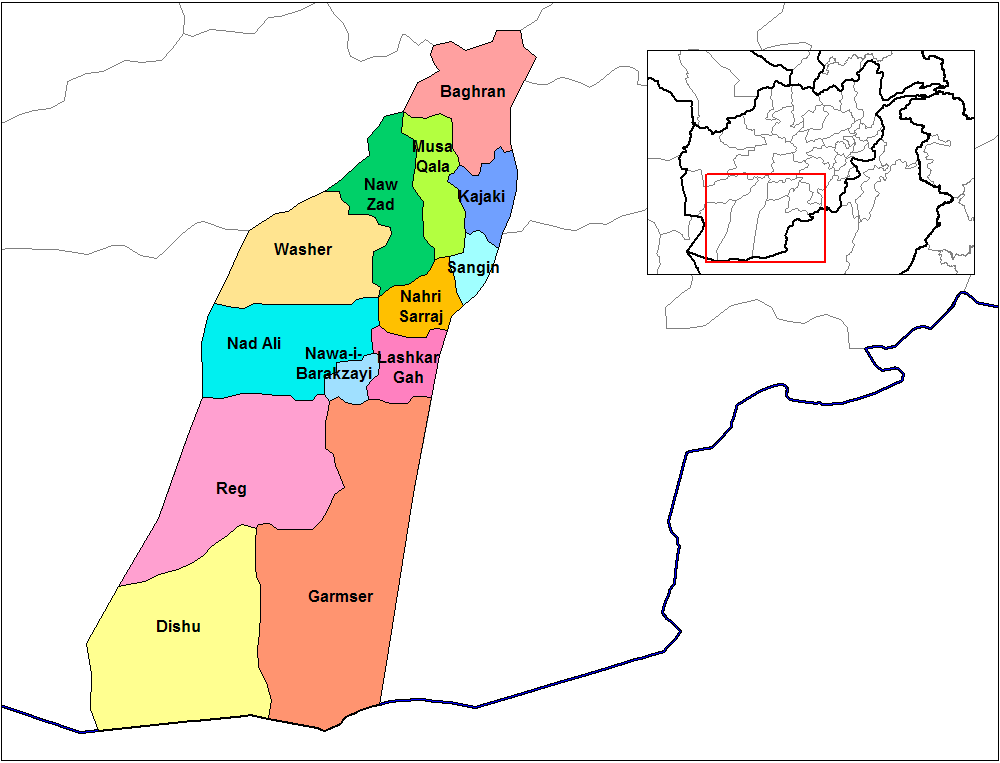
Helmand Province lies in southwestern Afghanistan. Its administrative center is Lashkar Gah, a regional urban hub. Locally the province is known in Pashto and Dari (هلمند), and the Helmand River (Helmand River) is the region's principal watercourse. Much of Helmand is arid or semi‑desert; irrigated areas around the river support most settled agriculture and population centers.
Image gallery
10 Images


Geography and infrastructure
The province is characterized by flat plains, seasonal irrigation canals, and several major hydraulic projects. Notable infrastructure includes dam and reservoir works that regulate the Helmand River and enable farming in otherwise dry terrain. The combination of irrigated land and traditional irrigation systems has shaped settlement patterns and local economies.
Economy and agriculture
Helmand's economy is largely agricultural. Where irrigation is available, farmers grow wheat, cotton, fruits and vegetables. For decades the province has also produced a substantial share of Afghanistan's opium poppy crop; opium production has been a major source of cash income and a focus of eradication and alternative‑livelihood programs. International and domestic efforts to reduce poppy cultivation have met mixed success, complicated by security, market incentives and limited access to services.
History and contemporary conflict
In recent decades Helmand has been a focal point of armed conflict. It has been described as a stronghold for the Taliban at times, and operations by international forces such as NATO contingents, as well as Afghan security forces, have taken place in the province. The presence of competing armed groups, recurring violence, and instability have impeded reconstruction, governance and development efforts.
Population and society
The population is predominantly rural and traditionally organized along tribal and community lines; Pashtun communities form the largest ethnic group in the province. Social life centers on villages and market towns, with Lashkar Gah serving as the main administrative and commercial center. Issues such as internal displacement, limited health and education access, and landmine contamination affect local communities.
Challenges and significance
- Security and governance: persistent conflict complicates civil administration and service delivery.
- Economy: dependence on irrigated agriculture and illicit cash crops creates economic vulnerability.
- Environment and water: efficient water management is crucial in a largely arid landscape.
- Strategic position: routes through Helmand link southern Afghanistan with neighboring regions and have influenced military and political attention.
Because of its size, agricultural potential, and role in recent conflict dynamics, Helmand remains one of Afghanistan's most strategically important provinces. Further information and regional updates can be found from provincial reports and international analyses (opium and drug reports, development assessments and security briefings available via official sources).
Questions and answers
Q: What is Helmand?
A: Helmand is one of the 34 provinces of Afghanistan located in the southwest of the country.
Q: What is the capital of Helmand?
A: The capital of Helmand is Lashkar Gah.
Q: What river flows through Helmand?
A: The Helmand River flows through the mainly desert region, providing water for irrigation.
Q: What does Helmand produce a lot of?
A: Helmand is the world's largest opium-producing region, producing 75% of the world's total production.
Q: Who is currently serving as governor in Helmand?
A: The current governor in Helmand is Mohammad Golab Mangal (since March 2008).
Q: Where are NATO and Taliban forces fighting?
A: Much of the fighting between NATO and Taliban forces is taking place in this province.
Q: Is it true that Helmand has become a Taliban stronghold?
A: Yes, it is said that Helmand has become a Taliban stronghold.
Related articles
Author
AlegsaOnline.com Helmand Province Leandro Alegsa
URL: https://en.alegsaonline.com/art/43409
Sources
- nps.edu : Afghanistan's Provinces–Helmand
- nps.edu : NPS
- smh.com.au : "Where the poppy is king" · webcitation.org
- zeenews.com : "Afghanistan still the largest producer of opium: UN report" · webcitation.org
- mrrd.gov.af : Helmand provincial profile
- nps.edu : Helmand Executive Summary, nps.edu
- nps.edu : NPS.edu
- fao.org : Afghanistan Geographic & Thematic Layers