
High-voltage direct current (HVDC)
HVDC is the transmission of electric power using high-voltage direct current. It is used for long-distance links, submarine cables, and connecting asynchronous power systems with efficient, controllable transfer.
High-voltage direct current (HVDC) denotes the bulk transmission of electrical power using direct current at high voltages. Unlike alternating current systems, HVDC conveys unidirectional or controllable bidirectional power between converter terminals and is commonly chosen where long distance, underwater/underground routing, or interconnection of asynchronous grids makes it more efficient or practical than AC. For an overview of transmission systems see transmission system materials.
Image gallery
10 Images


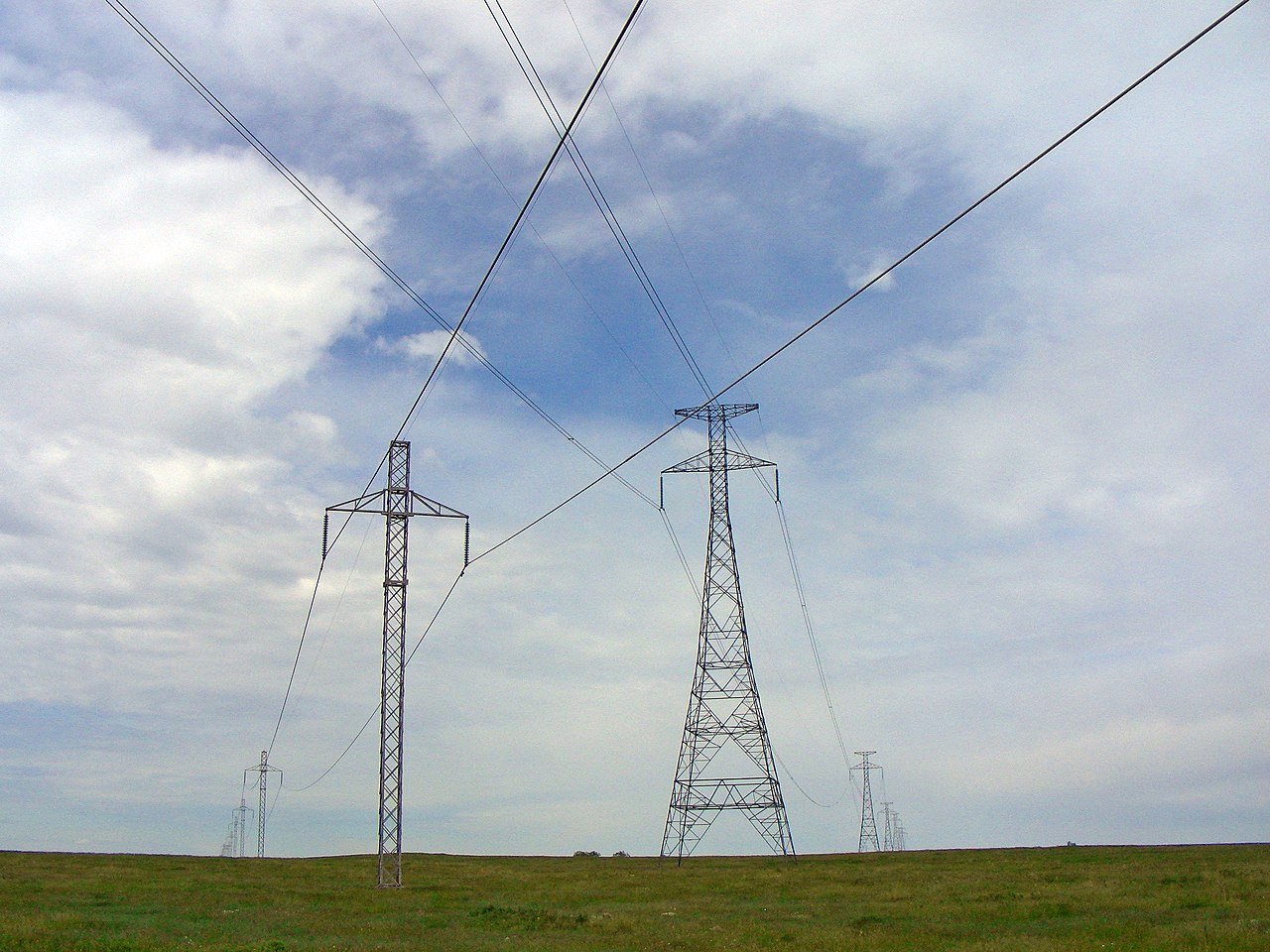


How HVDC works
An HVDC link comprises converter stations at each end, the high-voltage line or cable that carries DC, and control and protection equipment. Converter stations convert AC to DC at the sending end and DC back to AC at the receiving end. Modern installations use power electronics to control voltage, current and power flow; further technical information and introductions appear in DC technology references such as DC converter guides.
Converter technologies
- Line-commutated converters (LCC) rely on the AC system for commutation and have been widely used for high-capacity, long-distance links.
- Voltage-source converters (VSC) use newer semiconductor devices and permit independent control of active and reactive power, faster fault response, and black-start capability.
Line and cable types
HVDC transmission is implemented with overhead lines, submarine cables and buried cables. Subsea and underground applications especially benefit from DC because the absence of AC charging currents reduces losses and makes long cable runs feasible; industry overviews on electricity and cable use are available at industry resources.
System configurations and operation
- Monopolar, bipolar and multi-terminal arrangements are used depending on capacity, redundancy and cost considerations.
- Some systems use earth or metallic return; others adopt bipolar operation to improve reliability and reduce environmental impact.
Advantages and limitations
HVDC offers lower transmission losses for very long point-to-point connections, precise control of power flow, and the ability to link asynchronous networks. Trade-offs include higher converter station cost and complexity, and the need for specialized protection and harmonics management. For comparisons with alternating current systems consult general AC/DC discussion pages such as AC transmission.
Applications and development
Common applications include long-distance bulk transfer, offshore wind farm collection, cross-sea interconnects and regional grid links where stability or asynchronous operation is required. Over the 20th and 21st centuries progress in semiconductor devices, control electronics and insulation materials has expanded the practical uses and reliability of HVDC networks.
Specialist texts, grid operator publications and manufacturer guidance provide detailed technical standards, project examples and operational practices for planners and engineers.
Questions and answers
Q: What is a high-voltage direct current?
A: A high-voltage direct current is a transmission system that uses direct electric current (DC) to transmit electricity.
Q: How does a high-voltage direct current differ from a high-voltage alternating current?
A: A high-voltage direct current is more efficient over long distances than the usual high-voltage alternating current (HVAC).
Q: What is the advantage of using a high-voltage direct current?
A: The advantage of using a high-voltage direct current is that it is more efficient over long distances.
Q: What type of current does a high-voltage direct current use?
A: A high-voltage direct current uses direct electric current (DC).
Q: Why is a high-voltage direct current more efficient over long distances?
A: A high-voltage direct current is more efficient over long distances because it experiences less energy loss.
Q: What is usually used to transmit electricity over long distances?
A: The usual high-voltage alternating current (HVAC) is usually used to transmit electricity over long distances.
Q: What does HVDC stand for?
A: HVDC stands for high-voltage direct current.
Related articles
Author
AlegsaOnline.com High-voltage direct current (HVDC) Leandro Alegsa
URL: https://en.alegsaonline.com/art/44128
Sources
- pub.nf.ca : pub.nf.ca