
Hans-Ulrich Rudel
German Stuka dive-bomber pilot in WWII, the most highly decorated German serviceman and the only recipient of the Golden Oak Leaves version of the Knight's Cross; later a controversial postwar figure.
Overview
Hans-Ulrich Rudel (2 July 1916 – 18 December 1982) was a German ground-attack aviator during the Second World War who became widely known for his service on the Eastern Front and for the exceptional military honors he received. Trained as a pilot, Rudel specialized in flying the Stuka dive bomber, a type of aircraft used by Nazi Germany for close air support. He rose to national prominence during the conflict and remained a polarizing figure after the war.
Image gallery
5 Images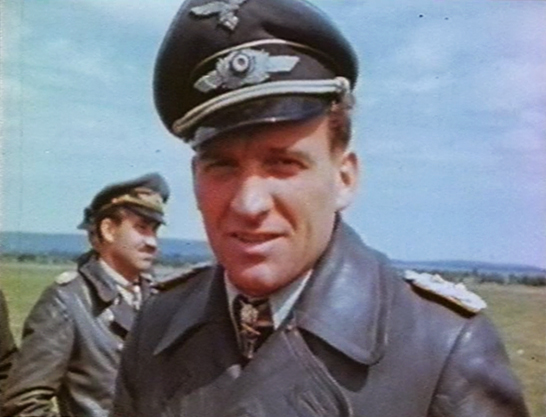


Military career and awards
Rudel served predominantly on the Soviet front, flying numerous combat missions in support of ground operations. Over the course of the war he was promoted through the Luftwaffe ranks to the position of Oberst (colonel). He was awarded many of the highest German military decorations of the era. Notably, he was one of a small group awarded the Knight's Cross of the Iron Cross with Oak Leaves, Swords and Diamonds, and he is often cited as the only person to receive the unique version described as the Knight's Cross with Golden Oak Leaves, Swords and Diamonds, an honor that marked him as one of the most highly decorated German servicemen of the war.
Typical missions and characteristics
Rudel's role emphasized dive-bombing and low-altitude attacks against armored and fortified targets. Pilots in his role required precise flying under intense ground fire and close coordination with advancing infantry and armor units. The aircraft he flew and the tactics he used were designed to destroy tanks, artillery and river crossings—targets of critical importance on the Eastern Front. Accounts of his service emphasize a combination of technical skill, persistence under fire and an aggressive operational style.
Postwar life and controversy
After Germany's defeat Rudel left Europe for a period and spent time in South America, where he established contacts with expatriate networks. In the postwar decades he maintained friendships with former military and political figures and participated in veteran organizations. His activities and public statements after 1945 attracted criticism because he defended or supported individuals and ideas associated with the defeated National Socialist regime. Those associations made him a controversial public figure in both South America and West Germany until his death in Rosenheim.
Legacy and assessment
Rudel's military record is often discussed separately from his postwar political alignments. Histories of the air war on the Eastern Front note his unique decorations and the tactical niche of dive-bombing operations, while postwar studies focus on the ways that some former Wehrmacht and Luftwaffe officers integrated into international networks after 1945. His life illustrates broader issues about memory, the commemoration of wartime service, and accountability for political beliefs held after the conflict.
Further notes
- For technical context on the aircraft and tactics he employed, see material about the Stuka dive bomber and ground-attack doctrine.
- Background on the wider conflict is covered under general accounts of World War II and the German military.
- Discussions of Rudel's honors refer to the system of German military decorations such as the Knight's Cross and its higher grades.
- Analyses of his postwar activities touch on networks of former Nazi affiliates and émigrés in the mid-20th century.
- Biographical and critical literature often notes his nationality as German and situates his career within the broader history of 20th-century Europe.
Because Rudel's life spans combat achievement and contentious political activity, assessments of his significance depend on whether the emphasis is placed on military history, biography, or the politics of remembrance.
Related articles
Author
AlegsaOnline.com Hans-Ulrich Rudel Leandro Alegsa
URL: https://en.alegsaonline.com/art/42296