
Halberd: Design, History and Use of the Medieval Polearm
A halberd is a two-handed pole weapon combining an axe blade, a central spike and a rear hook. Prominent in 14th–16th century Europe, it later survived as a ceremonial emblem of guards and ceremonies.
Overview
The halberd is a two-handed polearm that combines three functional elements on a single head: a cutting axe blade, a central thrusting spike and a rear hook or thorn. Mounted on a long wooden shaft, the weapon was designed to give infantry the means to cut, thrust and grapple at medium range. Its versatility made it well suited to countering armored horsemen, breaking up enemy formations and exploiting gaps in plate armour.
Image gallery
10 Images




Design and components
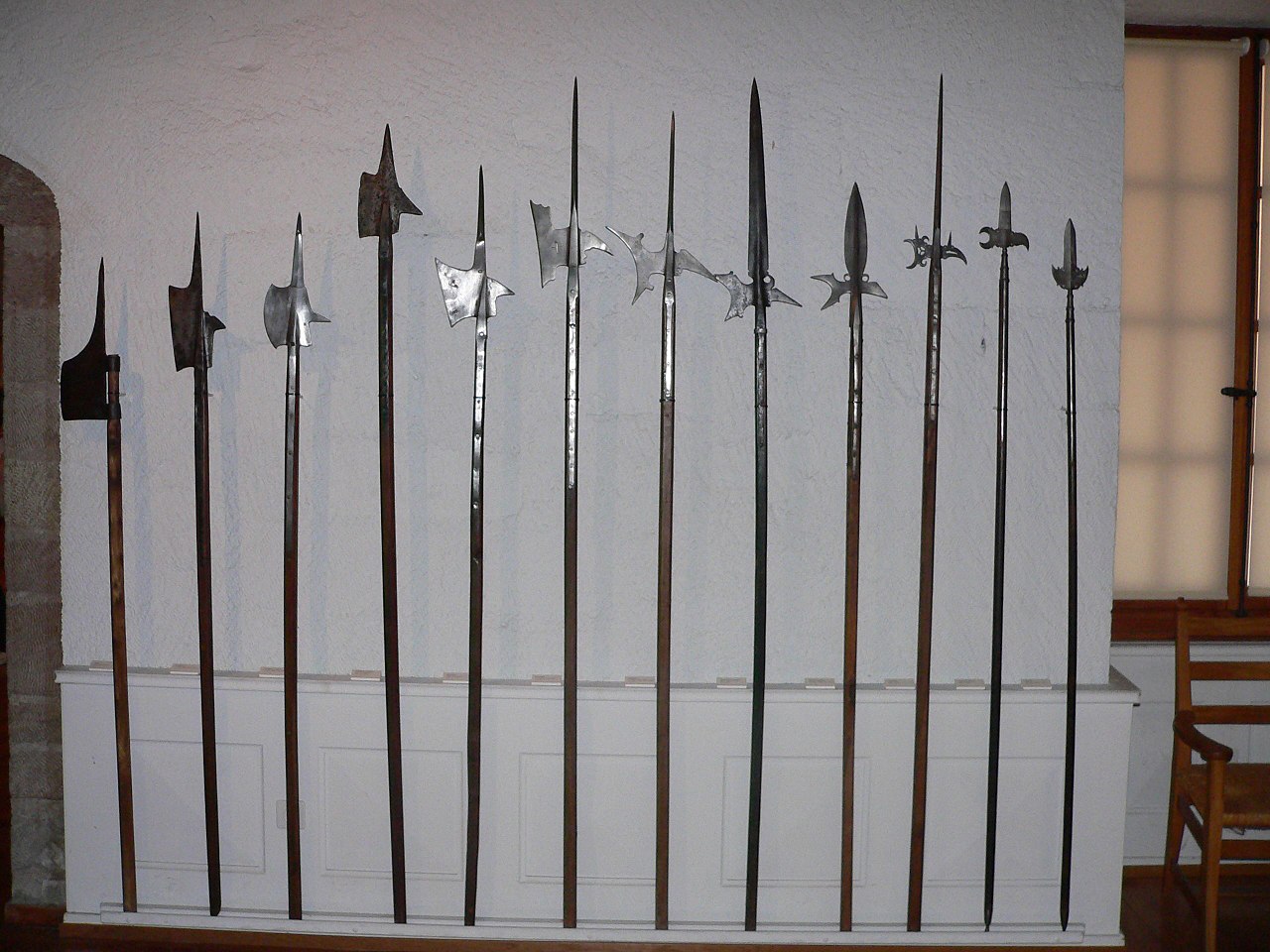
Typical halberds share a broadly similar arrangement. The axe blade provides a wide cutting surface for hacking and chopping; the spike above the blade permits effective thrusts and pommel-like weapon control; and the hooked back could be used to pull riders from saddles, unhorse cavalry or catch and control enemy arms. The head is usually forged from steel and fitted to a wooden pole by a socket or tang, often reinforced by metal langets—strips running down the shaft—to protect against being chopped through.
Construction and manufacture
Halberds were made by blacksmiths who forged heads to a range of forms: broad blades for heavy cutting, narrower blades for better balance, and spikes of varying length. The head might be riveted or socketed to the haft; the shaft itself was typically made of a strong hardwood and could be fitted with metal collars. Regional workshops developed recognizable styles, and surviving examples show a wide variety in proportion and decoration, from purely functional weapons to ornately engraved ceremonial pieces.
History and tactical use
The halberd rose to prominence in late medieval Europe, particularly in the 14th to 16th centuries, when heavily armoured cavalry remained a major battlefield threat. Infantry armed with halberds could hook riders, deliver cutting blows to unarmoured parts of the body or thrust at joints and visors. Halberdiers often fought in disciplined formations alongside pikemen, creating flexible bodies of troops capable of both offensive and defensive tasks. Contemporary fighting manuals and drill traditions describe coordinated stances, guards and techniques for using the weapon both singly and in formation.
Decline and ceremonial role
As firearms and new battlefield tactics spread in the 16th and 17th centuries, the halberd gradually declined as a frontline weapon. Nevertheless, it remained important as a symbol of authority and for close-range policing; many city militias and palace guards continued to display halberds as part of their kit. Today the halberd survives most visibly in ceremonial use by units such as the Swiss Guard at the Vatican and some traditional British and European guard corps.
Variations and related polearms
Variants of the halberd emphasize different functions: larger blades for cutting, longer spikes for thrusting or deeper hooks for grappling. Related polearms include the poleaxe, glaive and partisan, each with distinct balance and blade profiles. The halberd's characteristic three-part head—axe, spike and hook—remains its distinguishing feature.
Legacy and study
Halberds are studied by historians, armourers and historical fencers; many museums preserve examples that illustrate regional styles and metallurgical practice. Reenactors and scholars use surviving weapons and period treatises to reconstruct techniques and drill. As both a practical battlefield instrument and a ceremonial emblem, the halberd occupies a notable place in the military history of medieval and early modern Europe.
Related articles
Author
AlegsaOnline.com Halberd: Design, History and Use of the Medieval Polearm Leandro Alegsa
URL: https://en.alegsaonline.com/art/41851