
Angkor Wat
Angkor Wat is a large 12th‑century temple complex in Cambodia, built under King Suryavarman II. A masterpiece of classical Khmer architecture, it became a Buddhist site and is a major cultural and archaeological landmark.
Overview
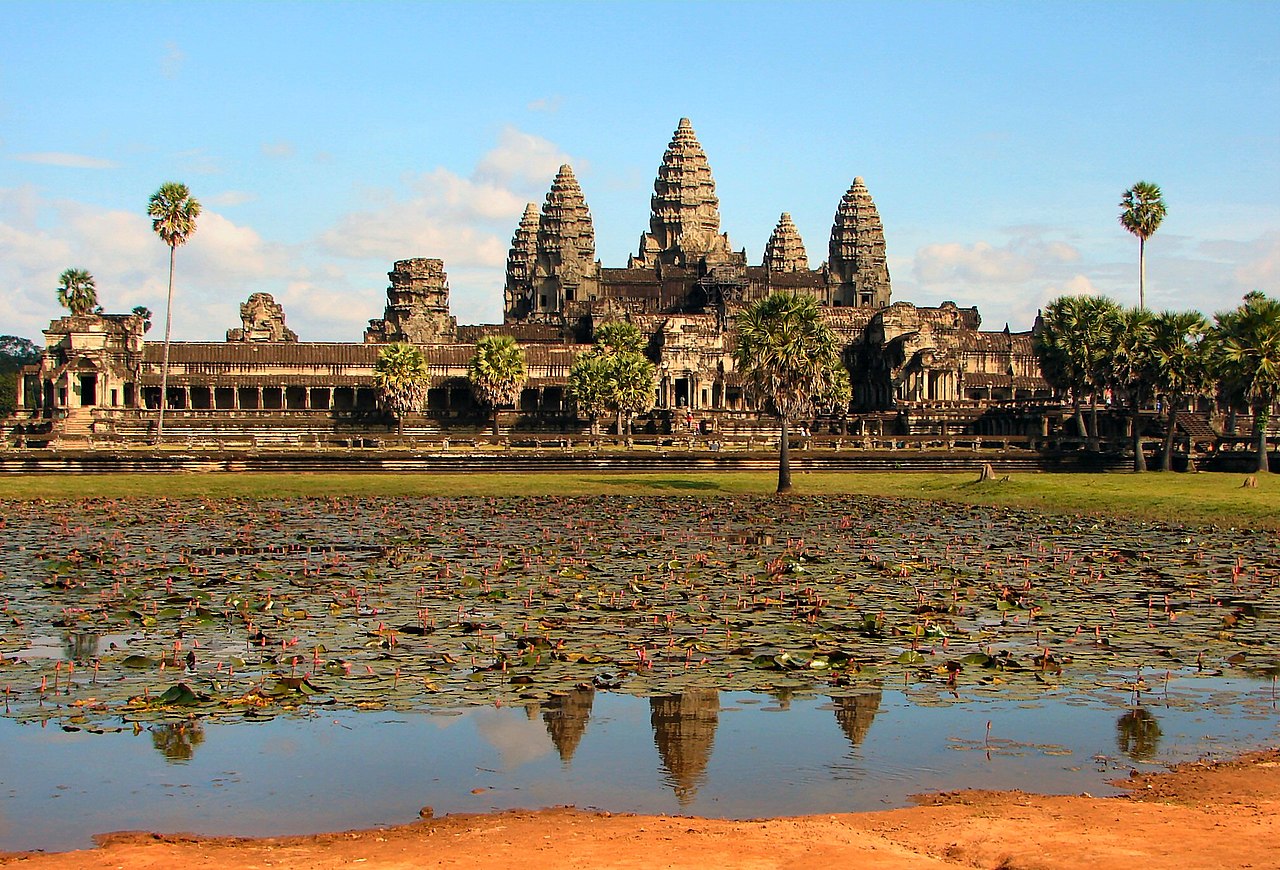
Angkor Wat is a vast temple complex near the modern town of Siem Reap in northwestern Cambodia. Constructed in the early 12th century during the reign of King Suryavarman II, it began as a Hindu state temple and capital and later became an important Buddhist site. It is widely described as the largest religious monument in the world and remains a powerful symbol of Cambodia and Khmer civilization.
Image gallery
10 Images



Design and principal features
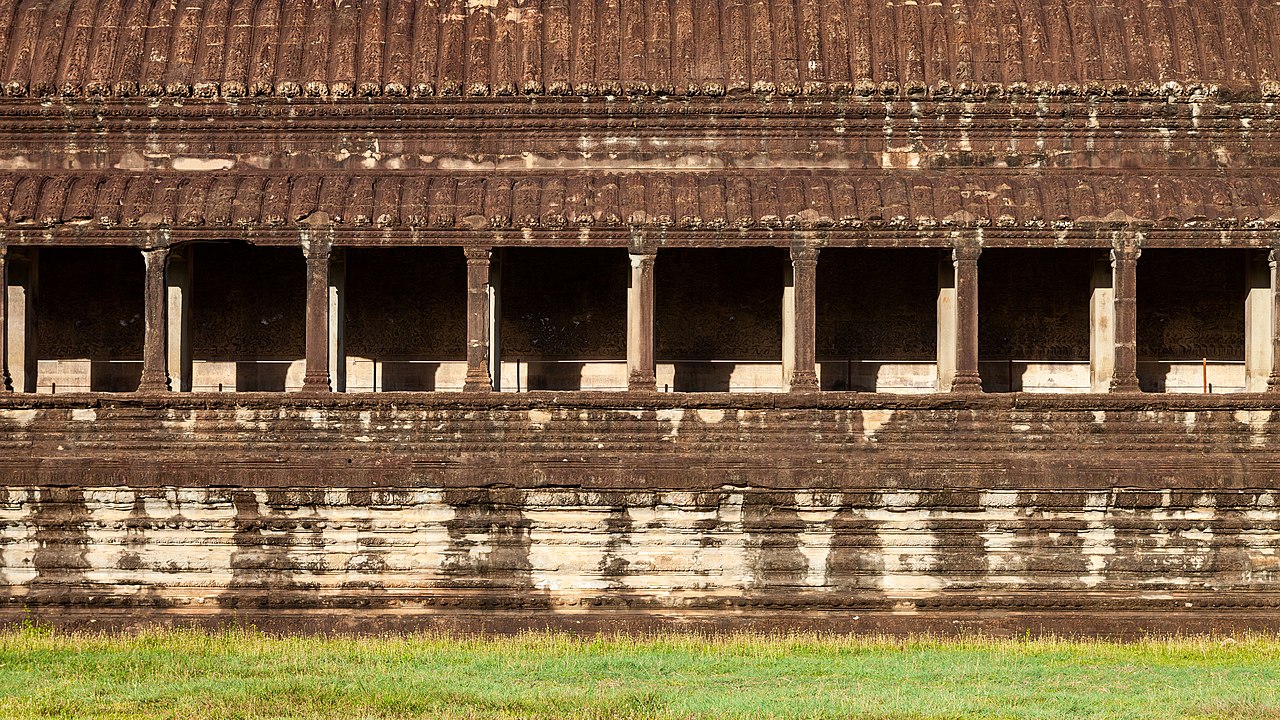
The plan of Angkor Wat follows classical Khmer principles, combining temple-mountain symbolism with a surrounding moat and concentric galleries. Its layout is dominated by a central quincunx of towers meant to evoke Mount Meru, the mythic home of the gods. The complex is noted for its scale, axial galleries, and the unity of its stone carving and architecture.
- Moat and causeway: a broad moat encircles the main precinct and frames the approach to the central temple.
- Galleries and bas-reliefs: long enclosures display extensive carved narratives showing Hindu epics, cosmology, and royal imagery.
- Towers and courtyards: tiered terraces and tower groups form a rising composition centered on the sanctuary.
History and religious use
Built as the state temple and funerary shrine of Suryavarman II, Angkor Wat was originally dedicated to the Hindu god Vishnu. Over the centuries its religious function shifted; Buddhism became the dominant tradition there and many later additions and statues reflect Buddhist practice. The wider Angkor polity experienced political and environmental changes after the 14th century that led to partial decline and shifting centers of power.
Art, inscriptions, and archaeology
Angkor Wat preserves an exceptional ensemble of stone carving, including long continuous bas-reliefs depicting scenes from the Ramayana and Mahabharata, processions, and episodes of Khmer history and mythology. Inscriptions and archaeological research have helped reconstruct aspects of Khmer administration, engineering, and religious life, while conservation specialists continue to study the site’s construction techniques and stone conservation needs.
Modern significance and conservation
Since the 19th century Angkor Wat has attracted international attention; it is a national symbol of Cambodia and appears on the country’s flag. The site was inscribed as a UNESCO World Heritage Site in 1992, prompting coordinated conservation, documentation, and tourism management efforts. Preservation challenges include weathering, vegetation growth, previous restoration work, and the impacts of mass tourism.
Visiting and notable facts
Today Angkor Wat is the center of the larger Angkor Archaeological Park and draws researchers and millions of visitors annually. Notable points include its architectural harmony, its role as a model of Khmer temple design, and its cultural resilience through religious change. For language and local names see the temple’s Khmer name; for practical location information see Siem Reap province.
Related articles
Author
AlegsaOnline.com Angkor Wat Leandro Alegsa
URL: https://en.alegsaonline.com/art/4169
Sources
- angkor-visit.com : "Angkor Temple Guide"