
Conurbation (urban geography)
A conurbation is a continuous urban area formed when cities, towns and villages expand and merge; it describes physical, economic and social integration beyond individual municipalities.
Overview
A conurbation is a large, continuous built-up area created when separate urban settlements grow until their edges join. It typically comprises cities, suburbs, towns and formerly separate villages that have become physically connected through expansion of housing, industry and infrastructure. The term refers primarily to the physical continuity of development and the functional ties among the component places rather than to a single administrative unit. For a general definition of an urban area, conurbations represent one common pattern of modern urban growth.
Image gallery
7 Images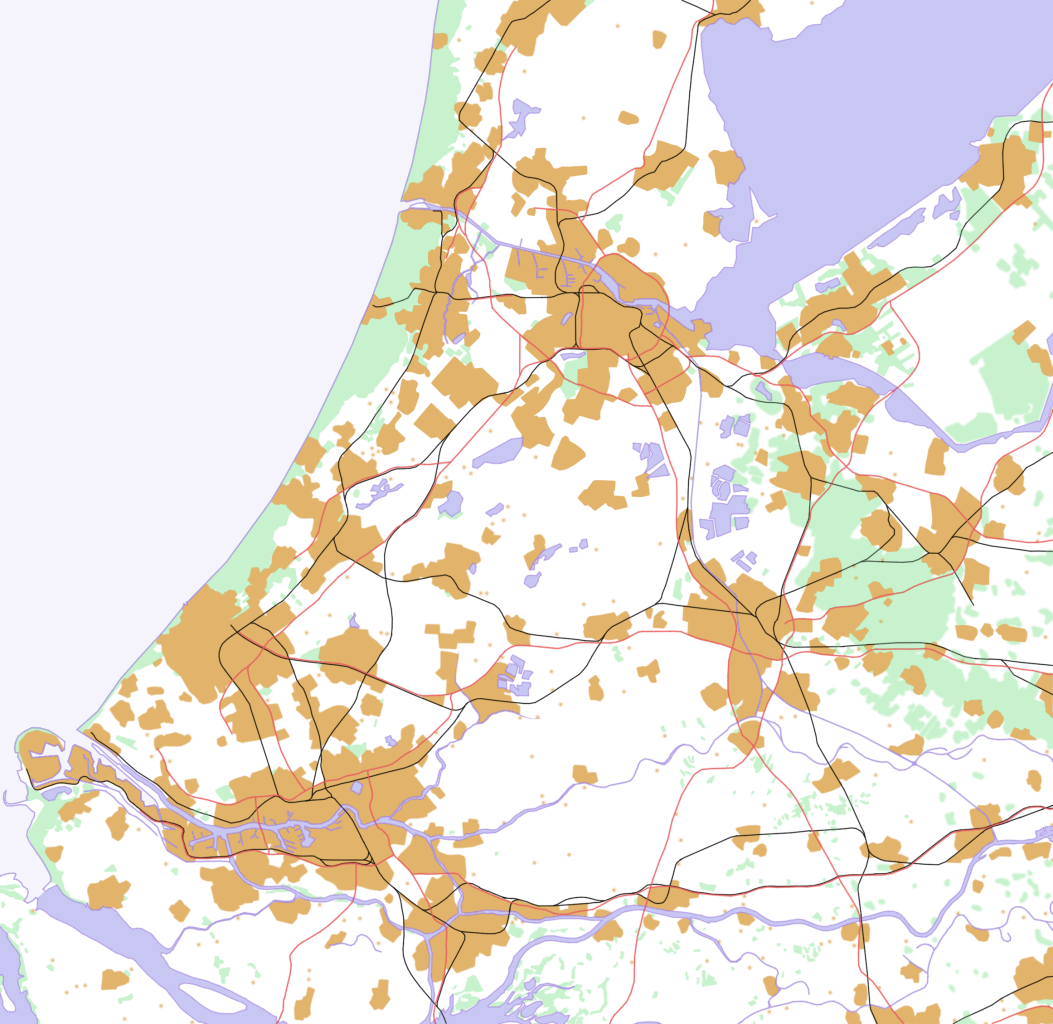


Key characteristics
Conurbations have several distinguishing features that planners and geographers use to identify them:
- Built-up continuity: buildings, roads and other urban land uses link formerly separate settlements into one unbroken urban fabric.
- Economic integration: firms, labour markets and services operate across municipal boundaries, producing interdependence.
- Commuting and mobility: extensive daily travel flows connect residential areas with employment centres within the conurbation.
- Complex governance: multiple local authorities and jurisdictions are often involved, making coordinated planning a challenge.
Origins and development
The concept of the conurbation arose as industrialisation, improved transport and population increases encouraged outward expansion of towns and cities. The word itself was coined by the Scottish urbanist Patrick Geddes in the early 20th century to describe networks of towns that had merged. Over the 19th and 20th centuries, railways, highways and suburban housing often accelerated merging; in later decades, population growth and economic change continued to reshape the boundaries of conurbations. Urban sprawl, brownfield redevelopment and infill can all contribute to greater contiguity.
Relations and distinctions
Conurbation is related to but distinct from several other urban concepts. An urban agglomeration emphasizes the population and contiguous built-up area, while a metropolitan area may include a core city and its wider commuting zone or hinterland—sometimes encompassing one or more conurbations. See also the broader idea of a metropolitan area. The process behind merging settlements—such as steady population growth and outward expansion—helps explain how towns (towns and villages) become incorporated into larger urban fabrics.
Importance for planning and policy
Recognising a conurbation has practical implications: transport networks, housing provision, environmental management and public services often need coordination at a scale larger than a single municipality. Planners may pursue metropolitan governance bodies, joint infrastructure projects or shared land-use strategies to address cross-boundary challenges. Environmental issues—air quality, green belt preservation and flood risk—frequently require integrated approaches across the entire conurbation.
Examples and notable facts
- Well-known large conurbations worldwide illustrate different forms: industrial belts, polycentric regions with several similar-sized cities, and single-core dominated spreads.
- Statistical definitions vary by country: some nations define conurbations by continuous built-up land, others by functional criteria like commuting patterns.
- Understanding conurbations helps explain modern urban problems and opportunities, from economic clustering to transport congestion.
Related articles
Author
AlegsaOnline.com Conurbation (urban geography) Leandro Alegsa
URL: https://en.alegsaonline.com/art/22814