
City of London (the Square Mile)
The City of London is the historic core and financial centre of London, a distinct local authority and ceremonial county often called the Square Mile.
Overview
The City of London, commonly called the City or the Square Mile, is the compact historic and financial core of the British capital. Covering just over one square mile (about 1.12 sq mi or 2.9 km2), it has retained boundaries closely similar to those established in the Middle Ages. Although small in area and in resident population, the City plays an outsized role in the economy and governance of the wider metropolis known as Greater London.
Image gallery
10 Images




Geography and governance
Geographically the City sits at the heart of central London, bounded largely by the River Thames to the south and adjacent boroughs of the modern capital. It is one of the distinct parts of London alongside the 32 boroughs that make up Greater London, and it is sometimes contrasted with neighbouring authorities such as the City of Westminster. The City of London is a separate ceremonial county and retains unique forms of municipal government; it elects its own historic civic head, the Lord Mayor of London, a post with ceremonial and representational duties distinct from the elected Mayor of London who leads the larger metropolitan administration.
History and development
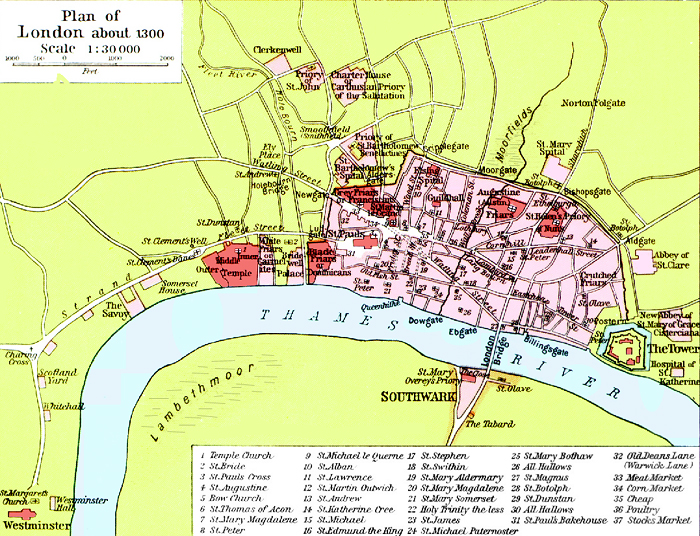
The site's urban origins reach back to Roman London, when a walled settlement and port were established on the Thames. Many of the City's limits and institutions date to medieval times, and its street pattern, some liberties and certain ceremonial rights reflect centuries of continuity. While the surrounding metropolis expanded vastly during the modern period, the City's boundaries have remained notably stable, preserving a compact historic footprint within the broader metropolis.
Economy, role and daily life
The City is one of the United Kingdom's principal centres for finance and professional services; much of the country's wholesale financial trade and international banking takes place here. The resident population is small—only a few thousand people live within its walls—but on typical working days the number of people in the Square Mile swells to several hundred thousand as workers, visitors and commuters converge on offices, trading floors and legal chambers. This daytime concentration shapes transport, retail and hospitality provision in the area.
Features, institutions and law enforcement
The City maintains distinctive institutions and services that reflect its special status. Examples include:
- Ancient civic offices and livery companies that preserve ceremonial and charitable roles.
- Key financial institutions and markets located in and around its streets and towers.
- Its own police force, the City of London Police, responsible for law and order within the Square Mile.
Distinctive facts and public perception
Although it is now a small fraction of the overall urban area, the City of London's combination of historic continuity, legal peculiarities and concentration of economic activity makes it unique among parts of the capital. It retains city status in its own right and is often presented as a symbol of London's financial history and global connectivity. Medieval rights, surviving boundary definitions and separate civic institutions continue to distinguish the Square Mile from the wider governance structures of Greater London and the modern administrative arrangements administered by the Mayor of London and borough councils.
For further reading on related topics, consider sources on the wider development of central London, the history of medieval municipal institutions, or the evolution of London's role as a financial centre that began in Roman times and expanded through successive commercial eras. The City's institutions and modern functions continue to be discussed in studies of urban governance and global finance.
Questions and answers
Q: What is the City of London?
A: The City of London is a district of Greater London. It has city status in its own right, and is also a ceremonial county. It is often referred to as the City or the Square Mile, and it covers an area of 1.12 sq mi (2.90 km2).
Q: What does the City of London do?
A: The City of London is where most of the United Kingdom's financial trade takes place. It has a very small resident population but many people come to work there during the day, making it very busy with some 300,000 people in it at any one time.
Q: How old is the City of London?
A: The city dates back to Roman times and has other ancient features dating back to medieval times.
Q: Who governs the City of London?
A: The City of London has its own mayor, known as the Lord Mayor of London, who holds an office separate from (and much older than) that held by the Mayor of London for Greater London itself.
Q: Does the City have its own police force?
A: Yes, it does - this is known as the City of London Police Force.
Q: How big is the area covered by the City?
A: The area covered bytheCityofLondonisjustoveronesquaremile(1.12sqmi/2.90km2).
Q: Is "London" now referring only to Greater London or does it still refer to just Central/TheCityofLondon?
A:"London" now refers specifically to GreaterLondonwhichismadeupof32boroughs(includingtheCityofWestminsterandtheCityofLondon).
Related articles
Author
AlegsaOnline.com City of London (the Square Mile) Leandro Alegsa
URL: https://en.alegsaonline.com/art/20556
Sources
- webarchive.nationalarchives.gov.uk : "City of London Resident Population Census 2001"
- cityoflondon.gov.uk : cityoflondon.gov.uk
- thisismoney.co.uk : "City of London still tops finance league"
- bis.org : BIS Triennial Central Bank Survey