
Buoyancy: Principles, Causes, and Practical Applications
Buoyancy is the upward force exerted by a fluid on an immersed object. This article covers its causes, Archimedes' principle, formula, examples, and engineering uses.
Overview
Buoyancy is the net upward force that a surrounding fluid or gas exerts on an object immersed in it. In everyday language this is what makes boats float and balloons rise. In scientific contexts buoyancy explains why objects appear lighter in water and how floating, sinking, and neutral equilibrium are determined. For a general discussion see physics.
Image gallery
6 Images


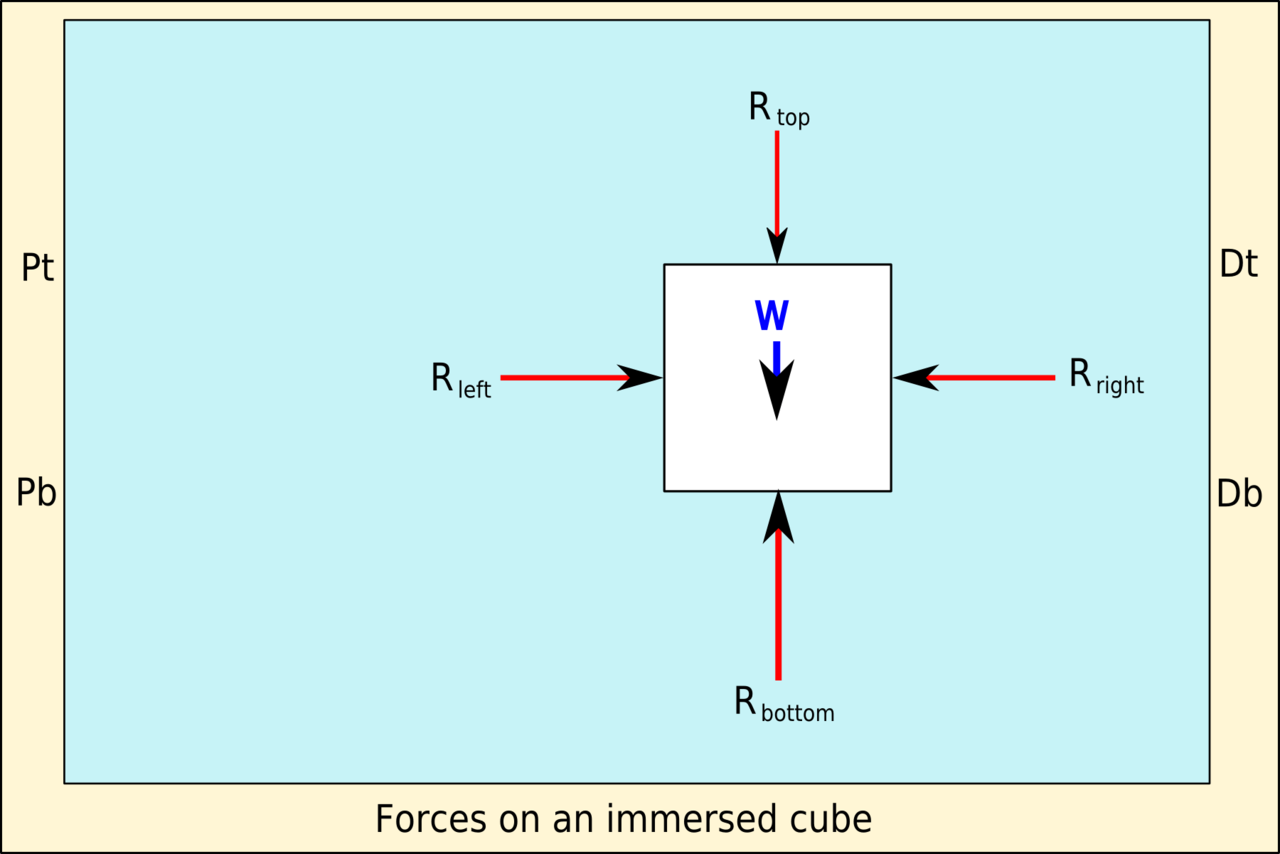


How buoyancy arises
Buoyancy results from pressure differences in a fluid: pressure increases with depth, so the fluid pushes harder on the lower parts of an immersed body than on the upper parts. That difference produces a net upward force. The relevant concept of pressure is described in more detail at pressure. The medium providing the push may be any fluid, including liquids and air, which is itself treated as a fluid for buoyancy effects; see also general material on fluids.
Archimedes' principle and simple formula
Archimedes' principle states that the buoyant force on a submerged object equals the weight of the fluid displaced by that object. Equivalently, buoyant force = (fluid density) × (gravitational acceleration) × (displaced volume). The comparison between that force and the object's own weight (or apparent weight) determines whether it floats, sinks, or remains neutrally buoyant.
Practical examples and uses
Many vehicles and devices exploit buoyancy. Ships and ships keep average density below that of water by enclosing large volumes of air; smaller craft like boats follow the same basic idea. Submarines adjust buoyancy with ballast tanks. Lighter-than-air craft such as balloons and blimps rise because the gas inside is less dense than surrounding air. The principle also guides the design of floating platforms, buoys, and many aquatic instruments, and is central to marine engineering and buoyant vehicle control (vehicles).
Important distinctions and notes
Buoyancy differs from aerodynamic lift although both can produce upward force. Stability of a floating object depends on the relative positions of its center of gravity and its center of buoyancy; these determine whether a craft rights itself or capsizes when tilted. Some counterintuitive outcomes, like the hydrostatic paradox, follow from buoyancy principles: the net buoyant force depends only on displaced volume and fluid density, not on the shape of the container holding the fluid.
Historical and conceptual points
The idea is ancient and is commonly associated with Archimedes, who articulated the displacement principle. The modern term is related to words for floating and to the noun "buoy," used for markers and floating devices. Understanding buoyancy requires both the qualitative picture of pressure differences and the quantitative use of density and displaced volume to predict behavior in air and liquids.
Questions and answers
Q: What is buoyancy?
A: Buoyancy is a force on an object that makes it rise or move upward, and is made by the difference in pressure put on the object by the fluid or air it is in.
Q: Where does the word "buoyancy" come from?
A: The word "buoyancy" comes from the Spanish word for "float", boyar.
Q: What is the net upward buoyancy force?
A: The net upward buoyancy force is equal to the magnitude of the weight of fluid that is displaced by the body.
Q: What does the buoyancy force enable an object to do?
A: The buoyancy force enables an object to float or at least seem lighter.
Q: What vehicles utilize buoyancy?
A: Many vehicles such as boats, ships, balloons, and blimps utilize buoyancy.
Q: How is buoyancy made?
A: Buoyancy is made by the difference in pressure put on the object by the fluid or air it is in.
Q: Why is buoyancy important?
A: Buoyancy is important for many vehicles because it allows them to float or stay afloat.
Related articles
Author
AlegsaOnline.com Buoyancy: Principles, Causes, and Practical Applications Leandro Alegsa
URL: https://en.alegsaonline.com/art/15360