
Grackle: overview of the New World blackbird group
Grackles are several species of New World blackbirds (family Icteridae) noted for glossy, often iridescent plumage, long tails and gregarious behavior across diverse habitats in the Americas.
A grackle is a common name for several species of passerine birds in the New World blackbird family. These birds are best known for their glossy, often iridescent feathers, long tails and adaptable, social behaviour. For general information and species accounts see species accounts.
Image gallery
4 Images
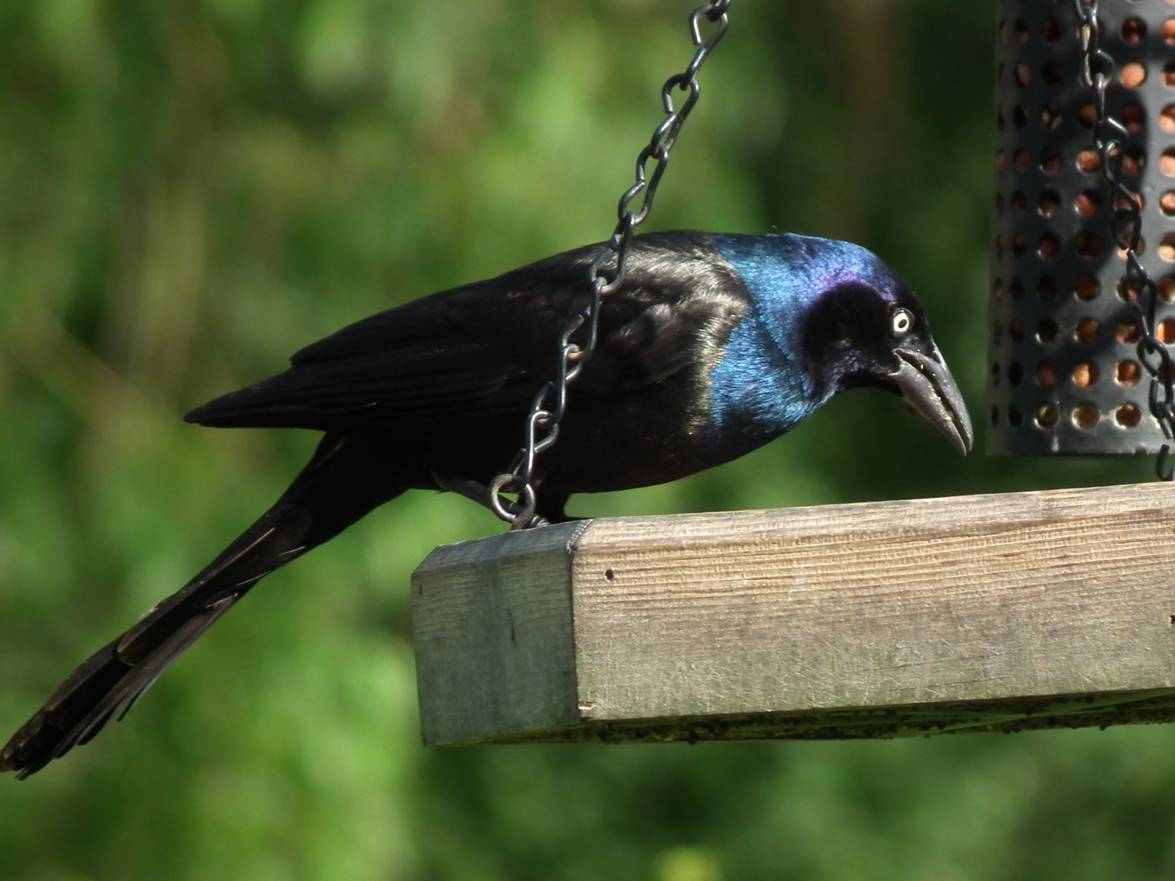


Appearance and identification
Grackles range from medium to fairly large among blackbirds. At a distance many appear uniformly dark, but close inspection reveals sheens of blue, green, purple or bronze. Males are generally larger and glossier than females. Key field marks include pointed bills, long tails that can be keel-shaped, and varied vocalizations such as rattles, whistles and croaks.
Behavior and diet
These birds are opportunistic feeders and highly adaptable to human-altered landscapes. Their diet includes insects, seeds, fruit, small vertebrates and scavenged food; they forage on the ground, in trees and at water edges. Many species form large communal flocks and communal roosts outside the breeding season, which can make them conspicuous in both rural wetlands and urban areas.
Range and habitats
Grackles occur throughout much of North America and extend into South America and the Caribbean. They occupy a wide range of habitats including marshes, open woodlands, agricultural land and cities. Some species have expanded their ranges in recent decades by exploiting new habitats created by humans.
Taxonomy and notable species
Grackles belong to the New World blackbird or Icterid family. Notable members often referred to as grackles include the common grackle, the great-tailed grackle and the boat-tailed grackle. Species boundaries and subspecies have been revised over time; identification often relies on tail shape, size, sheen and voice.
Human interactions and conservation
Grackles play ecological roles as insect predators and seed dispersers but can also damage crops, dominate feeders and form nuisance roosts. Attitudes toward them vary: some people appreciate their adaptability and striking plumage, while others manage populations where they conflict with agriculture or urban life. Conservation status differs by species; some are widespread and common, others are more localized and face habitat pressures.
Related articles
Author
AlegsaOnline.com Grackle: overview of the New World blackbird group Leandro Alegsa
URL: https://en.alegsaonline.com/art/40057