
Grant's gazelle (Nanger granti)
A medium- to large-sized East African antelope, Grant's gazelle (Nanger granti) inhabits dry savannas and open woodlands. Recognizable by curved horns, reddish coat and mixed feeding habits, it forms loose herds.
Overview
Grant's gazelle (Nanger granti) is a species of gazelle native to dry and open habitats of East Africa. It occupies grasslands, acacia savannas and lightly wooded country. The common Swahili name is Swala Granti and the English name commemorates 19th-century explorer James A. Grant. The species is placed in the genus Nanger and is related to other East African gazelles.
Image gallery
8 Images


Appearance and distinguishing features
Grant's gazelle is a medium- to large-sized antelope with a slender, athletic build adapted for speed. The coat is reddish-brown on the back with a white underbelly and a conspicuous white rump patch. Both sexes usually carry ringed, lyre-shaped horns; those of males are longer and more robust. Facial markings and a lateral flank stripe are common identifying features.
Diet, behaviour and reproduction
These gazelles are mixed feeders, taking both grasses and browse; their diet and local movements follow seasonal vegetation changes. They form loose social groups including female herds with young, bachelor groups and territorial males during the breeding season. Females commonly give birth to a single fawn after a gestation of about six months; newborns are often hidden for a short period and are able to stand and follow the mother within days.
Predators, ecological role and distribution
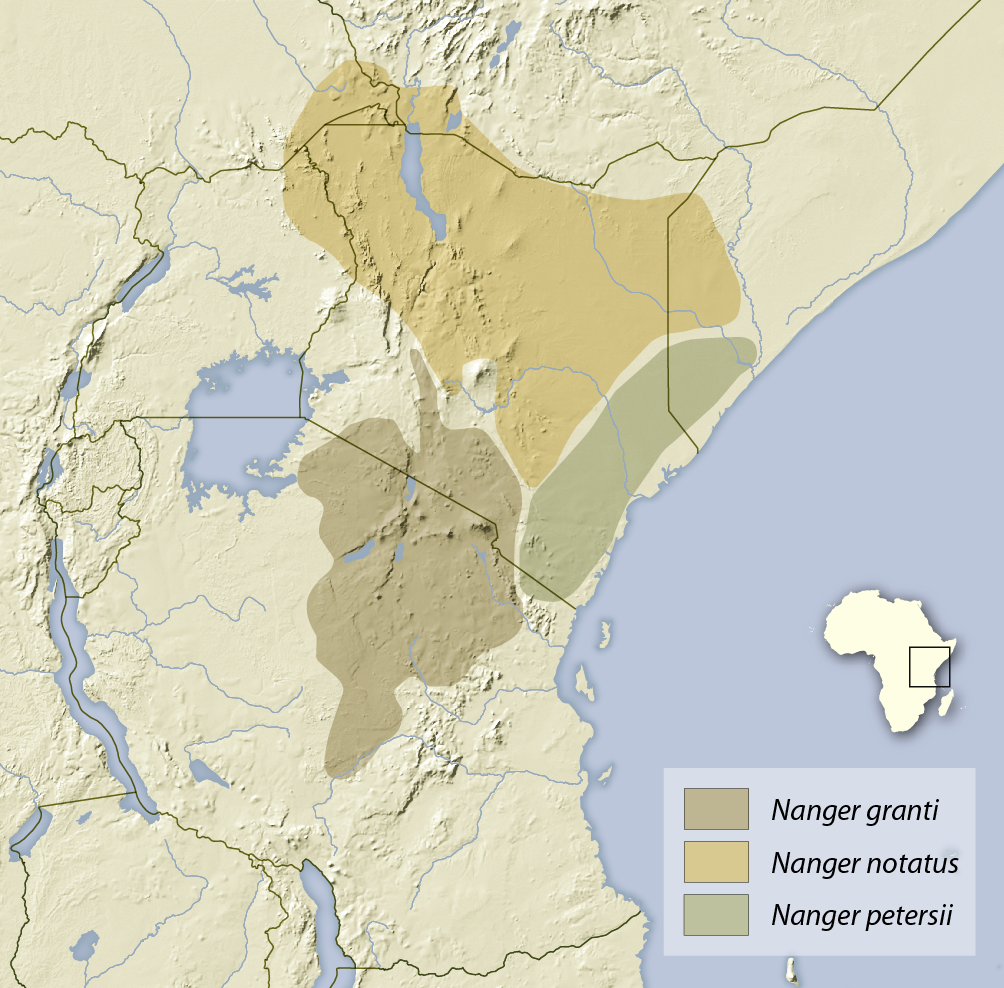
Predators include large African carnivores such as cheetahs, lions, spotted hyenas and African wild dogs; young animals are also vulnerable to smaller predators and crocodiles at watering sites. Grant's gazelles contribute to grassland ecology by grazing, browsing and aiding seed dispersal. They occur widely across East Africa, including populations in Kenya, Tanzania and adjacent regions.
Conservation and human interactions
Local population trends vary. Threats include habitat loss, fencing and competition with livestock, as well as illegal hunting in some areas. Conservation measures that benefit the species include protected areas, community-based management and measures to reduce habitat fragmentation. For regional information on habitat and management practices see resources on East Africa.
Related articles
Author
AlegsaOnline.com Grant's gazelle (Nanger granti) Leandro Alegsa
URL: https://en.alegsaonline.com/art/40321
Sources
- commons.wikimedia.org : Nanger granti
- species.wikimedia.org : Nanger granti
- iucnredlist.org : Nanger granti
- bucknell.edu : Nanger granti
- nature.com : "Extreme genetic differences among populations of Gazella granti, Grant's gazelle, in Kenya"
- outtoafrica.nl : Grant's Gazelle
- animals.mom.me : "Names of African Gazelles"
- blackwell.synergy.com : "Prey preferences of the cheetah (Acinonyx jubatus) (Felidae: Carnivora): morphological limitations or the need to capture rapidly consumable prey before kleptoparasites arrive?"
- doi.org : 10.1111/j.1469-7998.2006.00184.x