
Graphium sarpedon — the Common bluebottle
Graphium sarpedon, the Common bluebottle, is a swallowtail butterfly found across South and Southeast Asia and parts of Australia. It includes about 15 subspecies and is associated with laurel-family host plants.
Overview
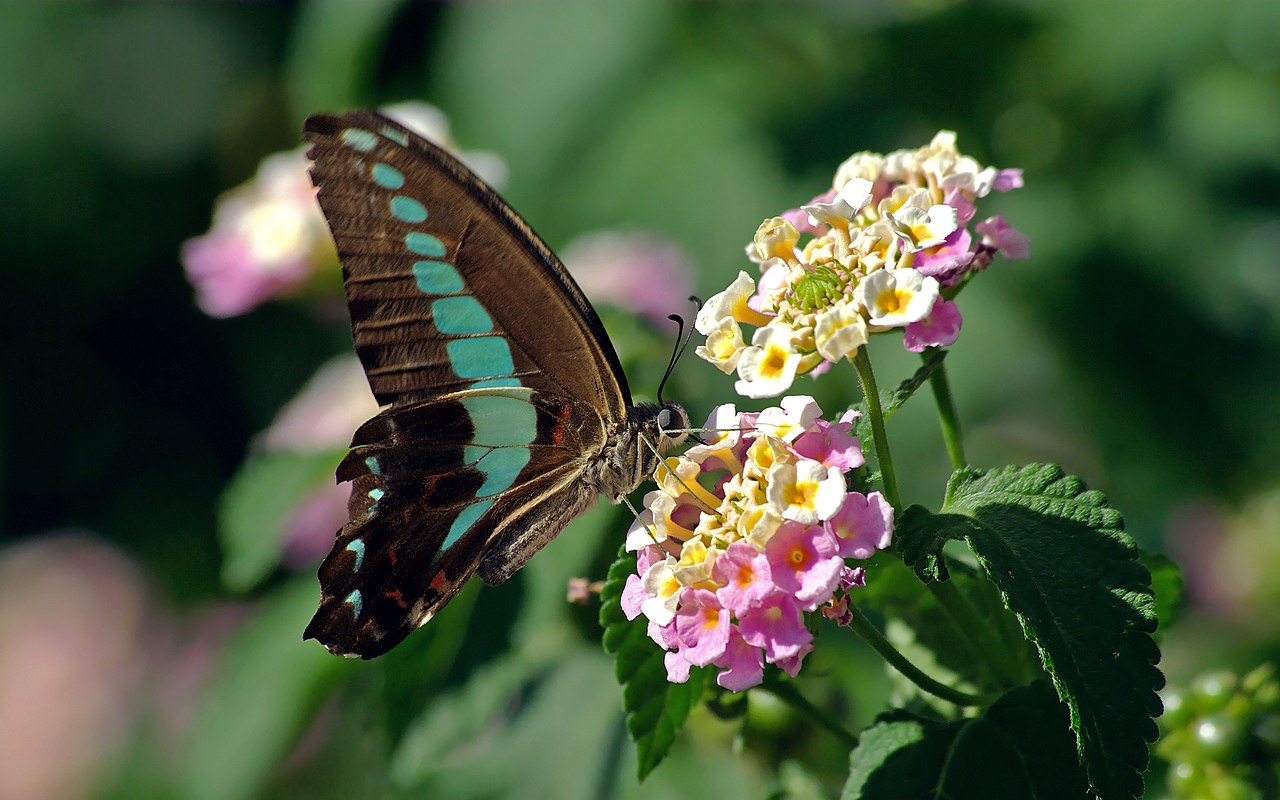
Graphium sarpedon, commonly called the Common bluebottle, is a medium-sized swallowtail butterfly noted for a bright, iridescent blue or green median band across otherwise dark wings. It belongs to the family Papilionidae and is a familiar sight in suitable forested and semi‑open habitats. For a species summary see species page and for family context consult the swallowtail family entry.
Image gallery
8 Images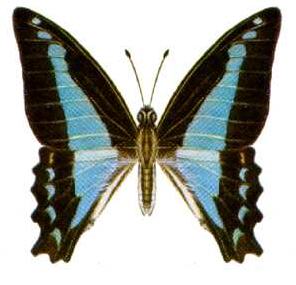



Identification
Adults have narrow, tailed hindwings and a prominent metallic band that can appear turquoise to deep blue depending on light and locality. The underside is generally darker and more cryptic. Key field characters are wing shape, position and width of the colored band, and a rapid, direct flight. Observers use these features when comparing populations.
Distribution and subspecies
The range extends across parts of South Asia, much of Southeast Asia and into some areas of Australia. Taxonomists recognise roughly fifteen geographical subspecies with local differences in coloration and size; comprehensive lists and nomenclatural details are available in specialist treatments and the subspecies list. Regional notes and mapped ranges appear in many field guides and online resources (range notes).
Life cycle and ecology
The life cycle includes egg, larva (caterpillar), pupa (chrysalis) and adult. Caterpillars feed mainly on trees and shrubs in the laurel and related plant families, and like other swallowtails possess an eversible osmeterium used as a defensive organ. Pupae are often cryptic, resembling a leaf or twig, and are attached to a substrate while they develop. Adults visit flowers for nectar, feed on rotting fruit and tree sap, and frequently mud‑puddle at damp ground to obtain salts and minerals.
Habitat, behavior and conservation
Preferred habitats range from lowland and montane forest edges to gardens and riparian corridors where host plants occur. The species is generally common where suitable habitat and larval foodplants are available, making it a useful indicator in regional surveys. Local populations can be affected by habitat loss and fragmentation; conservation attention focuses on preserving forest patches and host‑plant resources rather than species‑specific measures.
Further reading and resources
Field guides, regional faunas and entomological studies provide additional identification details, photos and distribution maps. Consult the linked resources above for introductory material and specialist literature for taxonomic and ecological treatments.
Related articles
Author
AlegsaOnline.com Graphium sarpedon — the Common bluebottle Leandro Alegsa
URL: https://en.alegsaonline.com/art/40357