
Grass snake (Natrix): description, distribution and ecology
A non-venomous, water-associated colubrid (genus Natrix) found across much of Europe, parts of the Middle East and northwestern Africa; largely amphibian-eating and the subject of recent taxonomic study.
The grass snake is a common name for several water-associated snakes in the genus Natrix. These are typically non-venomous colubrids that spend much of their time near ponds, marshes and slow streams. They feed mainly on amphibians and small reptiles and are generally harmless to people. The term "grass snake" is used in field guides and local language names; for a general species overview see species information.
Image gallery
10 Images


Appearance and behaviour
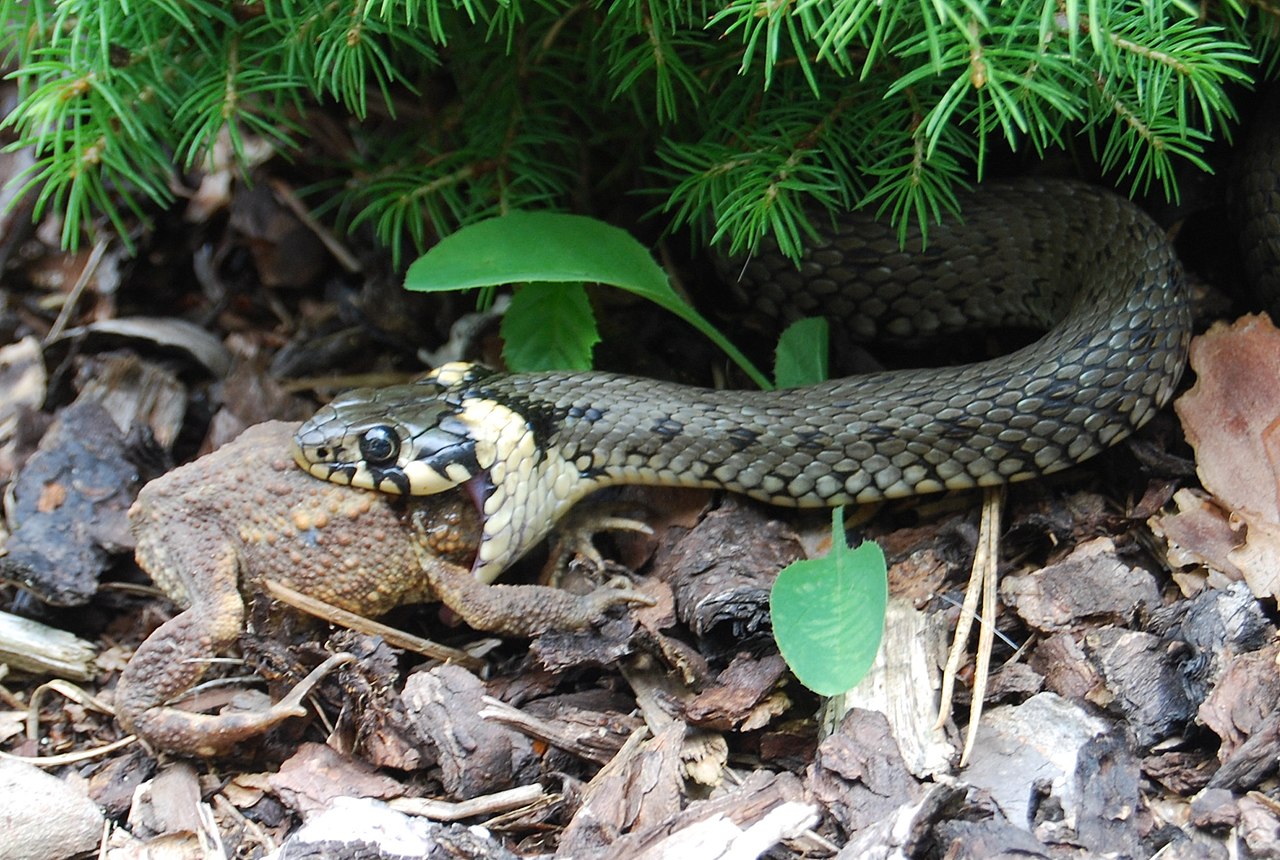
Grass snakes are medium-sized, often with grey, brown or olive dorsal colours and a lighter belly. Many individuals show a characteristic neck collar or markings behind the head. They are good swimmers, and when disturbed may flee into water, emit a foul scent or perform thanatosis (play dead). Reproduction is oviparous, with females laying eggs in warm compost or rotting vegetation where incubation can proceed.
Range and habitat
Populations occur widely across mainland Europe, extending from parts of mid Scandinavia down to southern regions such as Italy. Records also exist in parts of the Middle East and northwestern Africa. Habitats typically include wetlands, riverside vegetation, meadows with nearby water and garden ponds; these snakes need both terrestrial shelter and aquatic hunting grounds.
Taxonomy and recent research
Taxonomic understanding of the group has changed in recent years. Populations formerly treated as a single species have been split in parts of their range; for example the barred grass snake found in Great Britain is now recognized as separate from continental forms. This revision followed large-scale genetic sampling and analysis, including work by European research institutions and a notable genetic study that examined many specimens to clarify relationships within the complex.
Identification tips and conservation
- Look for a light collar or contrasting neck patch in many adults.
- Search near still or slow-moving water where amphibians are present.
- Note their calm, non-aggressive response to humans; they often escape rather than bite.
In many areas grass snakes are useful indicators of healthy wetland ecosystems because they depend on amphibian prey and intact aquatic habitats. Threats include habitat loss, road mortality and declines in amphibian populations. Local conservation actions focus on protecting wetlands, creating buffer zones and raising awareness to reduce unnecessary killing or persecution.
Questions and answers
Q: Is the grass snake venomous?
A: No, the grass snake is a non-venomous snake.
Q: Where can the grass snake be found in Europe?
A: The grass snake is widely distributed in mainland Europe, from mid Scandinavia to Southern Italy.
Q: What does the grass snake feed on?
A: The grass snake feeds almost exclusively on amphibians and lizards.
Q: Is the grass snake found in the Middle East and Northwestern Africa?
A: Yes, the grass snake is found in the Middle East and Northwestern Africa.
Q: What is the native species of grass snake in Great Britain?
A: The native species of grass snake in Great Britain is Natrix helvetica, the barred grass snake.
Q: What was the subspecies of the grass snake called until recently?
A: The two subspecies of the grass snake were both called Natrix natrix until recently (2017).
Q: Who lead the study into the genetics of over 1,600 grass snakes?
A: The Senckenberg Research Institute in Germany led the study into the genetics of over 1,600 grass snakes.
Related articles
Author
AlegsaOnline.com Grass snake (Natrix): description, distribution and ecology Leandro Alegsa
URL: https://en.alegsaonline.com/art/40368
Sources
- iucnredlist.org : "Natrix natrix"
- bbc.co.uk : bbc.co.uk/news/uk-40853286