
Gray whale (Eschrichtius robustus)
A baleen whale noted for its gray mottled skin, nearshore benthic feeding, and annual long-distance migration between high-latitude feeding areas and subtropical breeding lagoons.
Overview
The gray whale (Eschrichtius robustus) is a large baleen whale best known for its mottled gray skin, heavy layer of blubber, and tendency to travel close to shore. It is a filter feeder that uses baleen plates to strain small animals from sediment and water. Gray whales undertake long seasonal migrations between productive high-latitude feeding grounds and warmer, low-latitude breeding areas.
Image gallery
10 Images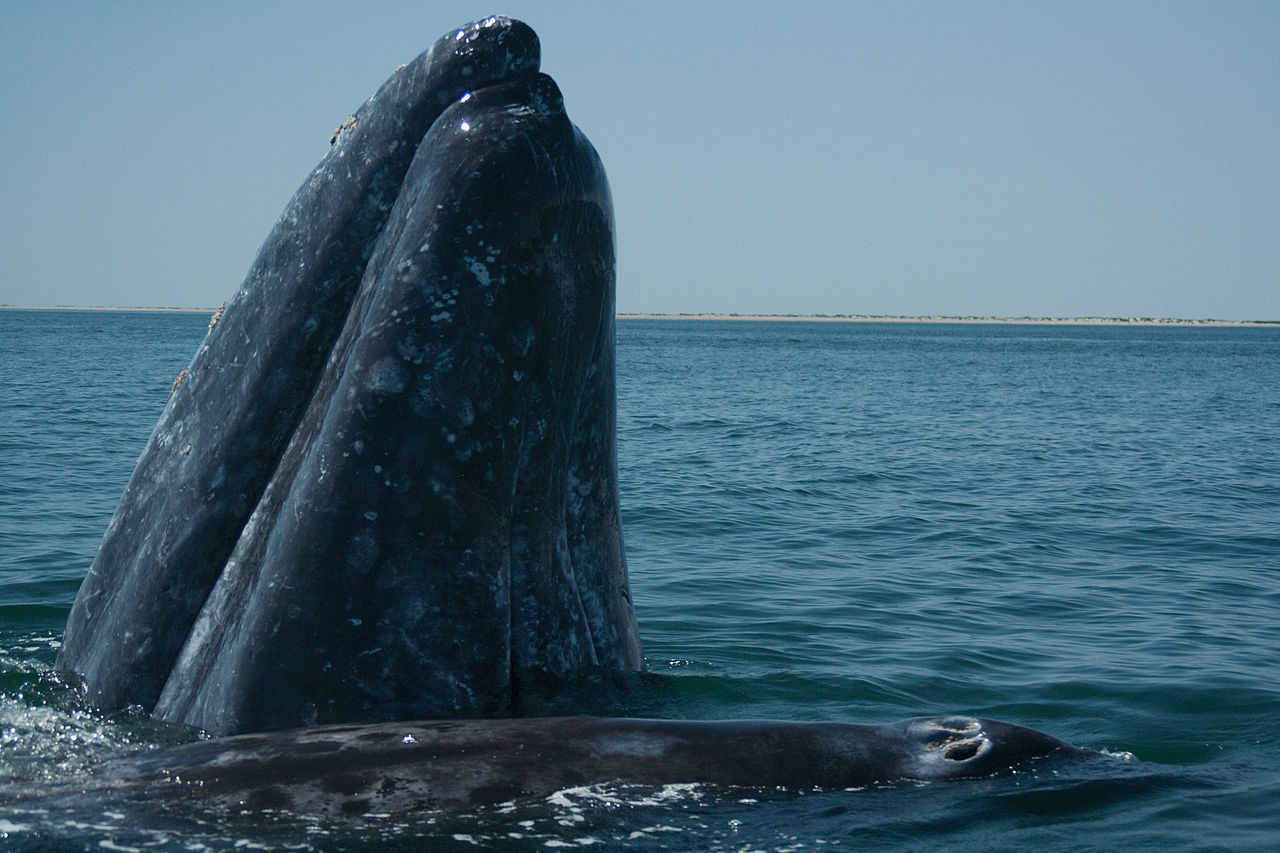




Appearance and anatomy
Adults are robust, with thick blubber and no prominent dorsal fin; instead they have a low hump followed by a series of knuckles along the back. Their skin is often encrusted with barnacles and patches of whale lice, producing a spotted or mottled look. Like other baleen whales, they have rows of baleen plates rather than teeth, which they use to filter food.
Behavior and migration
Gray whales are notable for long, annual migrations. Many travel between Arctic or sub-Arctic feeding areas and subtropical lagoons where breeding and calving occur. They commonly move in small groups or as mother–calf pairs and are capable divers, staying submerged for extended periods when feeding or travelling. Vocalizations such as grunts and moans are part of their social behavior and may help coordinate movements or courtship.
Feeding habits
Unlike many baleen whales that feed in the water column, gray whales often feed on or near the seafloor. They turn on their sides and scoop or suck up sediments to extract benthic organisms such as amphipods and other invertebrates. This bottom-feeding leaves visible feeding pits on the seafloor and distinguishes them ecologically from many other large whales.
History, human interactions, and conservation
Gray whales have long been part of coastal cultures and were heavily hunted during the commercial whaling era. Historical whalers sometimes called the species a "devilfish" because a defending mother would fiercely protect her calf, and accounts describe encounters in which whalers were attacked or the animals could even overturn their boats. After protections were enacted in the 20th century, one major North Pacific population recovered substantially, allowing limited whale-watching and research activities. A separate western population remains much smaller and vulnerable, and conservation attention continues for threats such as entanglement, ship strikes, and habitat change.
Importance and notable facts
- Gray whales are often observed close to shore, making them accessible for coastal viewing and scientific study.
- Their benthic feeding influences seafloor communities and nutrient cycling.
- Females fiercely defend calves; this behavior contributed to cultural stories and historical names.
- There are distinct populations with different conservation statuses; one has rebounded after protection while another is still rare.
Because of their striking migration, distinctive feeding style, and interactions with coastal people, gray whales are both an ecological keystone species in some regions and a symbol of marine conservation efforts. For further general information and resources, consult marine mammal guides and regional conservation organizations.
Questions and answers
Q: What is a gray whale?
A: A gray whale is a baleen whale, which is a filter feeder, and it has a thick layer of blubber up to 10 inches (25cm) thick.
Q: Why did whalers call the gray whale a devilfish?
A: Whalers called the gray whale a devilfish because a mother gray whale would fiercely defend her calf and attack whalers, even overturning their boats.
Q: What is the migration pattern of gray whales?
A: Gray whales migrate from cold waters to the tropics each year in pods.
Q: How agile are gray whales as swimmers?
A: Gray whales are very agile swimmers.
Q: How deep can gray whales dive?
A: Gray whales can dive up to 30 minutes and go 500 feet (155m) deep.
Q: What kind of sounds do gray whales make?
A: Gray whales make grunts, clicks, and whistling sounds which may be used to communicate with other gray whales.
Q: What is the scientific name of gray whale?
A: The scientific name of gray whale is Eschrichtius robustus.
Related articles
Author
AlegsaOnline.com Gray whale (Eschrichtius robustus) Leandro Alegsa
URL: https://en.alegsaonline.com/art/40420
Sources
- species.wikimedia.org : Eschrichtius robustus
- acsonline.org : "Gray Whale"