
Goldberg Variations (BWV 988)
A keyboard masterpiece by J.S. Bach: an aria followed by 30 variations that explore canons, dance forms and virtuosity; composed c.1741 and celebrated on harpsichord and piano.
The Goldberg Variations (BWV 988) are a landmark keyboard composition by Johann Sebastian Bach, published in 1741. The work opens with an aria and proceeds through thirty variations before returning to the aria da capo. Although fashioned as a set of variations, the piece is unified by the aria's bass line and harmonic plan, which underlie each variation even when the surface textures and characters change dramatically.
Image gallery
4 Images

Structure and musical characteristics
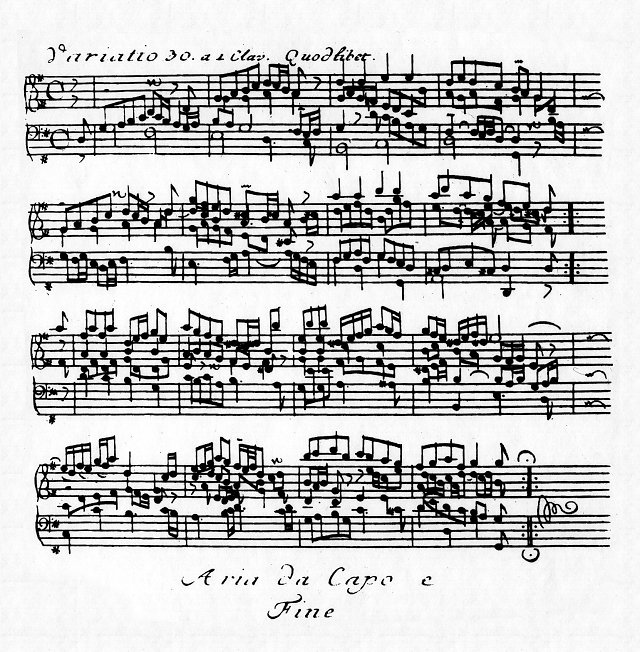
At its core the cycle is a study in contrapuntal and variation techniques. Every third variation is a canon that proceeds at successive intervals: the canons rise by step through the set, providing a clear organizing principle. Between these canons Bach inserts a wide variety of forms and devices: dance-like movements, bravura showpieces, slow embellished arias, hand-crossing passages, and fugal writing. The concluding Variation 30 is a quodlibet — a humorous contrapuntal mash-up of popular tunes — and the whole sequence closes by repeating the opening aria.
- Unity: consistent harmonic progression drawn from the aria.
- Contrast: shifts in tempo, texture and keyboard figuration across variations.
- Craft: systematic use of canonic writing and contrapuntal rigor.
Origin, commission and anecdotes
The set was allegedly commissioned by a young virtuoso keyboard player named J. G. Goldberg. The well-known anecdote, relayed by an early biographer, reports that Goldberg played these variations to soothe an insomniac patron, Count Keyserlingk. Scholars accept the tale as plausible but sometimes view it as apocryphal; regardless, the story helped fix the work's popular name. The aria itself was not an original melody of Bach's; it appears to be inspired by or derived from a French dance tune, though no single source has been definitively identified.
Formally published as part of Bach's keyboard writings, the Variations are often described as part of his explorations of harmonic design and contrapuntal possibilities. The printed edition presents the aria with basso continuo-type harmonies that each variation elaborates or reinterprets.
Performance, instruments and legacy
While composed in an era of harpsichords and frequently performed on the harpsichord, the Goldberg Variations have achieved widespread fame in the modern concert repertoire on the piano as well. Different instruments and approaches change the work's character: two-manual harpsichord performances can highlight hand-crossing effects and repeated notes, whereas pianistic readings often emphasize dynamic contrast and legato phrasing. The work is prized both for its intellectual architecture and its expressive range, and it remains a central touchstone for keyboard players, scholars and listeners alike.
Notable aspects that continue to attract study are Bach's integration of rigorous contrapuntal schemes with accessible melodic ideas, the sequence of canons as an organizing device, and the surprising emotional diversity across variations — from playful and witty to introspective and profound. For further reading and musical examples see editions and commentary linked by authoritative sources: Bach resources, historical notes at aria studies, analytical guides at variation analyses, and biographical context at performer histories, anecdotal accounts, harmonic studies, harpsichord literature and piano interpretations.
Related articles
Author
AlegsaOnline.com Goldberg Variations (BWV 988) Leandro Alegsa
URL: https://en.alegsaonline.com/art/39477