
Golden Sun (Game Boy Advance role-playing game)
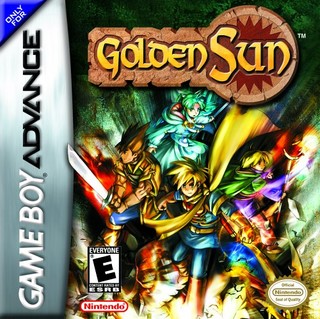
Golden Sun is a 2001 fantasy role-playing game for the Game Boy Advance. Developed by Camelot and published by Nintendo, it is noted for its Psynergy magic, Djinn system, puzzles and classic turn-based combat.
Overview
Golden Sun is a fantasy role-playing game released for the Game Boy Advance. Developed by Camelot and published by Nintendo, it is the first entry in the Golden Sun series. The title combines an overworld to explore, dungeon puzzles, a party-based turn‑based combat system and a narrative built around the return of a long-sealed force called alchemy.
Image gallery
4 Images

Setting and story
The game takes place on the world of Weyard, a high-fantasy setting shaped by ancient alchemical power. In the game's premise, alchemy was once pervasive but was sealed away to preserve balance. The player follows a group of young adepts — characters who can channel elemental energy — whose actions risk reawakening that power. The narrative focuses on travel between towns, ruins and elemental temples as the protagonists seek to control or reseal alchemy.
Gameplay and distinctive systems
Golden Sun blends traditional JRPG combat with puzzle-oriented field abilities. Its most notable mechanics include Psynergy (magic-like abilities), the Djinn system, and class dynamics that change with equipment and recruited elemental spirits.
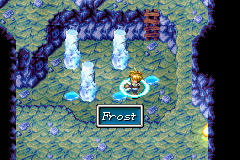
- Psynergy: Elemental abilities that are used both in battle and to solve environmental puzzles (for example, moving objects, creating bridges, or manipulating weather).
- Djinn: Small elemental creatures that can be assigned to characters to alter their stats and available skills. The combination of Djinn affects character classes and unlocks powerful summon attacks.
- Combat: Turn-based battles emphasizing strategy over button-mashing, with a balance of physical attacks, Psynergy, and summoned effects.
- Puzzles and exploration: Many areas require clever use of Psynergy, encouraging backtracking and attention to environment design.
Development and release
The game was developed by Camelot, known for several console titles, and features a soundtrack by composer Motoi Sakuraba. Initially released in the early 2000s for the handheld GBA platform, Golden Sun established a design identity that mixed traditional role-playing systems with a heavier focus on field puzzles and party customization. Its reputation for production values, presentation and depth helped secure a strong fanbase.
Reception and legacy
Critics and players praised Golden Sun for its graphics, music, and well-integrated mechanics. Reviewers highlighted the Djinn system as an unusual and engaging addition to party customization. IGN's Craig Harris noted Golden Sun as a standout among 2D Japanese role-playing games. The game spawned sequels, including Golden Sun: The Lost Age (2003) and a later series entry on handheld platforms, expanding the world and continuing the central themes of alchemy and elemental conflict.
Notable facts and distinctions
Golden Sun is often cited for marrying traditional RPG sensibilities with field-based magic puzzles and a distinctive summoning/class system. Its use of elemental Djinn to alter character roles makes party building highly flexible compared with many contemporaries. For players interested in systems-driven RPGs or puzzle-infused exploration, Golden Sun remains an influential handheld title. Further reading and resources about the platform and concepts can be found through developer and theme links such as Camelot, the general idea of alchemy, and broader series information at Golden Sun resources; platform context is available via Game Boy Advance and publisher pages for Nintendo.
Related articles
Author
AlegsaOnline.com Golden Sun (Game Boy Advance role-playing game) Leandro Alegsa
URL: https://en.alegsaonline.com/art/39517
Sources
- gameboy.ign.com : "IGN Golden Sun Review"