
Gilgit Agency: historical administrative region of northern Kashmir
Gilgit Agency was the Pakistan-administered portion of northern Kashmir from 1947 to 1970. This entry summarizes its geography, administration, towns, cultural sites, strategic importance and later reorganisation.
Overview
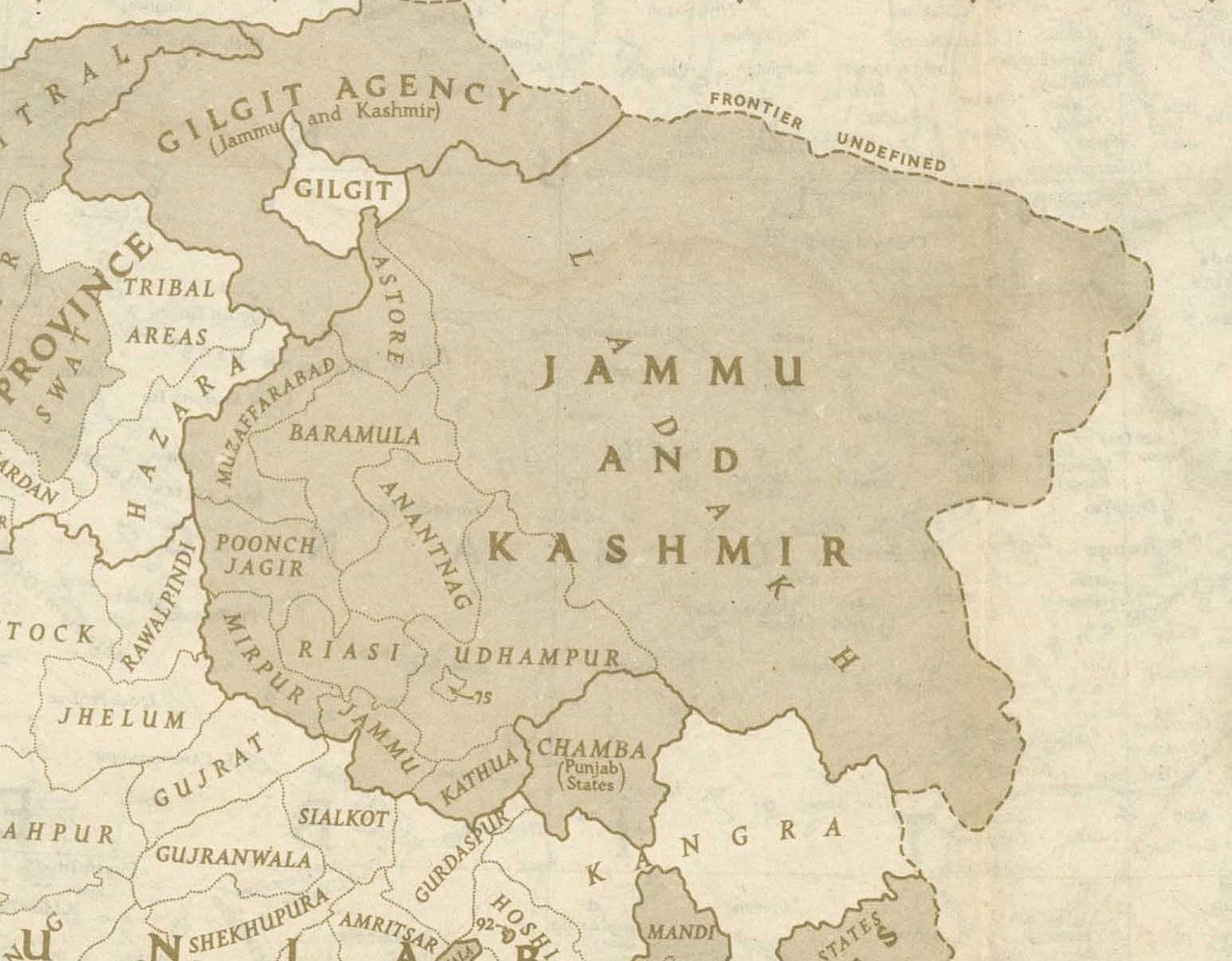
The Gilgit Agency was the name applied to most of the traditional Gilgit region in northern Kashmir which, after 1947, came under effective Pakistani administration as a distinct dependency until it was merged into the Northern Areas in 1970. The Agency was administered directly from the federal capital rather than through neighbouring state structures and functioned as a separate administrative and political unit in the decades immediately after partition. Its status, governance and borders have been shaped by colonial-era arrangements, local princely institutions and the wider Indo‑Pakistani dispute over Jammu and Kashmir.
Image gallery
4 Images


Geography and borders
Situated in the high mountain zones of the Karakoram and the western Himalaya, the Agency encompassed deep river valleys, high mountain passes and glaciated ranges. To the northeast it bordered the Sinkiang region of China, to the south the Indian-administered parts of Jammu and Kashmir, to the east Baltistan and to the west what is today Pakistan's northwestern provinces. The terrain includes important north–south and east–west routes historically used for trade and seasonal migration, and it lies at the intersection of several major mountain systems.
Historical background and administration
The political arrangements that formed the Gilgit Agency drew on long-standing colonial practices of managing frontier and princely areas through a resident political officer or agency. After the end of British rule in 1947, local forces and the Pakistani administration established control over much of the area and placed it under direct federal administration, separate from the neighbouring polity commonly known as Azad Jammu and Kashmir and separate from the small hill states such as Hunza and Nagar. The federal government in Islamabad retained administrative authority for the Agency during its existence as an entity.
Towns, former states and cultural sites
Major population centres included the town of Gilgit and the valley city of Skardu, which served as local commercial and administrative hubs. Former princely centres such as Hunza and Nagar remained distinct local polities in the landscape and influenced patterns of landholding, leadership and identity. Religious and cultural landmarks dot the region; for example, the small settlement of Ghyari is noted locally for a mosque associated with the 14th‑century Persian Sufi missionary Sayyid Ali Hamadani, who is credited with influencing the spread of Islam across parts of the western Himalaya. These sites are part of a regionally layered cultural heritage that blends indigenous, Persianate and Central Asian influences.
Strategic importance and communications
Beyond its local administrative function, the Gilgit Agency occupied a strategic corridor linking the subcontinent with Central Asia and China. Its mountain passes and valleys have long been used for caravan trade and seasonal routes into the high plateaus, and in modern times the region's road and air links increased its importance for trade and strategic connectivity. Its position adjacent to Xinjiang (referred to historically as Sinkiang) and near contested frontiers has given the area enduring significance in regional diplomacy and security planning.
Sovereignty, dispute and later reorganisation
The status of Gilgit and neighboring Baltistan has been and remains the subject of competing claims between the principal parties to the Jammu and Kashmir dispute. Both India and Pakistan treat these territories as part of the broader contested region, and that disagreement shapes international and bilateral references to local administration and rights. In 1970 the Agency was formally reorganised and incorporated into what was called the Northern Areas under Pakistani administration; that territory has since been administered under different arrangements and is commonly referred to today in Pakistani usage as Gilgit‑Baltistan. For background on the wider administrative framework see sources on Pakistan and the federal capital Islamabad.
Key points and distinctions
- The Gilgit Agency was distinguished by direct federal administration rather than integration into adjacent provincial or princely structures.
- Its borders placed it at the crossroads of several modern states and historical regions, contributing to ethnic, linguistic and cultural diversity.
- Administrative changes after 1970 altered its formal status, although the historical identity of the Gilgit region remains widely used.
- The political and legal status of Gilgit and Gilgit and neighboring Baltistan continues to be referenced within the larger context of the Jammu and Kashmir dispute.
Further reading: Readers seeking additional detail should consult archival and regional studies on frontier administration, the history of princely states in the western Himalaya, and contemporary accounts of Northern Areas/Gilgit‑Baltistan governance and development.
Related articles
Author
AlegsaOnline.com Gilgit Agency: historical administrative region of northern Kashmir Leandro Alegsa
URL: https://en.alegsaonline.com/art/38825