
Gerðr (Gerda) — Norse giantess and consort of Freyr
Gerðr is a jötunn of Old Norse myth who becomes the wife of the god Freyr. Her story appears in the Eddas and is often read as a personification of seasonal change and fertility.
Gerðr (often anglicized Gerda) is a figure from Old Norse mythology traditionally classified as a jötunn (giantess) who becomes the wife of the Vanir god Freyr. She appears most prominently in the poem Skírnismál in the Poetic Edda and in Snorri Sturluson’s Gylfaginning in the Prose Edda. Her narrative combines an encounter between divine and giant lineages with imagery that later readers have interpreted as relating to fertility, seasonal cycles and the human relationship to the natural world.
Image gallery
6 Images



Myth and narrative
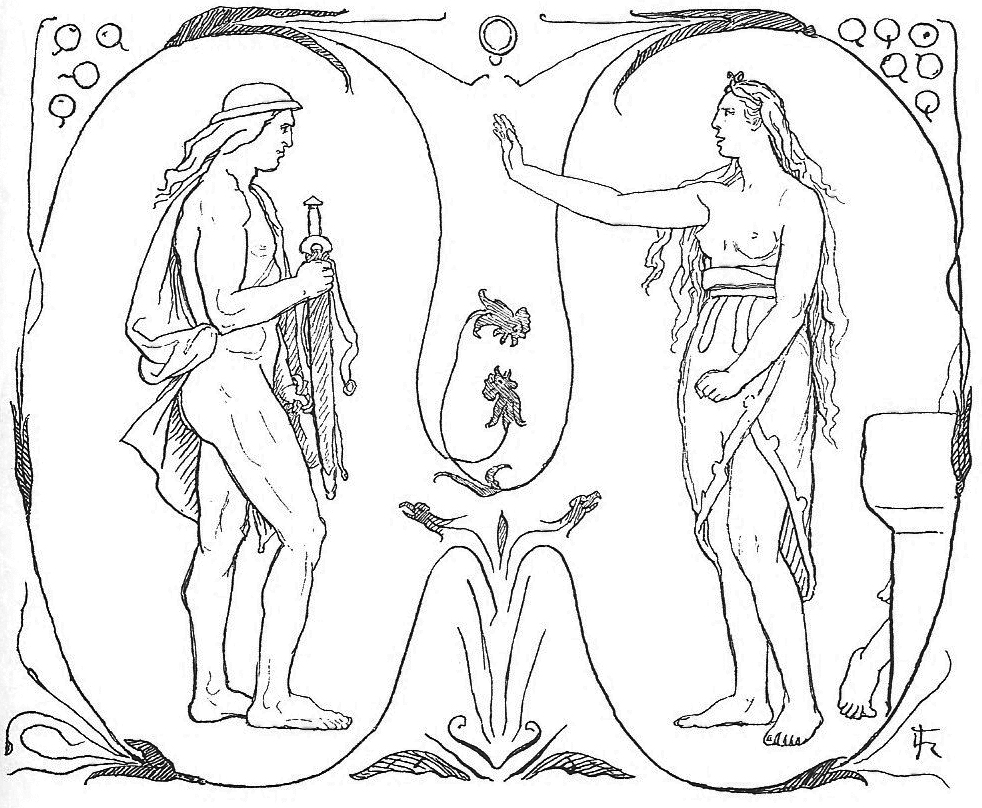
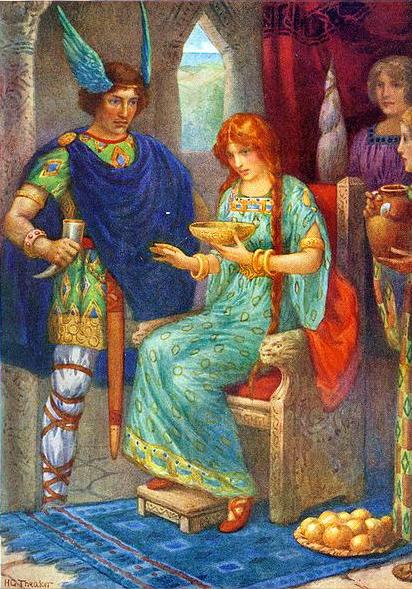
In the principal myth, Freyr falls in love with Gerðr after glimpsing her from afar. Unable or unwilling to win her himself, he sends his servant Skírnir to negotiate on his behalf. Skírnir first offers gifts and compliments, and when these fail he resorts to threats, culminating in a curse promising Gerðr a life of loneliness and cold if she refuses. Faced with this ultimatum she consents; the myth records a period of nine nights between her promise and the consummation of the marriage.
Characteristics and family
Gerðr is described as a daughter of the giant Gymir and the giantess Aurboda, and sometimes cited as sibling to figures such as Beli. Although classed among the jötnar, she takes a central role in a divine marriage, a motif common in Norse accounts where boundaries between gods and giants are porous. Her name has been compared to Old Norse words for an enclosure or fenced field, a connection often used to emphasize associations with cultivated land or the enclosed fertile earth.
Symbolism and interpretations
Later commentators and scholars have read Gerðr’s story as symbolic. The story’s motifs — the reluctant bride, the wooing by proxy, the nine-night interval — have been interpreted as representing the transition from winter to spring, or the earth’s awakening under the god’s warmth. Some modern interpreters have suggested wider natural associations, including phenomena such as the aurora borealis, but such links are speculative and not explicit in the surviving Old Norse texts.
Notable features and scholarly points
- Primary attestations are in Skírnismál (Poetic Edda) and in Snorri’s Gylfaginning (Prose Edda).
- The motif of a god marrying a jötunn is recurrent in Norse myth and may reflect mythic explanations for fertility and seasonal cycles.
- Her name’s etymology is debated; many scholars see a link to words meaning an enclosure or cultivated plot.
For readers interested in primary translations and commentary, see available Edda translations and notes. Gerðr continues to attract attention beyond academic circles: she appears in modern retellings, artistic works, and discussions of mythological symbolism, where her story is often used to explore themes of consent, power, and the interplay between human culture and the natural world.
Although surviving texts are relatively concise, Gerðr’s myth has proven durable. Its evocative imagery and ambiguous moral tones invite varied readings, from a straightforward account of courtship to layered allegory about the turning of the seasons and the relationship between gods and earth. As with many Old Norse figures, careful distinction between what the sources explicitly say and later interpretative traditions is important when studying her role in the mythic corpus.
Related articles
Author
AlegsaOnline.com Gerðr (Gerda) — Norse giantess and consort of Freyr Leandro Alegsa
URL: https://en.alegsaonline.com/art/38511