
Geronimo: Chiricahua (Bedonkohe) Apache leader, warrior and medicine man
Geronimo (Goyaałé) was a Bedonkohe member of the Chiricahua Apache who resisted U.S. and Mexican forces, surrendered in 1886, lived much of his later life as a prisoner, and remains a complex cultural symbol.
Overview
Geronimo (Chiricahua name Goyaałé, often anglicized as Goyathlay) was a prominent Bedonkohe member of the Chiricahua Apache active in the mid‑ to late 19th century. Traditional accounts place his birth on June 16, 1829 (birth reference) and his death on February 17, 1909 (death date). He is widely remembered for leading groups of Apache in armed resistance and evasive campaigns against Mexican and U.S. military pressure and for his role as a spiritual and healing figure within his band (medicine man).
Image gallery
10 Images

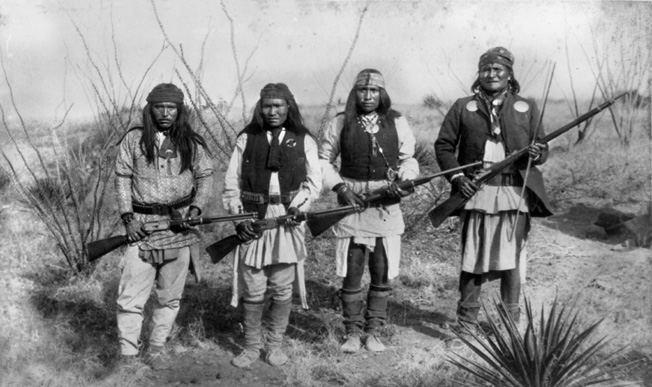


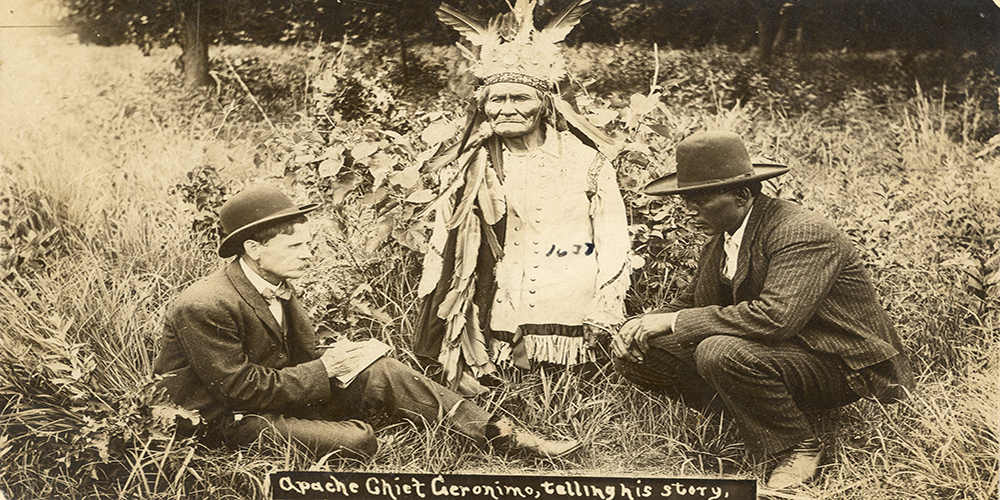
Origins, name and identity
Geronimo was born in country that is now in New Mexico (birthplace) and belonged to the Bedonkohe band of the Chiricahua Apache (tribal context). He was not a hereditary chief in the formal sense used by some other societies, but he emerged as a respected wartime leader and a traditional healer; popular accounts have sometimes called him a "chief" in error or simplification (leadership). The name Goyaałé is usually translated as "One Who Yawns." The Spanish name Gerónimo appears in contemporary Mexican and Anglo accounts and may reflect an invocation of Saint Jerome or a phonetic rendering of his Chiricahua name (name origin).
Early life and causes of resistance
Family history and frontier violence shaped Geronimo's path. In the 1850s and 1860s, expanding settlement, military columns, and cross‑border raids created sustained conflict in the Southwest and northern Mexico. Personal losses suffered by Geronimo and members of his band are cited in oral histories and written reports as factors that influenced his decisions to take part in raids and to lead groups away from forced settlement. These episodes are documented in a mixture of military dispatches, newspaper coverage and Apache oral tradition (contemporary press).
Campaigns, tactics and alliances
From the 1850s through the 1880s Geronimo and his followers conducted raids, ambushes and long evasive movements across what is now the U.S.–Mexico border. These actions were part of the broader Apache Wars, a series of conflicts driven by territorial encroachment and competing military objectives. Geronimo earned a reputation for skill as a guerrilla leader: small bands moved rapidly, used knowledge of the terrain, and prioritized the safety of women and children during flight. His relationships with other Apache leaders were complex and changed according to circumstance; alliances and rivalries with other bands were shaped by family ties, immediate threats and tactical needs (tribal context).
Surrender, captivity and later life
After prolonged pursuit by U.S. and Mexican forces, Geronimo surrendered in 1886; accounts of the final capitulation appear in a range of military records and later histories (surrender). Following the surrender he and many of his people were held as prisoners of war and were moved among military posts and prisons far from their homeland. During the final decades of his life he lived under guard in the United States and took part in public exhibitions and fairs, where he sometimes sold photographs and signed autographs; he appeared at the 1904 St. Louis World's Fair (World's Fair). Late in life he remained a prisoner of the U.S. Army and died in 1909 from pneumonia according to contemporary reports (cause of death) and documented dates (death date).
Legacy and interpretation
Geronimo's image has been widely mythologized in American and international popular culture. He is often presented as a symbol of Native resistance to colonization, but representations vary widely: heroic, villainized, romanticized and commercialized. His name and image have been appropriated in advertising and military lore, and his life has been a frequent subject for books, films and scholarly study. Modern historians and Indigenous scholars place his actions in the broader context of Apache sovereignty, settler expansion, and the consequences of U.S. and Mexican policies toward Indigenous peoples (biographical studies).
Sources, collections and continuing study
Primary materials about Geronimo are preserved in archival collections, military records and oral histories held by museums and research institutions (archives). For contemporaneous perspectives, researchers consult newspaper coverage from the period (press) and military correspondence (records). Curated collections and regional studies provide context for his life and the wider Apache experience in the American Southwest and northern Mexico (collections) (regional research). Oral histories and interviews with Apache descendants remain central to understanding his life from Indigenous viewpoints (oral history).
Notable facts
- Often called Geronimo by outsiders, his Chiricahua name was Goyaałé; the Spanish form Gerónimo was applied by Mexican soldiers and chroniclers (name origin).
- He was a Bedonkohe Apache and a respected medicine man in his band rather than a hereditary chief (spiritual role) (leadership).
- He led families and small war parties in resistance to removal and capture, and he surrendered in 1886 after prolonged campaigns (surrender).
- Late in life he participated in public exhibitions and was present at the 1904 St. Louis World's Fair, selling photographs and souvenirs (World's Fair).
- He died in 1909, and his life continues to be studied in archives, biographies and Indigenous oral traditions (biographies) (archives).
Related articles
Author
AlegsaOnline.com Geronimo: Chiricahua (Bedonkohe) Apache leader, warrior and medicine man Leandro Alegsa
URL: https://en.alegsaonline.com/art/38507