
Gerolamo Cardano: Renaissance polymath in mathematics, medicine and mechanics
Italian Renaissance scholar Gerolamo Cardano (1501–1576) was a physician, mathematician and inventor known for Ars Magna, early probability thinking, descriptions of complex numbers, and mechanical devices.
Overview
Gerolamo Cardano (also Girolamo Cardano; 1501–1576) was an Italian Renaissance thinker whose work spanned mathematics, medicine, mechanics and astrology. He became one of the most influential figures of the sixteenth century thanks to a combination of publishing, teaching and practical practice. For a concise biography and context about his life and times see biographical notes.
Image gallery
7 Images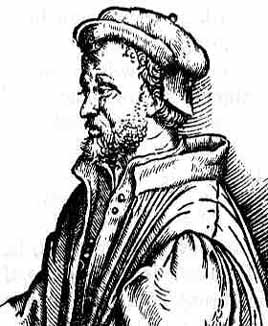


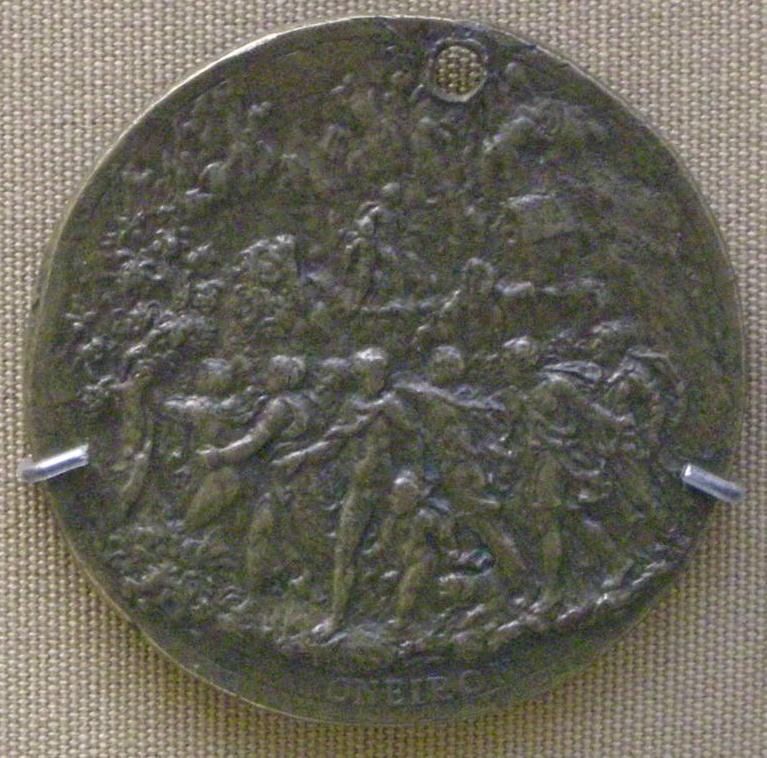
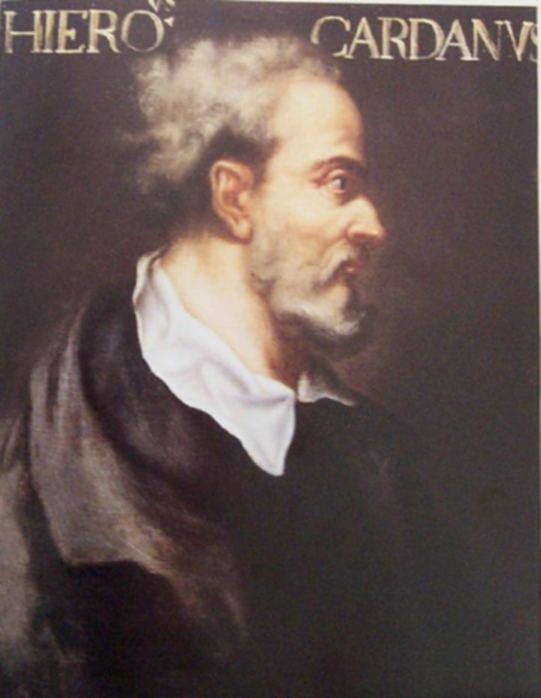

Mathematical contributions
Cardano is best known in mathematics for the book Ars Magna, which brought together algebraic methods and presented solutions of cubic equations in symbolic form. His presentation popularized techniques that had been developed elsewhere and provoked a well-known rivalry over priority. The book also acknowledged advances by others and collected material on polynomial equations; further background on his mathematical role is available at mathematics overview. He discussed problems that led toward the later acceptance of complex (imaginary) numbers and recorded practical rules for manipulation—an early step toward modern algebraic methods (on complex numbers).
Algebraic highlights and disputes
Two concrete advances associated with Cardano's circle were the solution of certain cubic equations and the reduction of quartic equations to solvable forms. Niccolò Fontana, called Tartaglia, revealed to Cardano a method for one class of cubics; Cardano published the method in Ars Magna after learning that Tartaglia's student had extended it, which triggered a bitter dispute over credit. Lodovico Ferrari, Cardano's student, produced a general method for quartic equations. For a focused account of these algebraic results see algebraic developments and cubic and quartic methods.
Medicine, astrology and practical work
Cardano trained and worked as a physician at a time when medical study and practice were closely tied to universities and licensing bodies. His illegitimate birth complicated some formal appointments, but he maintained a long medical practice, wrote clinical observations and combined medicine with astrological consultancy—practices typical of his era. Some historians credit him with early clinical descriptions that resemble what later came to be called typhoid fever; further reading on his medical writings is at medical works.
Probability, gambling and writings on chance
Cardano was a compulsive gambler and turned that interest into analysis. He wrote Liber de ludo aleae, an extended study of games of chance that contains one of the earliest systematic treatments of probability, methods for fair play, and commentary on deceptive practices in gaming. The manuscript circulated in his lifetime but was published only after his death; see writings on chance for more.
Inventions, mechanical ideas and legacy
Outside theory, Cardano described or popularized several devices and mechanical ideas: a simple form of steganographic grille (the Cardan grille), a sequence puzzle known as the baguenodier or Chinese rings, and descriptions of the universal joint often associated with his name. He also expressed skepticism about perpetual motion machines, arguing they were impossible in practice, though he made exceptions in metaphysical contexts such as celestial motion; related commentary appears at mechanical inventions and on perpetual motion. His life combined intellectual curiosity with personal turbulence—financial difficulty, contentious disputes and a readiness to cross disciplinary boundaries—which helped make his corpus influential across later mathematics, medicine and engineering. For assessments of his broader impact see legacy in algebra and influence on number concepts.
- Major works: Ars Magna (mathematics), Liber de ludo aleae (games and probability), assorted medical writings (works list).
- Fields: algebra, probability, medicine, astrology, mechanical description.
- Notable students and opponents: Lodovico Ferrari (student), Niccolò Tartaglia (opponent).
Related articles
Author
AlegsaOnline.com Gerolamo Cardano: Renaissance polymath in mathematics, medicine and mechanics Leandro Alegsa
URL: https://en.alegsaonline.com/art/38503